Of all the ways the modern diet has drifted from the one our bodies evolved to expect, the quietest is also the most consequential. It is not a surplus of something dramatic. It is an absence. Across wealthy countries, most people eat roughly half the fibre they should, and they do so without ever feeling that anything is missing. There is no craving for fibre, no obvious hunger it satisfies, no flavour we chase. And yet this single shortfall sits underneath a remarkable amount of what nutrition science worries about: gut health, blood sugar, cholesterol, weight, the long arc of risk for some of our most common diseases. It is the biggest hole in the way we eat now, and almost nobody notices it.
The strange thing about the fibre gap is how unglamorous the fix is. We will get to that. But first it helps to understand what fibre actually is — because the word hides a great deal of variety, and that variety is the whole point.
Fibre is a category, not a thing
When we say “fibre”, we are not naming a single molecule the way we name vitamin C. We are describing a job: the parts of plant foods that our own digestive enzymes cannot break down. Everything else about them — their shape, their behaviour, what they do on the way through — varies enormously. This is why blanket statements about fibre so often feel slippery. Different fibres do genuinely different things.
The oldest distinction is between soluble and insoluble fibre. Insoluble fibre — the wheat bran sort, the stringy structure of vegetables — largely passes through intact, adding bulk and helping things move. Soluble fibre dissolves in water, and some kinds form a gel. These viscous, gel-forming fibres are the quiet heroes of a lot of fibre’s better-evidenced effects: they slow the stomach’s emptying, blunt the rush of sugar into the blood, and bind certain compounds on their way out. The beta-glucan in oats and barley is the textbook example of a viscous fibre that earns its reputation.
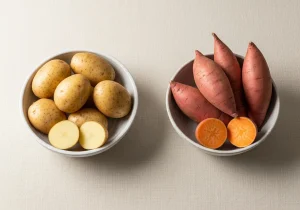
Cutting across that older split is a more modern and arguably more important one: how fermentable a fibre is. Some fibres reach the large intestine more or less untouched and become food for the trillions of bacteria living there. Resistant starch — found in cooked-and-cooled potatoes and rice, in slightly green bananas, in lentils and beans — behaves like fibre precisely because it resists digestion and feeds those microbes. So do the fructans in onions, garlic and wheat. Whether a fibre is fermentable, and how vigorously, turns out to shape a great deal of what follows.
The practical lesson from all this taxonomy is simple: there is no single best fibre, and “eat more fibre” is really an argument for eating more kinds of plant.
Why the gap exists
The typical recommendation lands somewhere around 25 to 38 grams a day, depending on the body doing the eating. Typical actual intake in many countries hovers near 15 grams — and for plenty of people, lower still. That is not a rounding error. It is a structural feature of how we eat.
The cause is not mysterious. Fibre lives in the parts of plant foods that modern processing is very good at removing. Refining a grain — turning whole wheat into white flour, brown rice into white — strips out the bran and germ where most of the fibre sits. Layer on a diet light on legumes, fruit and vegetables and heavy on convenience foods built from refined starch, and the gap opens almost automatically. Nobody decides to under-eat fibre. The food environment decides it for them.
What fibre does, and how sure we are
Fibre’s reputation has swung between “roughage your grandmother nagged you about” and “miracle nutrient”. The honest position is in between, and it varies sharply by claim. Here is what the evidence actually supports, graded.
It feeds the gut microbiome (well-established, and increasingly central)
Fermentable fibre is the primary fuel for the bacteria in the large intestine. As they ferment it, they produce short-chain fatty acids — butyrate, propionate, acetate — that nourish the cells lining the colon, help regulate inflammation, and ripple outward into metabolism in ways researchers are still mapping. That fibre feeds the microbiome and yields short-chain fatty acids is now well-established. Exactly which downstream benefits flow from that, and how much, is an active and genuinely exciting frontier rather than a settled ledger.
It helps with fullness and weight (consistent, modest)
Viscous fibre slows digestion and stretches out the feeling of fullness, and higher-fibre foods tend to be more filling per calorie. The observational evidence linking higher fibre intake to healthier body weight is consistent, though fibre is no magic lever — it nudges rather than transforms.
It lowers blood cholesterol (well-established for viscous fibre)
This is one of fibre’s most solid claims, but it is specific: soluble, viscous fibre — beta-glucan above all — modestly lowers LDL cholesterol, likely by binding bile acids and forcing the body to draw on cholesterol to replace them. Insoluble fibre does not do this. It is a clean illustration of why the category matters.
It steadies blood sugar (well-established mechanism, real effect)
By slowing the emptying of the stomach and the absorption of glucose, viscous fibre flattens the blood-sugar spike after a meal. Diets higher in fibre are consistently associated with better glycaemic control and lower risk of type 2 diabetes — a finding that holds across many populations.
It keeps things regular (well-established)
The least glamorous benefit is also among the most reliable. Fibre — particularly the insoluble, bulking kind, with enough water alongside it — improves bowel regularity and stool form. This is old knowledge, and it remains true.
It tracks with lower disease risk (consistent observational evidence)
At the population level, higher fibre intake is associated with lower colorectal cancer risk and lower all-cause mortality. These are among the more striking findings in nutrition. They are also observational: people who eat a lot of fibre tend to differ in many other ways from people who eat little, and untangling fibre’s specific contribution from the broader pattern of a plant-rich life is genuinely hard. The direction of the evidence is consistent and encouraging; the precise size of fibre’s own effect is less certain. Both things are true at once.
How much you actually need
The working targets — roughly 25 grams a day for adult women and up to about 38 for men — are useful anchors, not commandments. The more honest framing is directional: nearly everyone eating a typical modern diet would benefit from more, and the gap between 15 grams and 30 is large enough that you do not need to count anything to know which way to move. Build the habit of plants at every meal and the numbers tend to take care of themselves.
Where fibre actually lives
Fibre is not evenly distributed across plant foods — some are dramatically richer than others — so it pays to know the heavy hitters.
Legumes are the single best lever most people have. Lentils, chickpeas, black beans and edamame deliver more fibre per serving than almost anything else, alongside protein and resistant starch — and they are cheap. If you change one thing, make it beans.
Whole grains, when they are genuinely whole. Oats bring beta-glucan; whole-wheat bread, brown rice, buckwheat and quinoa keep the bran that refining throws away. The word “whole” on the label is doing real work here.
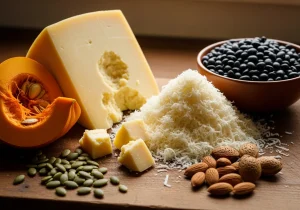
Seeds punch far above their weight. Chia seeds and flaxseed are among the most fibre-dense foods by weight, and flax is also a leading source of lignans. Pumpkin seeds add more still.
Fruit and vegetables, eaten whole. Avocado is unusually fibre-rich for a fruit; apples, pomegranate, strawberries and bananas all contribute, as do broccoli, kale, spinach, sweet potato, beetroot and carrots. Eating them whole rather than juiced is the part that counts. A handful of almonds or walnuts rounds the picture out. You can browse the full set in the foods index.
Closing the gap without the discomfort
Here is the part that derails people. If you go from 15 grams to 35 overnight, your gut — and the microbes in it — will protest, loudly. The bloating and wind that result are not a sign fibre disagrees with you. They are a sign you moved too fast.
Three rules make the transition comfortable. Increase gradually, over weeks, so your microbiome can adapt. Drink more water as you do — fibre needs fluid to do its bulking work, and a sudden increase without it can backfire. And aim for variety rather than a single fibre supplement, because different fibres feed different microbes and the diversity is itself part of the benefit. This is exactly the logic behind a whole-food, plant-based pattern, or the broad, plant-forward shape of the Mediterranean diet.
There is one important caveat. People with irritable bowel syndrome or sensitive guts may react badly to certain highly fermentable fibres — the FODMAPs, including the fructans in wheat, onion and garlic. For them, more fibre indiscriminately can mean more discomfort, and a structured low-FODMAP approach, ideally with professional guidance, is the wiser path. The general rule still holds — most people simply need more — but “most” is not “all”.
A higher-fibre day, in practice
None of this requires a spreadsheet. A day that quietly closes the gap might look like this: porridge made from oats with a spoon of chia or ground flaxseed and some strawberries at breakfast; a lunch built around lentils or chickpeas with plenty of vegetables; an afternoon handful of almonds or an apple; and a dinner with black beans, broccoli and a whole grain like quinoa instead of white rice. No single one of those is dramatic. Together they clear 30 grams without effort.
That is the curious truth of the fibre gap. It is the largest hole in the modern diet, and the patch for it is almost boringly ordinary — beans, oats, seeds, fruit, vegetables, grains eaten whole. We spend a lot of energy chasing nutritional novelty. The biggest single win is sitting, unglamorously, in the foods our grandparents would have recognised. For more on how the pieces fit together, the articles index is a good place to wander next.
This article is general information, not medical or dietary advice. If you have a digestive condition, introduce fibre changes gradually and speak to a qualified professional.