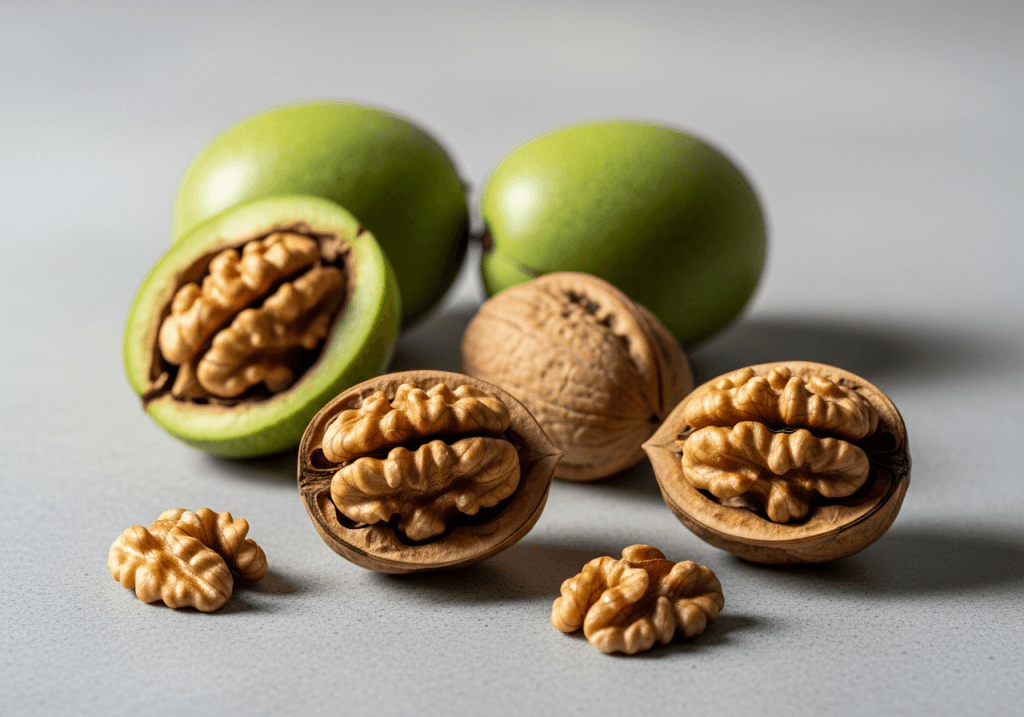
Walnuts are the only common nut with a meaningful amount of plant omega-3 in the form of alpha-linolenic acid, or ALA. That single fact places them in a different nutritional category from almonds, cashews and peanuts, and it explains why walnuts feature in almost every major heart-health dietary trial. That pattern is why walnuts are most often studied for heart health, brain health and anti-inflammatory pathways.
Compounds & anti-nutrients in Walnuts
Per 100 g, Walnuts is a notable dietary source of these active compounds. Tap any to see its full sources map and how to work with it.
Why walnuts are good for you
Walnuts supply ALA at a rate most other nuts cannot match — roughly 9 g per 100 g. The human body can convert ALA into the longer-chain EPA and DHA found in fish, albeit inefficiently, so walnuts are a meaningful plant-based omega-3 source for anyone who eats little or no fish. They also provide copper and manganese, two minerals involved in antioxidant enzymes, and their polyphenol content is among the highest of any everyday nut.
Walnut nutrition at a glance
The label shows the numbers, but the practical takeaway is that walnuts are calorie-dense and nutrient-dense simultaneously. Regular walnut eaters do not gain more weight than non-nut-eaters in long-term cohorts — a reminder that whole-food calories do not behave like textbook calorie maths.
How to buy, store and use walnuts
Buy walnuts in the shell if you can, or from a shop with high turnover if you buy them shelled — their polyunsaturated fats go rancid faster than most nuts. Keep them in the fridge or freezer and use within a few months. A small handful makes a useful addition to overnight oats, salmon salads, or roasted vegetable dishes. Walnut oil is delicious cold but has a low smoke point and loses its omega-3s if heated aggressively.
Common questions
How many walnuts should I eat a day? Most studies used roughly 30–60 g — about a small handful or a quarter-cup. That amount is enough to move nutrient intake meaningfully without turning the calories into a problem.
Can walnuts replace fish for omega-3? They are a useful plant complement, but the conversion from ALA to EPA and DHA is limited. For vegetarians and vegans they are one of the best available options; for everyone else, they work best alongside oily fish.
Explore by health goal
Walnuts is one of many foods that support these goals: