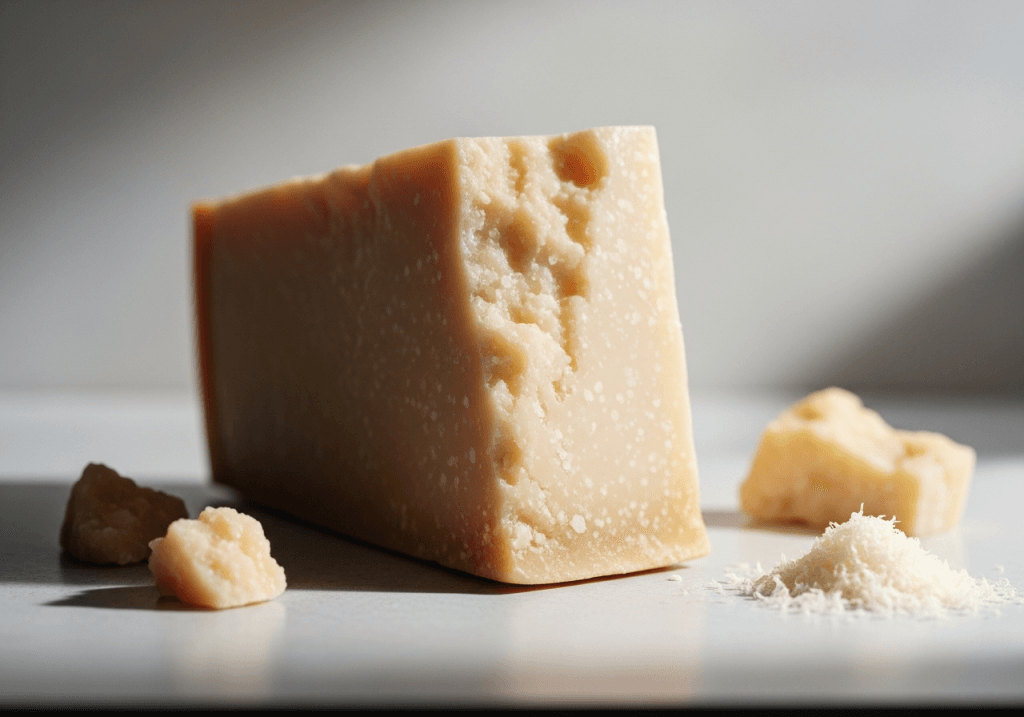
Parmesan is the hard, aged Italian cheese whose intense, savoury flavour means a little goes a long way, making it a smart way to add richness without large portions. As a concentrated dairy food it is best known for its links to bone health.
Compounds & anti-nutrients in Parmesan
Per 100 g, Parmesan is a notable dietary source of these active compounds. Tap any to see its full sources map and how to work with it.
Why parmesan is good for you
Like other cheeses, parmesan is an excellent source of calcium and high-quality protein, both important for maintaining bone and muscle. Because it is aged for many months, its protein is partly broken down, which is why it tastes so savoury and why many people who struggle with fresh milk find it easy to digest. It also supplies vitamin B12 and phosphorus, the latter working alongside calcium in bone structure.
Its umami punch makes it a useful seasoning: a small grating over vegetables or wholegrains can encourage you to eat more of those foods, with the cheese earning its place through flavour rather than volume.
Parmesan nutrition at a glance
The full breakdown is in the label above, but the key context is that parmesan is calorie-dense and high in both saturated fat and salt. It is genuinely high in sodium, so it is best treated as a flavour accent rather than a main ingredient, and a light hand keeps your overall salt intake sensible. Used in modest amounts, its richness and calcium make it a worthwhile addition.
How to choose, store and use parmesan
Buy it in a block and grate it fresh where you can, as pre-grated versions lose aroma quickly and sometimes contain anti-caking agents. Genuine Parmigiano-Reggiano carries its name stamped into the rind. Wrap the block in baking paper, then loosely in foil, and keep it in the fridge; don’t throw away the rind, as it adds depth to soups. Parmesan finishes dishes built around tomato and pairs beautifully with wholewheat pasta.
Common questions
Is parmesan healthier than other cheese? Its strong flavour means you tend to use less, and it is rich in calcium and protein. It is still high in salt and saturated fat, though, so the benefit comes from using small amounts rather than from the cheese being inherently light.
Can people who are lactose intolerant eat parmesan? Long ageing leaves hard cheeses such as parmesan with very little lactose, so many people who are lactose intolerant tolerate small servings comfortably. Individual sensitivity varies, so it is worth testing a little.
Explore by health goal
Parmesan is one of many foods that support these goals: