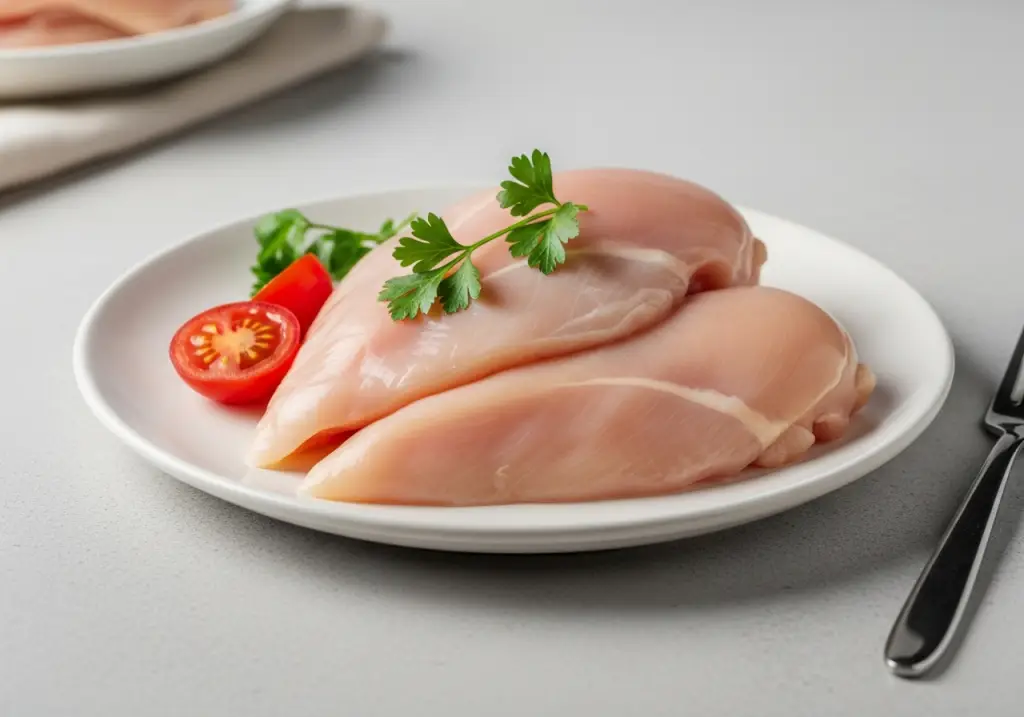
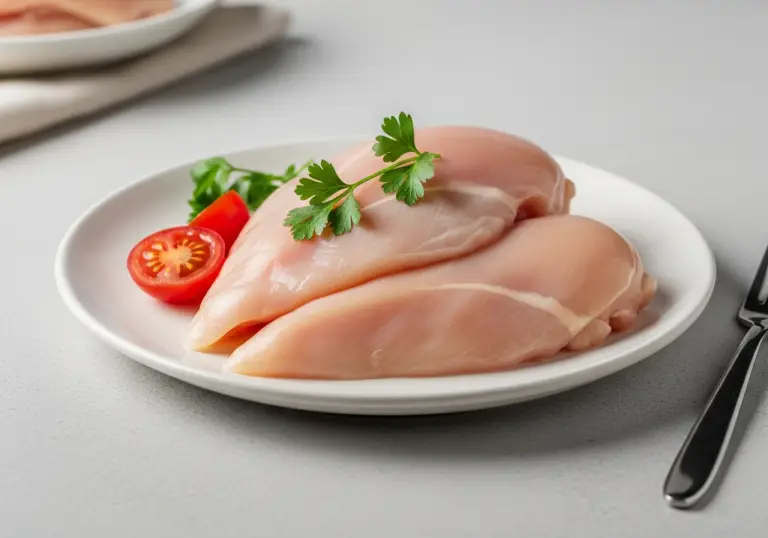
Chicken breast is the benchmark lean protein: 100 g of cooked skinless breast delivers roughly 31 g of complete protein with barely any fat, plus a full day’s selenium and most of your vitamin B6. That efficiency is why chicken breast is the default choice for anyone targeting energy and performance or weight management.
Compounds & anti-nutrients in Chicken Breast
Per 100 g, Chicken Breast is a notable dietary source of these active compounds. Tap any to see its full sources map and how to work with it.
Why chicken breast is good for you
Chicken breast supplies complete protein with all nine essential amino acids in ratios well suited to human tissue repair and muscle maintenance. It is also rich in niacin, a B vitamin involved in energy metabolism, and selenium, an antioxidant cofactor that supports thyroid and immune function. Because it is so lean, it sits well in almost any dietary pattern.
Chicken breast nutrition at a glance
The label shows the numbers, but the practical message is protein-per-calorie efficiency: chicken breast gives you more usable protein per 100 kcal than most other everyday foods. The main quality variable is cooking method — dry heat or light oil preserves the leanness; breading and deep-frying add calories and fat.
How to buy, store and cook chicken breast
Choose firm, pink meat with no grey spots or off smell. Store in the coldest part of the fridge and cook within a couple of days, or freeze for longer storage. Quick, hot methods — grill, pan-sear, bake — work best because long, slow cooking dries out lean muscle. Brining for 30 minutes helps retain moisture. Chicken pairs naturally with broccoli, brown rice and sweet potato.
Common questions
Is chicken breast healthy? Yes, as part of a varied diet. It is lean, complete protein with useful B vitamins and selenium. The health question is usually about overall pattern — how often you eat processed meat, how much fibre you pair it with, and whether you overcook it.
Does grilling chicken produce harmful compounds? Charred surfaces can contain heterocyclic amines and advanced glycation end-products, but the evidence of harm comes mainly from very high intakes of very well-done meat. Avoiding charring and using marinades with rosemary, garlic or citrus reduces their formation without affecting flavour much.
Explore by health goal
Chicken Breast is one of many foods that support these goals: