Chicken breast and pork tenderloin are both the leanest cuts of their respective meats, reached for constantly by anyone tracking protein — and while they’re closer nutritionally than most meat comparisons, a couple of real differences stand out.
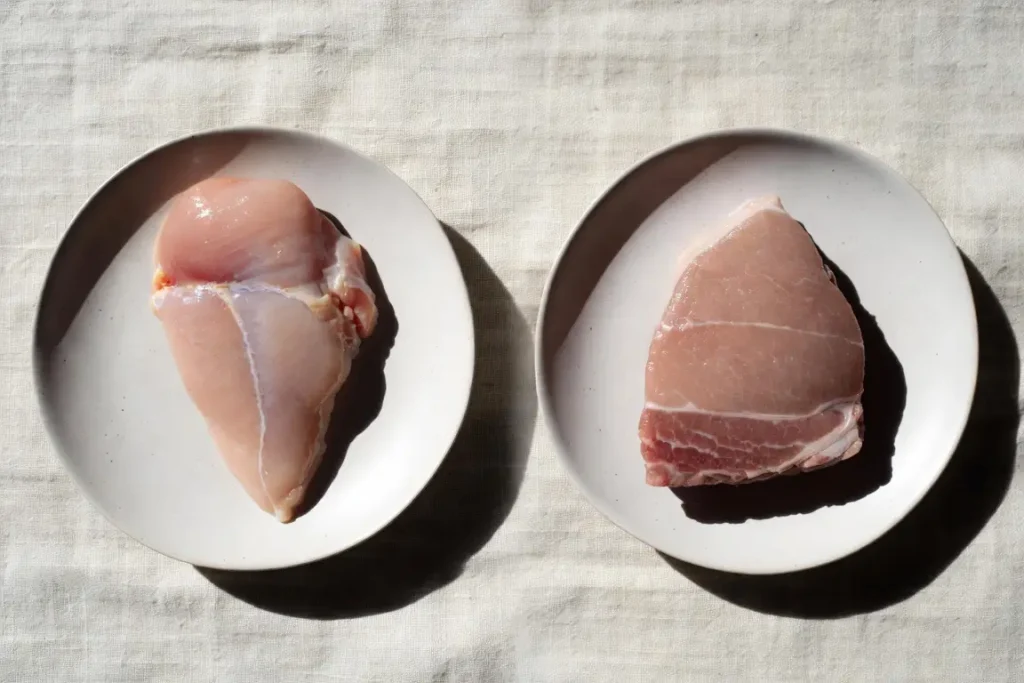
| Nutrient | Chicken Breast | Pork Tenderloin |
|---|---|---|
| Calories | 165 kcal | 119 kcal |
| Protein | 31 g ✓ | 21.6 g |
| Total Carbohydrate | 0 g | 0 g |
| Dietary Fiber | 0 g | 0 g |
| Total Sugars | 0 g | 0 g |
| Total Fat | 3.6 g | 3.9 g |
| Saturated Fat | 0.7 g ✓ | 0.87 g |
| Sodium | 74 mg | 41.4 mg ✓ |
Notable compounds in each
When to choose each
Reach for chicken breast when protein density is the priority — it carries noticeably more per 100 g than pork tenderloin. Reach for pork tenderloin when sodium is a consideration, or for its slightly richer flavour and tenderness straight from the cut, without needing the trimming chicken breast sometimes does. Both are excellent, genuinely lean choices — closer to each other than either is to most other cuts of meat.
Common questions
Is pork tenderloin as lean as chicken breast? Very nearly – it’s one of the leanest pork cuts available, which is why it’s often recommended as a pork alternative to chicken breast for anyone watching fat intake.
Can I cook them the same way? Broadly yes – both suit roasting, grilling and pan-searing, though pork tenderloin is a more uniform cylindrical cut and cooks a little more evenly than a chicken breast’s uneven thickness.