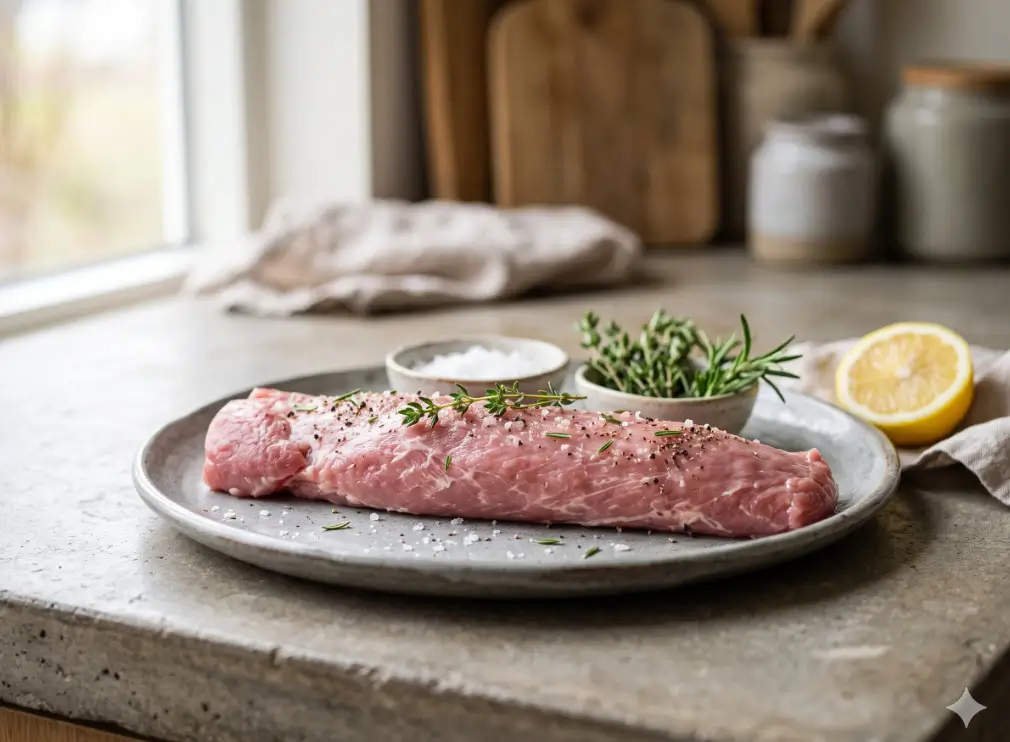
Pork tenderloin is the leanest cut on the pig and a genuinely lean red-meat option, comparable to skinless chicken once trimmed. That makes it a high-protein choice without the fat load people often associate with pork, and a useful one for anyone focused on energy and performance or weight management.
Compounds & anti-nutrients in Pork Tenderloin
Per 100 g, Pork Tenderloin is a notable dietary source of these active compounds. Tap any to see its full sources map and how to work with it.
Why pork tenderloin is good for you
Tenderloin delivers a generous serving of complete protein, supplying all the essential amino acids the body needs to build and repair muscle. It is also one of the richest everyday sources of thiamine (vitamin B1), which the body uses to turn food into usable energy, and it carries vitamin B6, plus the minerals zinc and selenium that support immune function and antioxidant defences. The zinc and B12 in pork are also well absorbed, since the body takes up these nutrients readily from meat.
Pork tenderloin nutrition at a glance
The full breakdown is in the label above, and the headline is a lot of protein for relatively little fat, much less than fattier pork cuts or processed pork products. It is the fresh cut that earns its lean reputation: bacon, sausages and gammon are a different proposition, higher in salt and saturated fat, and best kept occasional. Trimming any visible fat keeps tenderloin firmly in the lean camp.
How to choose, store and cook pork tenderloin
Look for firm, pinkish-red meat with a little marbling and no grey patches or excess liquid in the pack. Because it is so lean, tenderloin dries out if overcooked, so a hot, quick sear followed by a short roast and a few minutes’ rest keeps it juicy; modern guidance allows pork to stay slightly pink. It pairs naturally with apple sauce, or roast it alongside sweet potato and a handful of garlic.
Common questions
Is pork tenderloin healthy? It is one of the leanest cuts of pork, high in protein and rich in B vitamins, zinc and selenium, which makes it a nutritious choice. Keeping portions sensible and cooking methods simple keeps it that way.
Does pork have to be cooked all the way through? Whole cuts like tenderloin no longer need to be cooked until grey; current guidance considers them safe when cooked to a safe internal temperature, which can leave them a touch pink and far more tender.
Explore by health goal
Pork Tenderloin is one of many foods that support these goals: