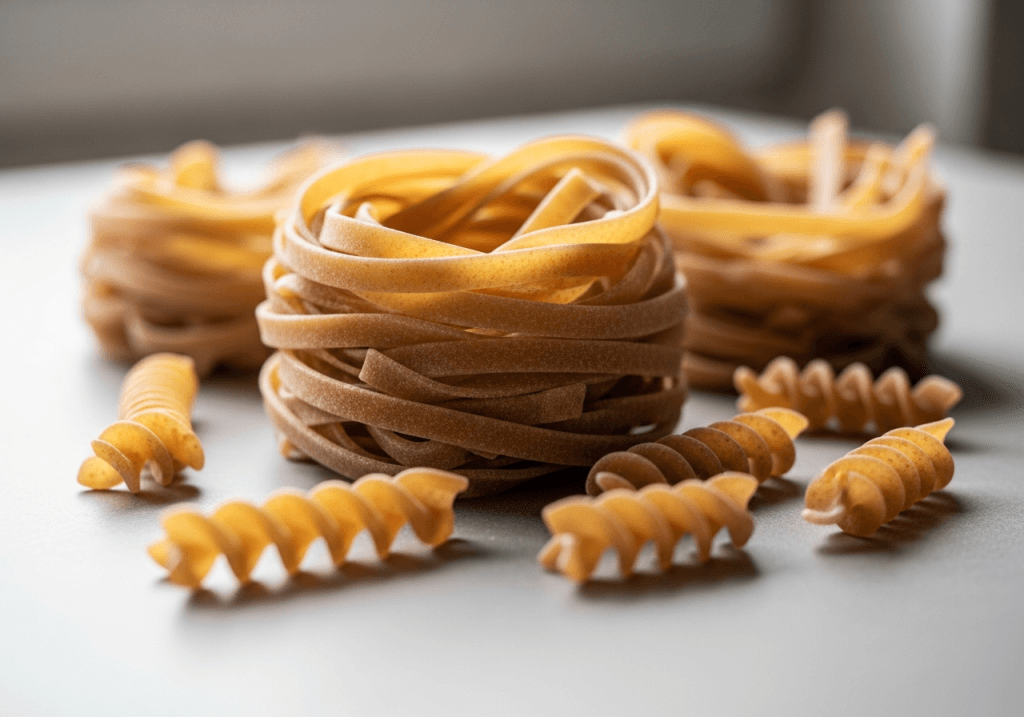
Wholewheat pasta is simply pasta made from the entire wheat kernel rather than the stripped-down white flour, and that one difference changes its character: keeping the bran and germ means keeping much of the grain’s fibre, minerals and protein. That extra substance is why wholegrain pasta turns up in research on gut health, heart health and steady energy.
Compounds & anti-nutrients in Wholewheat Pasta
Per 100 g, Wholewheat Pasta is a notable dietary source of these active compounds. Tap any to see its full sources map and how to work with it.
Why wholewheat pasta is good for you
The main advantage of wholewheat pasta is fibre, which supports digestion, feeds beneficial gut bacteria and helps you feel full for longer. Holding on to the bran and germ also means more magnesium, manganese and B vitamins, the nutrients involved in turning food into usable energy, along with more plant protein than refined pasta. Its fibre and intact grain structure also slow digestion, so the energy it provides arrives more gradually rather than as a sharp spike.
For the most balanced plate, the classic Mediterranean approach pairs it with vegetables, pulses and a drizzle of good olive oil rather than heavy, creamy sauces.
Wholewheat pasta nutrition at a glance
The full breakdown is in the label above. In short, wholewheat pasta is a carbohydrate-rich staple that delivers noticeably more fibre and minerals than its white counterpart while staying naturally low in fat and sodium. It is still an energy-dense food, so portion size and what you serve with it matter as much as the pasta itself.
How to choose, store and cook wholewheat pasta
Check the ingredients list for wholewheat or wholemeal flour as the first item, since some “brown” pastas are only partly wholegrain. Stored dry in a sealed packet, it keeps for months. The key to cooking it well is to stop at al dente, with a slight bite, which both improves the texture and keeps the rise in blood sugar gentler than soft, overcooked pasta. It pairs naturally with a tomato and lentil ragu or with garlicky greens and olive oil.
Common questions
Is wholewheat pasta better than white pasta? Nutritionally it usually is: keeping the whole grain means more fibre, minerals and protein, and a gentler effect on blood sugar. White pasta is not unhealthy, but wholewheat is the more nourishing everyday choice.
Is wholewheat pasta good for weight loss? Its extra fibre and protein make it more filling than refined pasta, which can help with portion control, but it is still energy-dense, so the serving size and sauce remain the main factors.
Explore by health goal
Wholewheat Pasta is one of many foods that support these goals: