Calorie density is simply how many calories a food carries per gram. It is one of the few nutrition numbers that changes behaviour on its own, because it decides how much food you get for a given number of calories — and people tend to eat a fairly consistent weight of food rather than a consistent number of calories.
Across the 111 foods measured here the range is enormous: Cucumber at 16 kcal per 100 g against Extra Virgin Olive Oil at 884 — a factor of 56. Same weight of food, 56 times the energy.
Two things set it: water and fat
Water has no calories and takes up space, so the more water a food holds the lower its density. Cucumber is roughly 95% water, which is the entire reason it sits at the bottom of the range. Fat does the opposite: about 9 kcal per gram against 4 for protein and carbohydrate, and oils contain no water at all, which is why they set the ceiling.
Everything else follows from those two. Cooking that adds water lowers density; drying raises it. This is why dried fruit measures three to four times its fresh equivalent while being the same fruit, and why a cooked grain is far less dense than the dry weight on the packet.
The full range, banded
| Band | Per 100 g | Foods | Examples | What sits here |
|---|---|---|---|---|
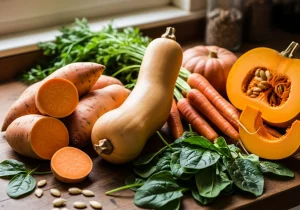
| Very low | 0–50 kcal | 35 | Cucumber, Lemon, Carrot, Butternut Squash | Non-starchy vegetables, berries, citrus and melon. Mostly water by weight. |
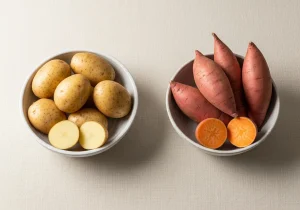
| Low | 50–150 kcal | 36 | Apple, Shrimp, Mussels, Tofu | The rest of the fruit, potatoes and peas, and nearly all lean fish, poultry, eggs and low-fat dairy. |
| Moderate | 150–300 kcal | 9 | Ground Turkey, Tempeh, Mackerel, Mozzarella | Oily fish, fattier cuts, avocado, bread and softer cheese. |
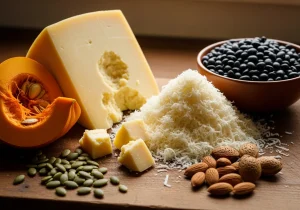
| High | 300–500 kcal | 17 | Kidney Beans, Coconut, Couscous, Cheddar Cheese | Dry grains and legumes plus hard cheese — dense because the water is gone, not because they are fatty. |
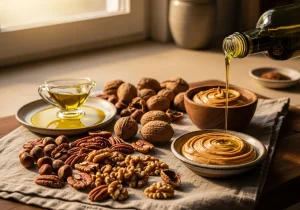
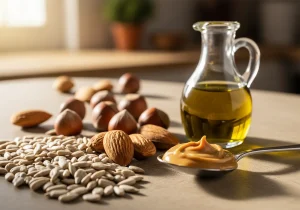
| Very high | 500 kcal and up | 14 | Chia Seeds, Sesame Seeds, Peanut Butter, Extra Virgin Olive Oil | Nuts, seeds, dark chocolate and oil. Fat-dominated, almost no water. |
The distribution is worth noticing: 71 of these 111 foods fall below 150 kcal per 100 g and 31 sit above 300, with only 9 in between. Whole foods cluster at the two ends because water and fat pull in opposite directions and few foods are moderate in both. Most of what occupies the middle of the range in a normal diet is cooked, mixed or manufactured — a composed meal rather than an ingredient.
How to use it
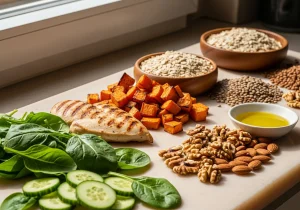
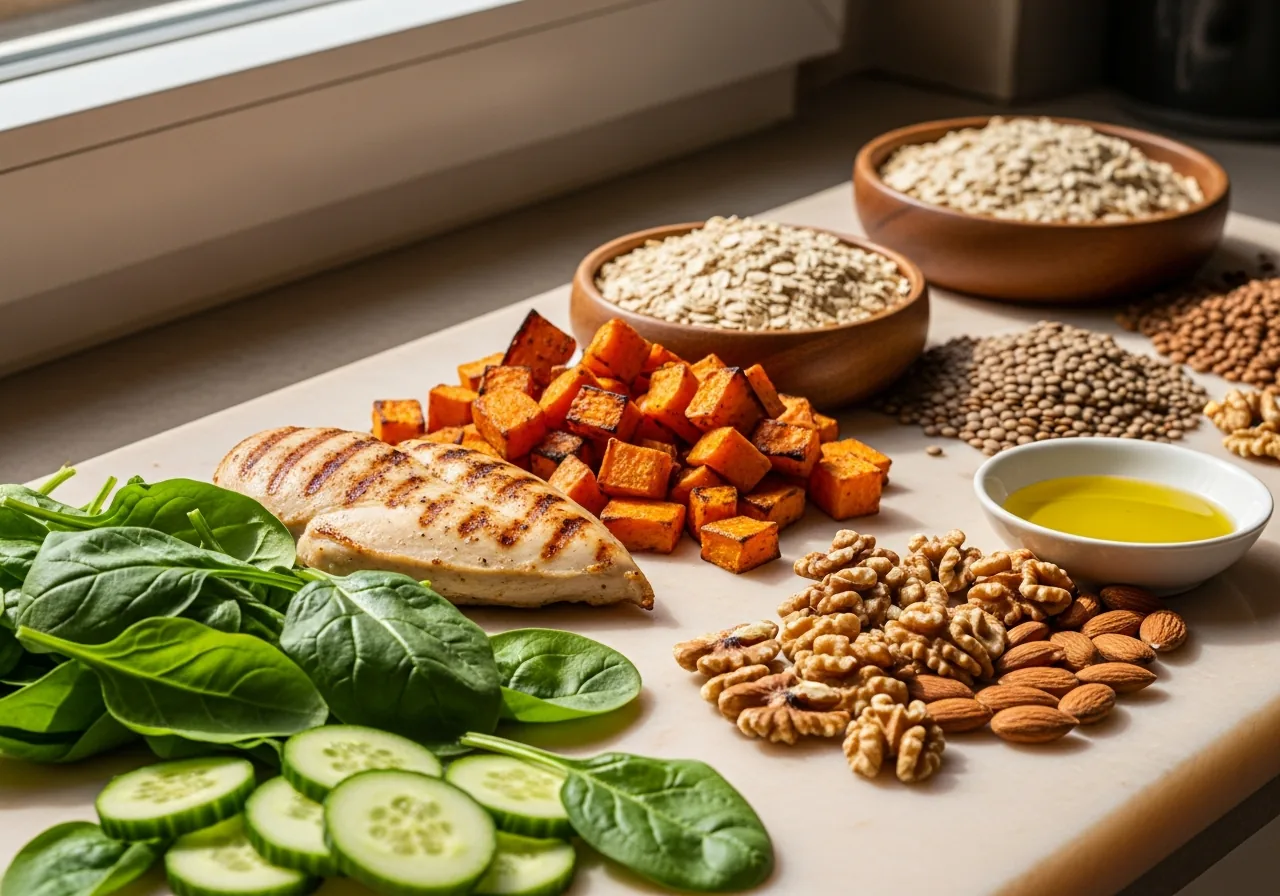
The practical move is not to eat only low-density food — that way lies a diet of cucumber and not much else. It is to build meals where the bulk comes from the low bands and the flavour and staying power come from the higher ones. Vegetables and lean protein for volume, then oil, nuts, cheese or avocado in measured amounts for satisfaction. You end up with a large plate and a moderate calorie count, and no sense of restriction.
It also explains why some foods are unexpectedly easy to overeat. A 30 g handful of nuts and a 300 g bowl of strawberries carry similar calories. Neither is wrong; they just do very different jobs, and only one of them fills a bowl.
Protein deserves a mention here because it does both — high protein foods tend to be satiating well beyond what their density predicts. See high-protein, low-calorie foods for the overlap.
Common questions
Is calorie density the same as calories? No, and confusing the two is the usual mistake. Density is calories per gram; the total depends on how much you eat. A large portion of a low-density food can carry more calories than a small portion of a dense one.
Does calorie density affect weight loss? It affects how full a given number of calories leaves you, which is what makes an intake sustainable rather than what makes it work. Two 500 kcal meals at different densities are not equally satisfying, so density helps even if you are counting calories anyway.
Do liquid calories count the same as food? They count identically on paper and behave differently in practice: calories in drink form tend to register poorly against appetite, so they add to the day’s total without displacing much. Drinks are excluded from the tables here for a related reason — a liquid at 1 kcal per 100 g tops any low-density ranking while telling you nothing about food.