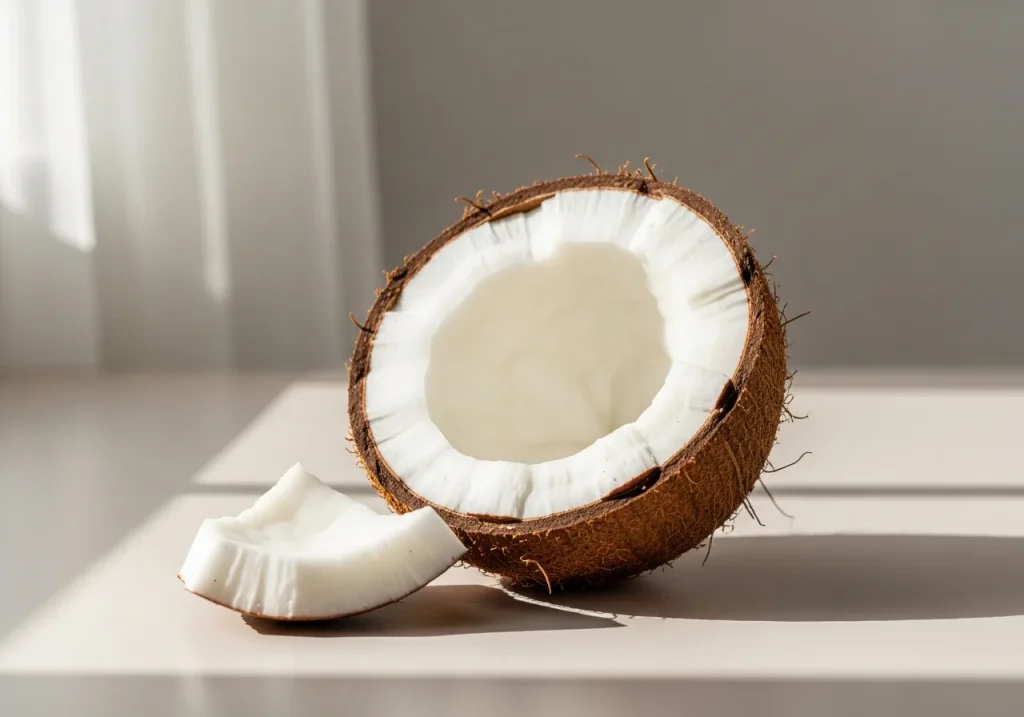
Coconut is one of the most divisive foods in nutrition. The meat, water and oil each have distinct profiles: coconut meat is high in fibre and polyphenols; coconut water is a natural electrolyte drink; coconut oil is mostly saturated fat, but unusually rich in medium-chain triglycerides (MCTs). That complexity is why coconut appears in research on energy and performance and heart health.
Compounds & anti-nutrients in Coconut
Per 100 g, Coconut is a notable dietary source of these active compounds. Tap any to see its full sources map and how to work with it.
Why coconut is good for you
Coconut meat supplies useful fibre, manganese, copper and polyphenols. Coconut water is a natural source of potassium, sodium and magnesium, which is why it is used as an oral rehydration fluid in some settings. Coconut oil’s MCTs — especially lauric acid — are absorbed directly into the portal vein and oxidised quickly for energy, which is why they are popular in ketogenic and sports nutrition. The saturated fat caveat remains: coconut oil raises LDL cholesterol, though it also raises HDL, and the net cardiovascular effect is still debated.
Coconut nutrition at a glance
The label shows the numbers, but the practical message is that the whole coconut is more useful than the isolated oil. Use coconut meat for fibre and flavour; use coconut oil for cooking stability and MCT energy; use coconut water for hydration, not as a magic sports drink.
How to buy and use coconut
Fresh young coconuts have the most water and soft meat; mature coconuts have harder meat and less water. Shredded unsweetened coconut is useful for baking and smoothies. Coconut oil is stable at high heat and works well for stir-frying. Coconut water without added sugar is the best hydration choice. Coconut pairs naturally with chocolate, oats, curry and salmon.
Common questions
Is coconut oil healthy? It is better than some fats for cooking stability and MCT energy, but it is still mostly saturated fat. Use it in moderation, not as a replacement for unsaturated oils.
Is coconut water better than sports drinks? For moderate activity, yes — it is naturally low in sugar and contains useful electrolytes. For intense endurance exercise, sports drinks’ higher sugar content may be preferable.
Explore by health goal
Coconut is one of many foods that support these goals: