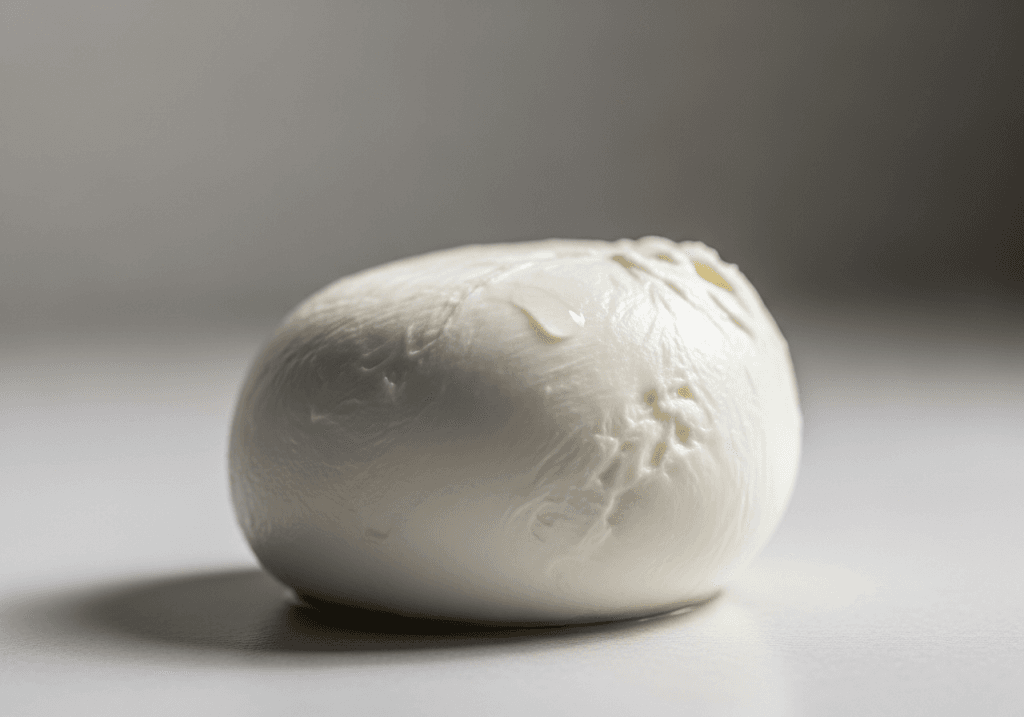
Mozzarella is the soft, mild, milky cheese that melts into long strings on a pizza and tears into creamy pieces over a salad. Made by stretching fresh curds, it is gentler in flavour and lower in salt than most aged cheeses, while still delivering the protein and calcium that make dairy worth eating — qualities that connect it to bone health and strength and recovery.
Compounds & anti-nutrients in Mozzarella
Per 100 g, Mozzarella is a notable dietary source of these active compounds. Tap any to see its full sources map and how to work with it.
Why mozzarella is good for you
Mozzarella is a good source of complete protein, supplying all the building blocks your body uses to maintain muscle. It is rich in calcium and phosphorus, the two minerals that form the bulk of bone, and it provides vitamin B12, which supports energy metabolism and the nervous system. Because it is a fresh cheese rather than an aged one, it carries noticeably less salt than harder varieties — a useful point if you are mindful of sodium.
Fresh mozzarella does contain some lactose, though less than milk, as much of it drains away with the whey during making — so many people who are mildly lactose-sensitive tolerate it better than a glass of milk.
Mozzarella nutrition at a glance
The full breakdown is in the nutrition label above. The headlines are its protein and calcium; the caveat is that, like most cheese, mozzarella is a source of saturated fat, so it is best enjoyed in sensible portions rather than by the handful. Lower-moisture, pre-grated ‘pizza’ mozzarella tends to be saltier and firmer than the fresh balls sold in brine, which are creamier and milder.
How to choose, store and use mozzarella
Fresh mozzarella should sit in its own milky liquid and smell clean and faintly sweet; use it within a few days of opening and keep it submerged in the fridge so it does not dry out. Buffalo mozzarella is richer and softer than the cow’s-milk version. It shines raw — torn over ripe tomatoes with basil and olive oil — and melts beautifully when baked. For other options, browse our dairy and eggs.
Common questions
Is mozzarella a healthy cheese? It is one of the better everyday choices. Mozzarella is high in protein and calcium and lower in salt than most aged cheeses. As with any cheese, keep an eye on portion size because of its saturated fat.
Can you eat mozzarella if you are lactose intolerant? Many mildly sensitive people can. Mozzarella contains less lactose than milk because much of it drains off during cheesemaking, but tolerance varies, so start with a small amount.
Explore by health goal
Mozzarella is one of many foods that support these goals: