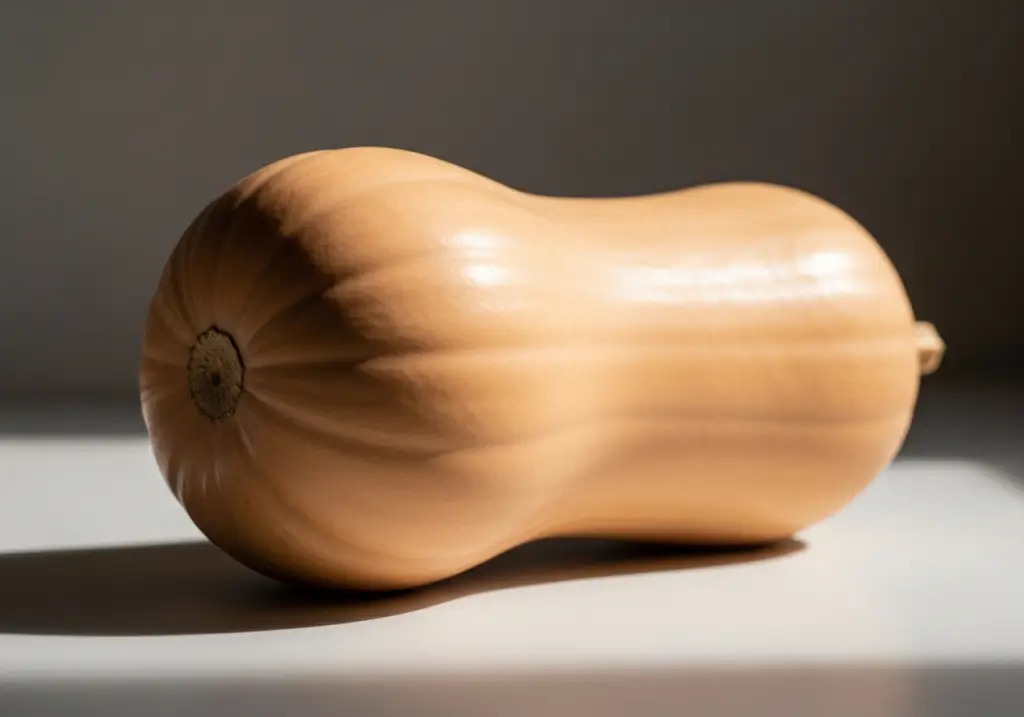
Butternut squash is the bell-shaped winter squash whose orange flesh delivers roughly 8.8 g of fibre, vitamin A precursors, vitamin C and potassium per 100 g — a nutrient density that rivals sweet potatoes. That combination is why butternut squash appears in research on eye health and heart health.
Compounds & anti-nutrients in Butternut Squash
Per 100 g, Butternut Squash is a notable dietary source of these active compounds. Tap any to see its full sources map and how to work with it.
Why butternut squash is good for you
Butternut squash’s beta-carotene content is high, and it supports vision, immune function and skin repair. The fibre content is also high for a vegetable — roughly 8.8 g per 100 g — and partly soluble, which lowers LDL cholesterol. The potassium content matters for blood pressure regulation. The caveat is that butternut squash is sweet and starchy, with a higher glycaemic index than most vegetables, so portion control matters for blood sugar.
Butternut squash nutrition at a glance
The label shows the numbers, but the practical message is that butternut squash is a cheap, nutrient-dense winter vegetable with a sweet, creamy texture that works as a side dish, soup base or pasta replacement.
How to buy and use butternut squash
Choose firm, heavy butternut squash with no soft spots or cracks. The skin should be matte beige, not shiny. Store in a cool, dry place for months. Peel, seed and cube the flesh for roasting, soups and stews. Roast cubes with olive oil and sage for a side dish, blend into soup with coconut and ginger, or spiralise into “noodles” for a low-carb pasta substitute. Butternut squash pairs well with cinnamon, sage and ricotta.
Common questions
Is butternut squash good for weight loss? It is more calorie-dense than most vegetables, but the fibre promotes satiety. Eat it in place of refined carbohydrates, not as well as them.
Can I eat butternut squash skin? No — the skin is tough and inedible. Peel it before cooking.
Explore by health goal
Butternut Squash is one of many foods that support these goals: