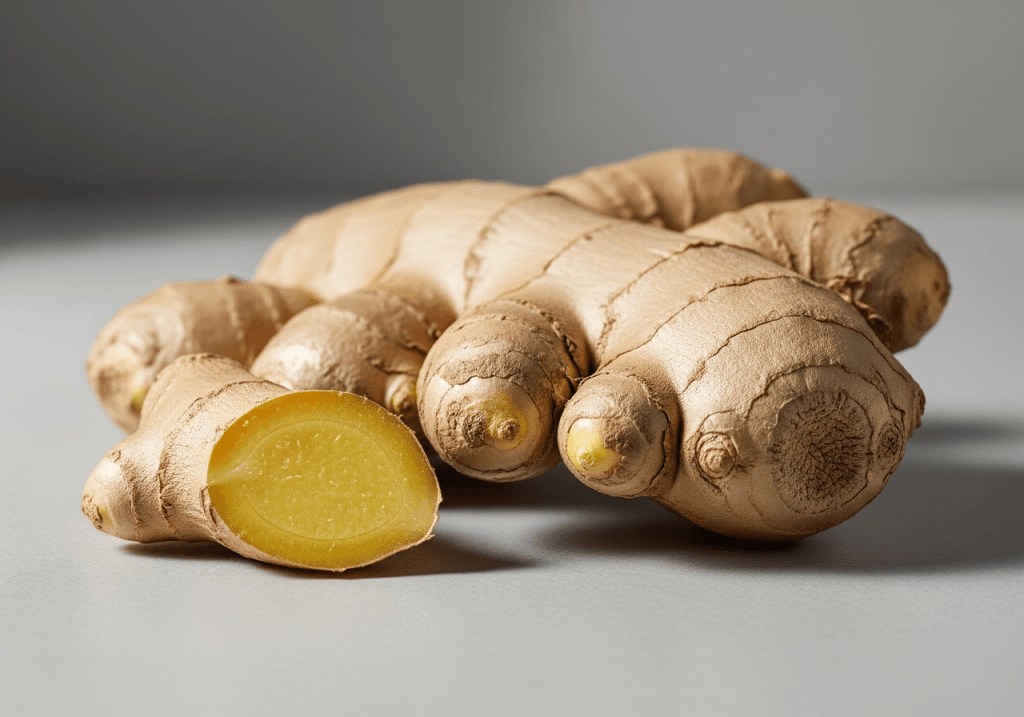
Ginger is the rhizome that has been used in traditional medicine for millennia, and its active compounds — gingerols, shogaols and paradols — are now among the best-studied plant anti-inflammatory agents. That pharmacological profile is why ginger appears in research on anti-inflammatory eating, nausea relief and immune support.
Compounds & anti-nutrients in Ginger
Per 100 g, Ginger is a notable dietary source of these active compounds. Tap any to see its full sources map and how to work with it.
Why ginger is good for you
Ginger’s anti-inflammatory effect is mediated by COX-2 inhibition, similar to non-steroidal anti-inflammatory drugs but much weaker. The nausea evidence is stronger: ginger consistently reduces nausea in pregnancy, chemotherapy and post-surgery settings in meta-analyses. The immune evidence is more preliminary, but ginger has antimicrobial properties in vitro. Nutritionally, ginger supplies manganese and vitamin B6 at useful levels.
Ginger nutrition at a glance
The label shows the numbers, but the practical message is that ginger is a low-toxicity, whole-food anti-inflammatory and anti-nausea agent. A couple of centimetres of fresh root, or a quarter-teaspoon of powder, is enough for the evidence-based benefits.
How to buy and use ginger
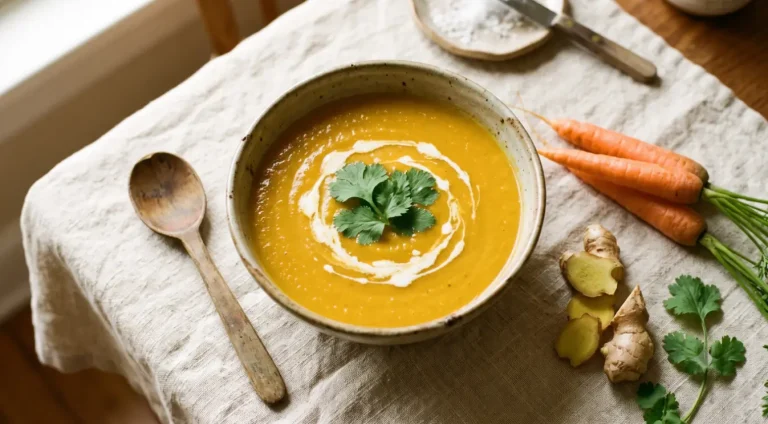
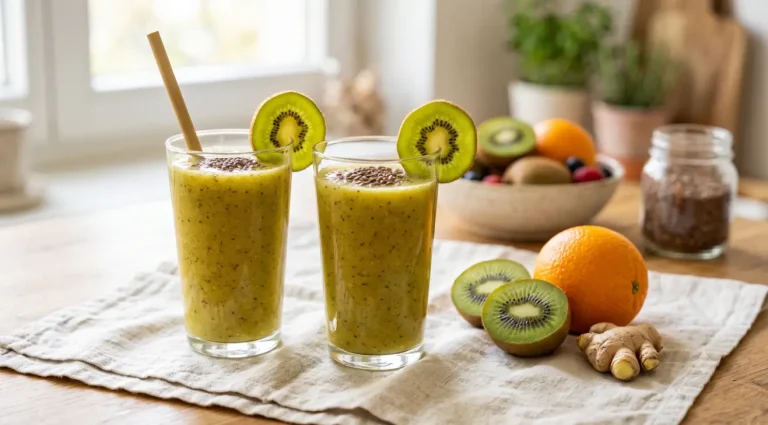
Choose firm, heavy ginger with smooth, unblemished skin. Store in the fridge for up to a couple of weeks, or freeze for longer storage. Peel and grate fresh ginger into curries, smoothies, stir-fries with garlic and turmeric, or steep in hot water with lemon for a tea. Dried ginger powder is convenient but less potent. Ginger pairs well with salmon, coconut and honey.
Common questions
Does ginger help with nausea? Yes — multiple meta-analyses show ginger reduces nausea in pregnancy, chemotherapy and post-operative settings. It is a safe first-line remedy for morning sickness.
Can ginger reduce inflammation? Modestly. The COX-2 inhibition is weaker than pharmaceutical NSAIDs, but ginger has a much lower side-effect profile. It is a useful dietary adjunct, not a replacement for medication.
Explore by health goal
Ginger is one of many foods that support these goals: