The table below is not comparing like with like, and it matters. Our ginger record is the fresh root at 80 calories per 100 g; our turmeric record is dried ground powder at 312. Almost all of that gap is water, not nutrition — and the same applies to turmeric’s enormous-looking fibre (22.7 g) and potassium (2,080 mg) figures.
More importantly, nobody eats 100 g of either. A teaspoon of ground turmeric is about 3 g, so the real contribution is roughly a thirtieth of everything shown. Neither of these is a food you get nutrients from in any meaningful quantity — they are flavourings, and the interest in them is about their active compounds.
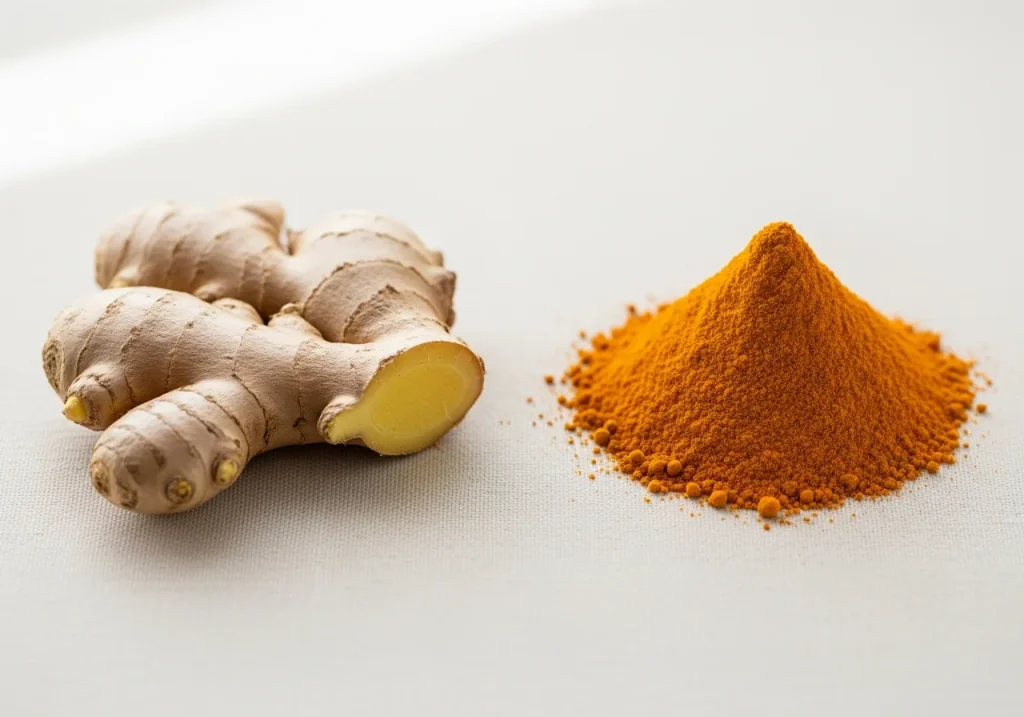
| Nutrient | Ginger | Turmeric |
|---|---|---|
| Calories | 80 kcal | 312 kcal |
| Protein | 1.82 g | 9.68 g ✓ |
| Total Carbohydrate | 17.8 g | 67.1 g |
| Dietary Fiber | 2 g | 22.7 g ✓ |
| Total Sugars | 1.7 g ✓ | 3.21 g |
| Total Fat | 0.75 g | 3.25 g |
| Saturated Fat | 0.2 g ✓ | 1.84 g |
| Sodium | 13 mg ✓ | 27 mg |
Notable compounds in each
When to choose each
Reach for ginger for its warmth and bite, fresh or dried — its active compound is gingerol, best known for the evidence around nausea. Reach for turmeric for colour and earthiness, and for curcumin, which is what nearly all the research attention is about. Curcumin is poorly absorbed on its own, which is why turmeric is traditionally cooked with fat and black pepper.
Ginger vs turmeric: why the per-100g figures mislead
Comparing 100 g of a fresh root with 100 g of a dried powder is comparing a food that is mostly water with one that has had the water removed. Dried ginger would read far closer to turmeric’s numbers.
Read the table as a compositional description of each spice, not as a guide to what either contributes to your diet. On a realistic teaspoon, both deliver negligible calories, fibre and potassium — and that is fine, because that is not why anyone uses them.
Common questions
Which is better, ginger or turmeric? They do different jobs. Ginger is the one with the strongest evidence for nausea; turmeric is the one studied for its curcumin content. Neither contributes meaningful nutrition at the amounts people actually use, so pick on flavour and on which effect you are interested in.
Can you take ginger and turmeric together? Yes, and they are commonly combined in cooking and in drinks. There is no interaction between them to worry about at culinary amounts. Concentrated supplements are a different matter and worth raising with a pharmacist if you take medication.
Is turmeric high in fibre and potassium? The per-100 g figures say so — 22.7 g of fibre and 2,080 mg of potassium — but a teaspoon is about 3 g, so a realistic serving delivers well under a gram of fibre. Treat those numbers as a description of dried powder, not as a nutritional contribution.
Why is black pepper added to turmeric? Piperine, the compound that makes pepper hot, substantially increases how much curcumin is absorbed. Curcumin on its own is poorly taken up by the body, which is why traditional preparations pair turmeric with pepper and with fat.