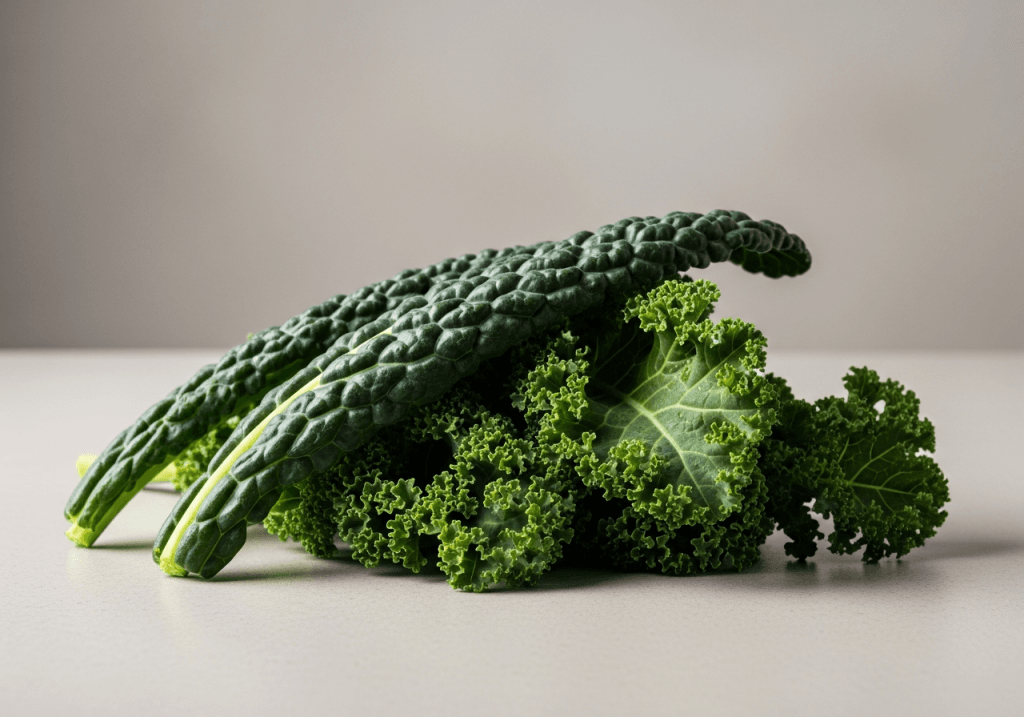
Kale is the poster child of leafy greens for good reason: a single serving comfortably exceeds a full day’s vitamin K and delivers lutein and zeaxanthin for long-term eye health. That dense spread of vitamins and plant compounds is why kale shows up so often in research on bone health, heart health and inflammation.
Compounds & anti-nutrients in Kale
Per 100 g, Kale is a notable dietary source of these active compounds. Tap any to see its full sources map and how to work with it.
Why kale is good for you
Kale’s standout nutrient is vitamin K, which the body needs to direct calcium into bone and keep blood vessels healthy. Its deep-green leaves are also rich in beta-carotene, which converts to vitamin A for vision and immune function, and in vitamin C. As a brassica, kale supplies glucosinolates — the same family that gives broccoli its sulforaphane — studied for their anti-inflammatory effects.
It carries lutein and zeaxanthin too, carotenoids that gather in the retina. A little fat alongside, such as a drizzle of olive oil, helps you absorb these fat-soluble compounds.
Kale nutrition at a glance
The full picture is in the label above. The headline is extraordinary nutrient density for almost no calories, along with a respectable amount of fibre. One thing worth knowing: kale contains vitamin K in amounts that matter to anyone taking blood-thinning medication such as warfarin, so keeping intake steady and discussing it with a healthcare professional is sensible.
How to choose, store and cook kale
Choose firm, deeply coloured leaves and avoid any that are wilted or yellowing. Store unwashed in a breathable bag in the fridge and use within a few days. Strip the leaves from the tough central stems before cooking. Massaging raw kale with a little olive oil softens it for salads, while a quick sauté or a spell in the oven turns it into crisps. It pairs well with chickpeas in a warm bowl.
Common questions
Is kale better raw or cooked? Both work. Raw kale keeps the most vitamin C, while light cooking softens it and makes its carotenoids easier to absorb. Massaging raw leaves makes them far more pleasant to eat.
Is kale safe to eat every day? For most people, yes, as part of a varied diet. Those on blood-thinning medication should keep their vitamin K intake consistent and seek advice from a healthcare professional.
Explore by health goal
Kale is one of many foods that support these goals: