The Mediterranean diet is the most studied dietary pattern in the world, and the research keeps pointing the same way: towards a longer, healthier life. It is less a diet than the traditional way of eating around the olive-growing Mediterranean, built on plants, fish and good fats rather than rules and restriction. That foundation is why it features so heavily in research on heart health and brain health.
What is the Mediterranean diet?
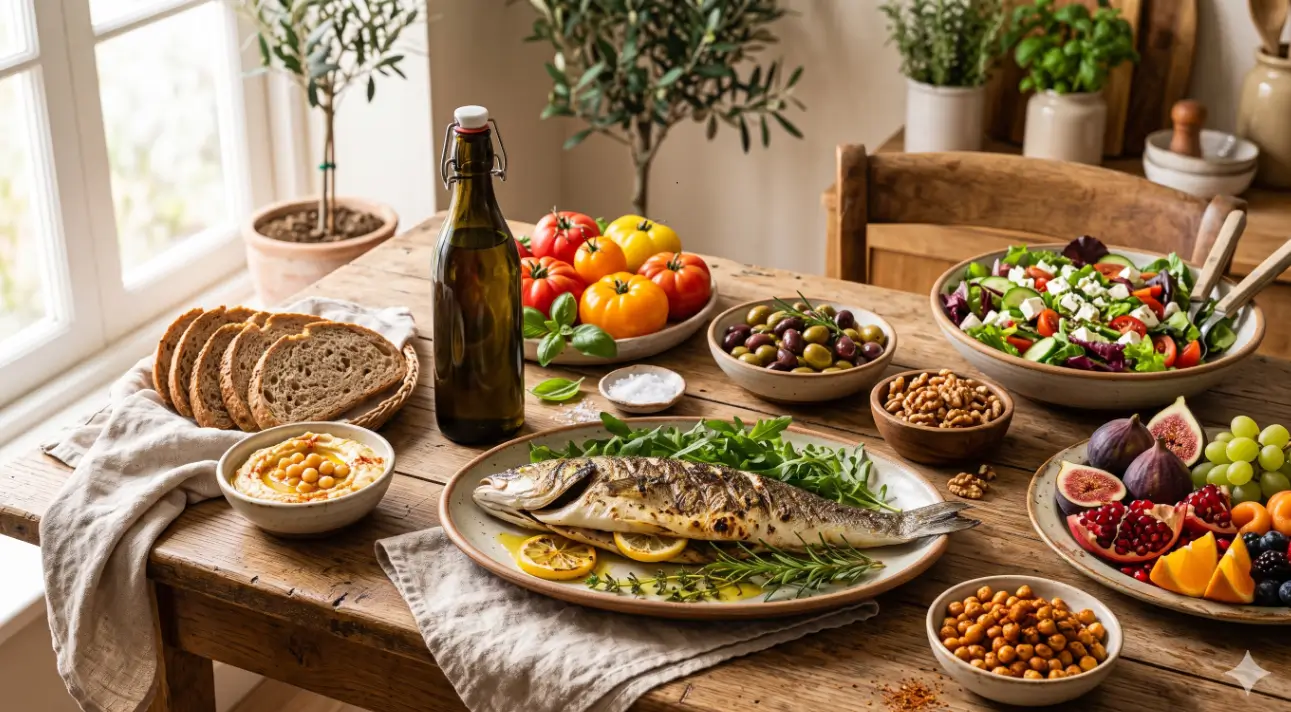
At its core the pattern is simple: vegetables, fruit, wholegrains, pulses, nuts and olive oil every day; fish and seafood a few times a week; modest amounts of dairy, eggs and poultry; and red and processed meat kept to a minimum. Meals are largely home-cooked, shared and unhurried. Rather than counting anything, you shift the balance of the plate towards plants and unsaturated fats. You can explore the wider family of patterns on our Mediterranean diet hub.
What to eat on the Mediterranean diet
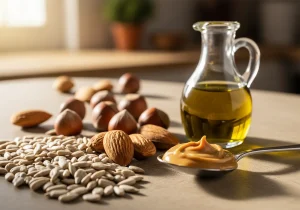
The signature fat is extra virgin olive oil, used generously in cooking and dressings. Oily fish such as salmon and sardines supply long-chain omega-3s, while pulses like lentils and chickpeas provide plant protein and fibre. Round the plate out with plenty of vegetables, fruit, wholegrains and a daily handful of walnuts or other nuts. Herbs, garlic and a little cheese or yoghurt complete the picture.
What to limit
Nothing is strictly forbidden, but the pattern naturally crowds out a few things. Processed meats, refined grains such as white bread, and foods with added sugar sit at the edges rather than the centre of the diet. Butter and other sources of saturated fat largely give way to olive oil. The aim is balance over a week, not perfection at every meal.
What the evidence says
The evidence here is unusually strong. The landmark PREDIMED trial found that a Mediterranean diet enriched with olive oil or nuts was associated with around a 30% lower rate of major cardiovascular events compared with a lower-fat control diet. Decades of observational research link the pattern to better heart health, healthier ageing and, more tentatively, slower cognitive decline. It is consistently ranked among the best overall eating patterns by expert panels.
Who it suits — and who should take care
This pattern suits almost anyone looking for a sustainable, evidence-led way to eat for heart health, longevity and general wellbeing. Because it is flexible rather than restrictive, it adapts well to families, budgets and most cultures. There are few cautions: those with a fish or nut allergy simply adapt the protein sources, and anyone on blood-thinning medication should keep their vitamin-K-rich greens reasonably steady and check with their doctor.
Common questions
Can you lose weight on the Mediterranean diet? Yes, though it was never designed as a weight-loss diet. Its emphasis on fibre-rich plants, protein and healthy fats helps with fullness, so many people eat more mindfully and lose weight without counting calories — but portion size still matters, especially with olive oil and nuts.
Is the Mediterranean diet expensive? It needn’t be. Tinned fish, dried pulses, frozen vegetables, eggs and seasonal produce keep costs down, and meat — often the priciest item on a plate — takes a back seat. If you’d like a closely related pattern, the DASH diet shares much of the same shopping list.