If you’re keeping an eye on your sodium intake — for blood pressure, fluid balance, or just general heart health — most whole foods already put you in a strong position. Below is a data-backed ranking of the foods in our database with the least sodium per 100 g, drawn from the same USDA-based figures behind every food page on this site.
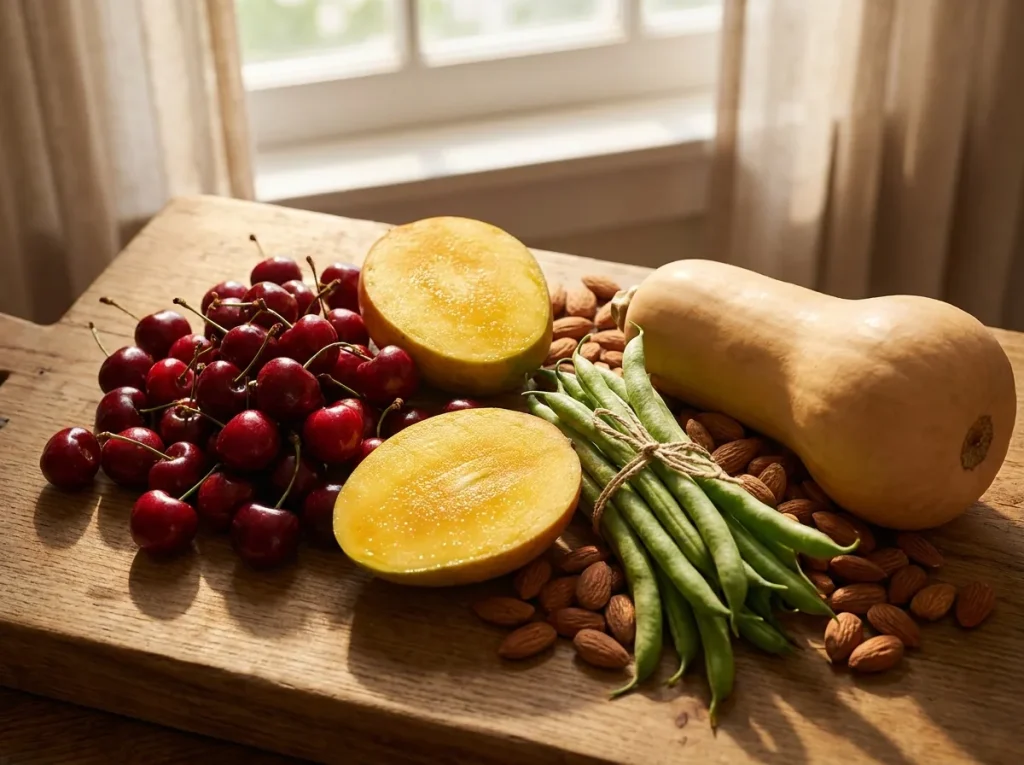
| # | Food | Sodium |
|---|---|---|
| 1 | Almonds | 0 mg |
| 2 | Blueberries | 0 mg |
| 3 | Butternut Squash | 0 mg |
| 4 | Cherries | 0 mg |
| 5 | Chia Seeds | 0 mg |
| 6 | Grapefruit | 0 mg |
| 7 | Green Beans | 0 mg |
| 8 | Hazelnuts | 0 mg |
| 9 | Lentils | 0 mg |
| 10 | Mango | 0 mg |
| 11 | Millet | 0 mg |
| 12 | Orange | 0 mg |
| 13 | Peach | 0 mg |
| 14 | Pecans | 0 mg |
| 15 | Pineapple | 0 mg |
| 16 | Pistachios | 0 mg |
| 17 | Plum | 0.0 mg |
| 18 | Pumpkin Seeds | 0 mg |
| 19 | Raspberries | 0 mg |
| 20 | Red Bell Pepper | 0 mg |
| 21 | Strawberries | 0 mg |
| 22 | Sunflower Seeds | 0 mg |
| 23 | Sweet Potato | 0 mg |
| 24 | Walnuts | 0 mg |
| 25 | Apple | 1 mg |
You’ll notice a cluster of everyday staples tie at the top of the table, rounding to virtually no sodium at all — that’s not a data gap. Whole fruits, vegetables, grains, nuts and legumes like lentils genuinely contain next to none in their natural state. Sodium mostly enters a diet through processing, curing and added salt rather than the food itself; compare the table above with a naturally salty food like Parmesan and the gap is stark.
Why sodium matters
Sodium is essential in small amounts, but many everyday diets run well above typical recommendations, which is linked to heart health and blood pressure over time. Building meals around naturally low-sodium whole foods, then salting to taste yourself, gives you far more control than relying on pre-seasoned or processed ingredients.
Common questions
Does cooking change a food’s natural sodium content? Not much — the sodium naturally present in a whole food stays fairly stable through cooking. What changes everything is what you add: salt, stock, cured ingredients and sauces can turn a naturally low-sodium food into a high-sodium dish.
Is a low-sodium diet right for everyone? Most people benefit from moderating sodium, particularly for blood pressure, but needs vary — heavy sweating from exercise or certain medical conditions can change the picture. Speak to a healthcare professional before making major changes if you have a specific health condition.