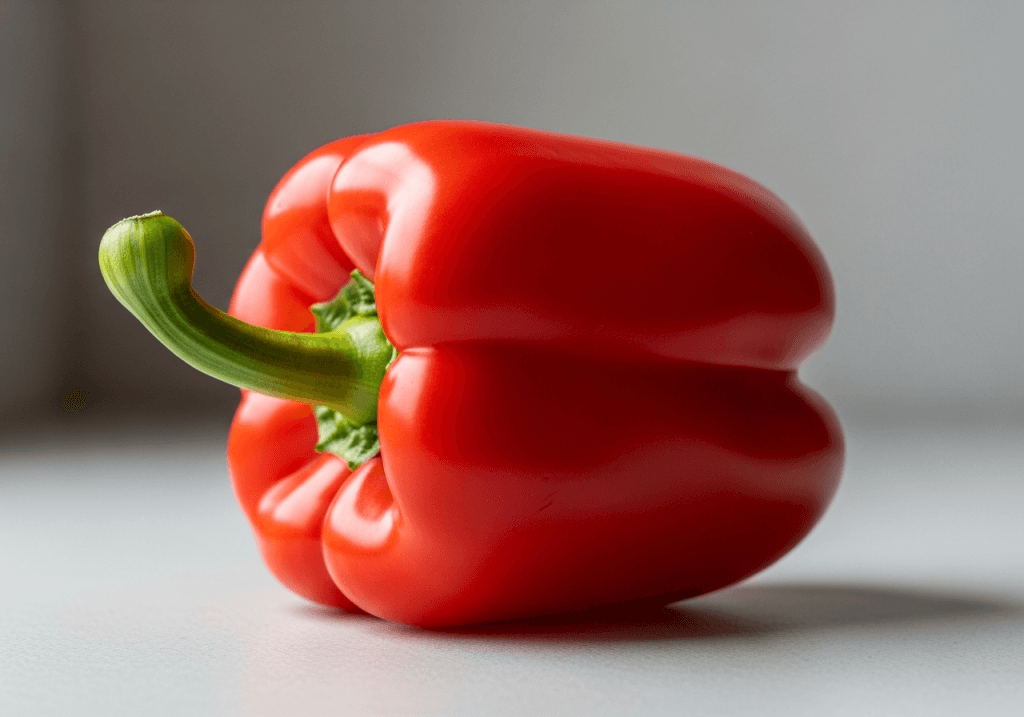
Red bell peppers are the mature form of green bell peppers, and their ripening converts chlorophyll to beta-carotene, capsanthin and other carotenoids, roughly tripling the vitamin C content. A 100 g portion delivers roughly 128 mg of vitamin C — more than oranges — alongside beta-carotene, lutein, zeaxanthin and fibre. That combination is why red bell peppers appear in research on immune support and eye health.
Compounds & anti-nutrients in Red Bell Pepper
Per 100 g, Red Bell Pepper is a notable dietary source of these active compounds. Tap any to see its full sources map and how to work with it.
Why red bell peppers are good for you
Red bell peppers’ vitamin C content is exceptional for a vegetable, and the carotenoid content — especially capsanthin, which is almost unique to red peppers — has antioxidant and anti-inflammatory effects. The capsanthin content is linked to improved lipid profiles in trials. The caveat is pesticide residue: bell peppers often appear on the Dirty Dozen list, so wash well or buy organic.
Red bell pepper nutrition at a glance
The label shows the numbers, but the practical message is that red bell peppers are one of the most nutrient-dense vegetables per calorie, with more vitamin C than oranges and a broad mix of carotenoids.
How to buy and use red bell peppers
Choose firm, glossy red bell peppers with no soft spots, wrinkles or mould. Store in the fridge for up to a week. Slice raw into salads with spinach and olive oil, roast with olive oil and garlic for a side dish, stuff with lean beef and rice, or blend into a romesco sauce with almonds and tomato. Red bell peppers pair well with onion, garlic and Mediterranean herbs.
Common questions
Are red bell peppers better than green? Yes — they have more vitamin C, more carotenoids and more fibre because they are allowed to ripen fully on the plant.
Are bell peppers good for eyes? Yes — the lutein and zeaxanthin content supports macular health, and the vitamin C protects against cataracts.
Explore by health goal
Red Bell Pepper is one of many foods that support these goals: