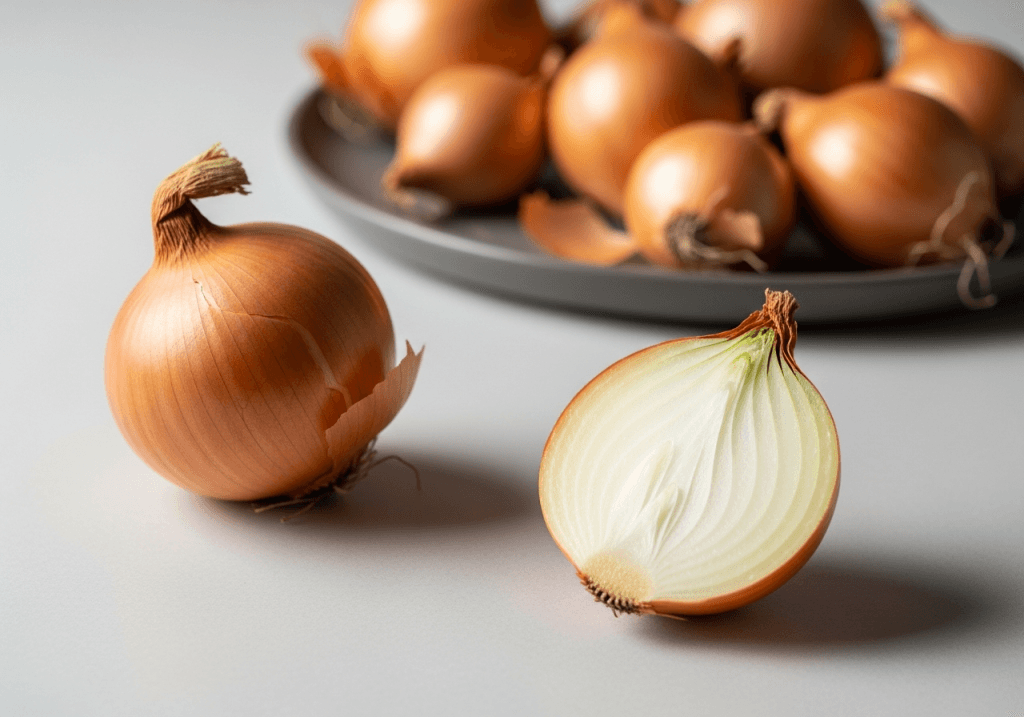
Onion is the quiet foundation of cooking the world over, and beneath that everyday role sits a surprisingly capable health food, rich in the flavonoid quercetin and the prebiotic fibres that feed a healthy gut. That combination is why onions turn up in research on heart health, gut health and immune support.
Compounds & anti-nutrients in Onion
Per 100 g, Onion is a notable dietary source of these active compounds. Tap any to see its full sources map and how to work with it.
Why onions are good for you
Onions are one of the richest dietary sources of quercetin, an antioxidant flavonoid studied for its anti-inflammatory effects and possible role in supporting healthy blood pressure. They are also high in fructans, a type of prebiotic fibre that beneficial gut bacteria ferment to produce short-chain fatty acids. The sulphur compounds released when you slice an onion, the same ones that sting your eyes, are being studied for cardiovascular and immune benefits too.
Much of the quercetin concentrates in the outer layers and in red varieties, so trimming sparingly and choosing colourful onions makes the most of it. Cooking softens the sharpness but keeps many of the benefits intact.
Onion nutrition at a glance
The full breakdown is in the nutrition label above. The headline is the plant compounds rather than the basic numbers: onions are low in calories and bring fibre, vitamin C and a wealth of antioxidants. One caveat is that their fructans are a known FODMAP, so people with IBS may find large amounts trigger bloating, even though the same fibres are a benefit for most.
How to choose, store and cook onions
Choose firm onions with dry, papery skins and no soft spots or sprouting. Store them somewhere cool, dark and airy, away from potatoes, and they will keep for weeks. Slow, gentle cooking caramelises their natural sugars into something sweet and savoury, while raw rings add bite to salads. Onions are the starting point for countless dishes; build them up with garlic and tomato for a quick base, or roast them whole until meltingly soft.
Common questions
Are raw onions healthier than cooked? Raw onions retain the most vitamin C and the sharpest sulphur compounds, while quercetin survives cooking well. Both forms are worthwhile, so choose by taste and digestibility rather than worrying about losing the benefits.
Why do onions cause bloating in some people? Onions are high in fructans, fermentable fibres classed as FODMAPs. For most people these feed good gut bacteria, but those with IBS may experience gas and bloating and might tolerate the green parts of spring onions better.
Explore by health goal
Onion is one of many foods that support these goals: