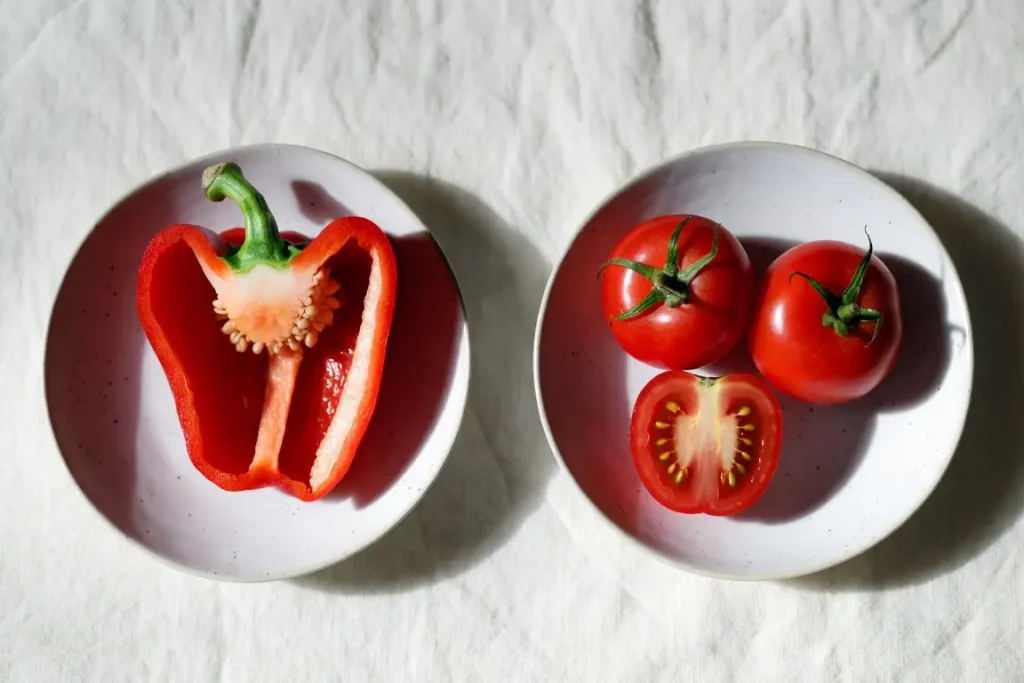
Red bell pepper and tomato are both salad-drawer regulars and both technically fruits – closer in nutrition than most people expect.
| Nutrient | Red Bell Pepper | Tomato |
|---|---|---|
| Calories | 31.3 kcal | 18 kcal |
| Protein | 0.9 g ✓ | 0.88 g |
| Total Carbohydrate | 6.65 g | 3.89 g |
| Dietary Fiber | 1.16 g | 1.2 g ✓ |
| Total Sugars | 4.2 g | 2.63 g ✓ |
| Total Fat | 0.13 g | 0.2 g |
| Saturated Fat | 0.059 g | 0.03 g ✓ |
| Sodium | 0 mg ✓ | 5 mg |
Notable compounds in each
When to choose each
These two are close enough that the differences barely register – red bell pepper has a slight edge on protein and sodium, while tomato is marginally ahead on fibre and saturated fat and clearly lower in sugar. Red bell pepper is the standout for vitamin C among raw vegetables generally; tomato brings its own well-known lycopene content, particularly concentrated when cooked. Both are low-calorie, everyday staples worth eating liberally.
Common questions
Which has more vitamin C, red bell pepper or tomato? Red bell pepper, by a wide margin – it’s one of the richest raw vegetable sources of vitamin C available, well ahead of tomato and even citrus fruit gram for gram.
Does cooking tomatoes destroy their nutrients? Not entirely – cooking does reduce vitamin C content, but it actually increases the bioavailability of lycopene, tomato’s signature antioxidant, which is why tomato sauce and paste are often considered just as valuable nutritionally as fresh tomato.