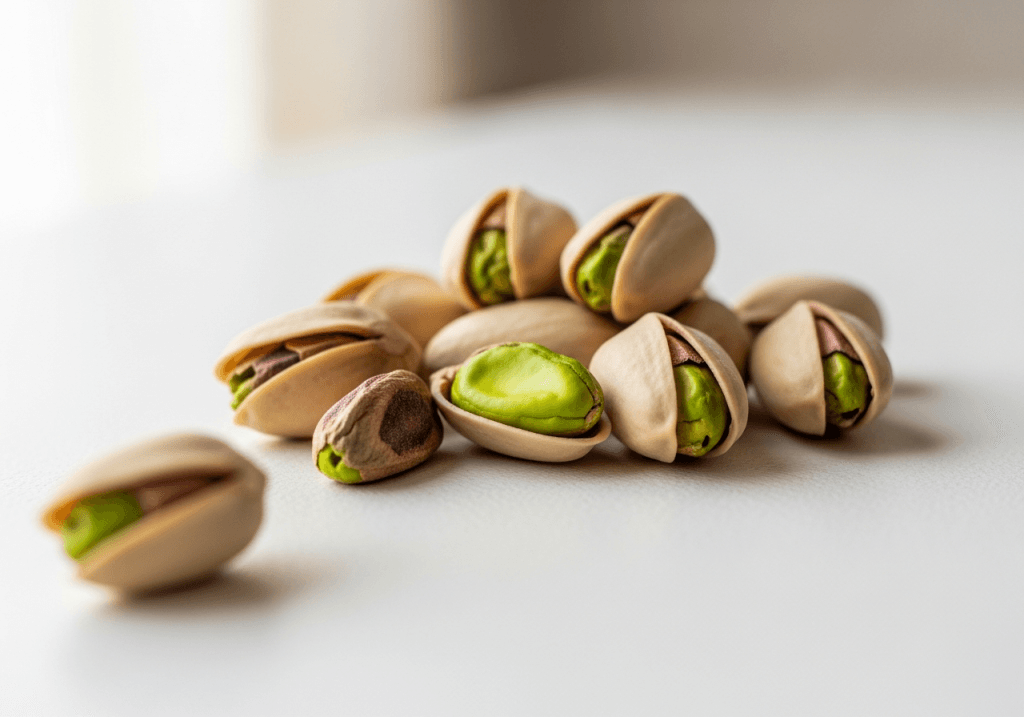
Pistachios are the green-hearted nut you have to work for, and that small effort of shelling them is part of why they suit mindful snacking so well. Among nuts they are particularly associated with heart health and weight management.
Compounds & anti-nutrients in Pistachios
Per 100 g, Pistachios is a notable dietary source of these active compounds. Tap any to see its full sources map and how to work with it.
- Copper 1.05 mg 117.1% DV
- Vitamin B6 1.7 mg 100% DV
- Manganese 1.05 mg 45.7% DV
- Selenium 23.12 µg 42% DV
- Phosphorus 499.6 mg 40% DV
- Magnesium 109.7 mg 26.1% DV
- Dietary Fibre 6.97 g 24.9% DV
- Potassium 947 mg 20.1% DV
- Vitamin E 2.86 mg 19.1% DV
- Calcium 117.4 mg 9% DV
- Beta-Carotene 305 ug
- Oxalates 31.7 mg
- Monounsaturated Fat 23.26 g
- Lutein & Zeaxanthin 2.9 mg
- Coenzyme Q10 2 mg
Why pistachios are good for you
Pistachios stand out for their protein and fibre, an unusually filling combination for a nut, and they are a strong source of potassium and vitamin B6. Most of their fat is the unsaturated kind studied for supporting healthy cholesterol. They are also a good plant source of magnesium, and their green-and-purple colour comes from lutein and other carotenoids investigated for eye health.
Buying them in the shell is a quiet advantage: the slower pace of shelling tends to curb how many you eat, and the empty shells give a useful visual record of how much you have got through in one sitting.
Pistachios nutrition at a glance
The full breakdown is in the label above, but the headline is a nutrient-dense package of protein, fibre and healthy fats. Like all nuts they are calorie-dense, so a small handful is a sensible serving rather than open-bowl grazing. Choose unsalted or lightly salted varieties where you can, since heavily salted snack pistachios can add a lot of sodium without you noticing.
How to choose, store and eat pistachios
Look for nuts whose shells have naturally split open, which signals ripeness, and avoid any that smell musty, a sign they have turned rancid. Their healthy fats are sensitive to heat and light, so store them in an airtight container somewhere cool, or in the fridge or freezer for longer keeping. They are excellent on their own, chopped over Greek yoghurt, or scattered with blackberries for a bit of crunch.
Common questions
Are pistachios good for weight loss? Their protein and fibre make them satisfying, and shelling them slows you down, both of which can help with portion control. They are still calorie-dense, so weight management comes down to keeping to a modest handful.
How many pistachios should you eat a day? A small handful most days is a sensible amount that delivers the nuts’ benefits without too many calories. Reaching for unsalted ones keeps your sodium intake in check.
Explore by health goal
Pistachios is one of many foods that support these goals: