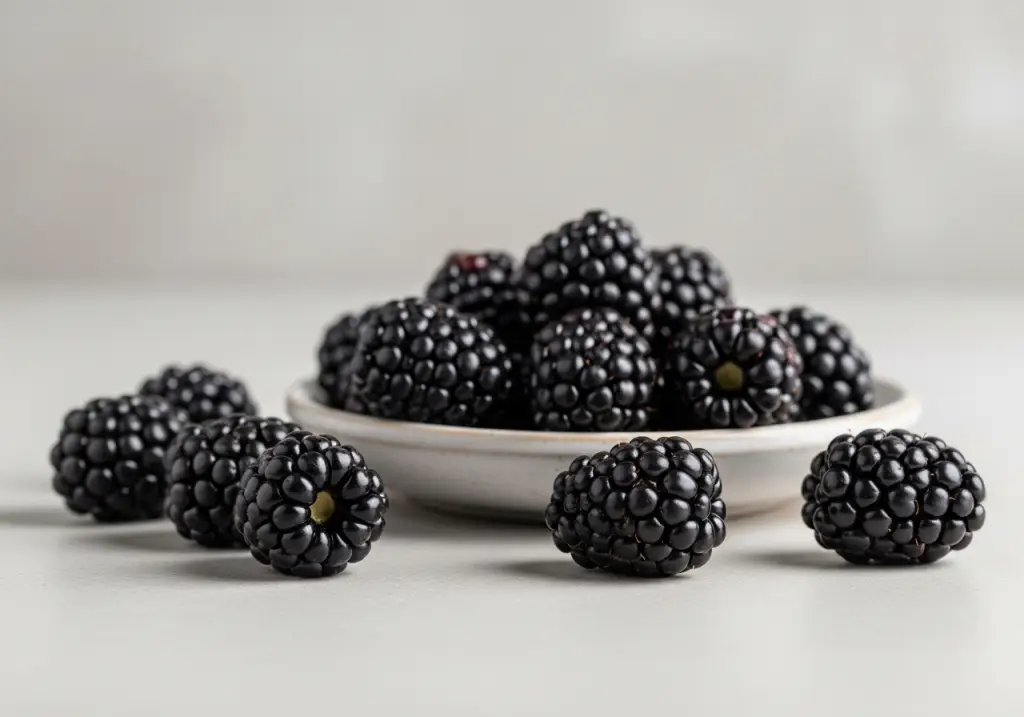
Blackberries are one of the darkest, most antioxidant-rich berries you can pick, and that deep purple-black colour is the clue to why. Their pigments and fibre are the reason blackberries appear so often in research on inflammation, heart health and digestion.
Compounds & anti-nutrients in Blackberries
Per 100 g, Blackberries is a notable dietary source of these active compounds. Tap any to see its full sources map and how to work with it.
Why blackberries are good for you
The colour comes from anthocyanins, plant pigments studied for their antioxidant and anti-inflammatory effects. Alongside them, blackberries are a good source of vitamin C, which the body uses to build collagen and support immune cells, plus vitamin K and the mineral manganese. They are also notably high in fibre for a fruit, much of it in the tiny edible seeds.
That fibre is a mix of soluble and insoluble types, so it feeds beneficial gut bacteria while supporting regularity. Eating blackberries with a little protein or healthy fat, such as yoghurt or nuts, slows how quickly their natural sugars are absorbed.
Blackberries nutrition at a glance
The full breakdown sits in the nutrition label above, but the headline is a lot of fibre and plant antioxidants for very few calories. Their sugar content is modest and arrives wrapped in fibre and water, so blackberries digest gently. The small seeds can lodge between teeth and are best avoided by anyone advised to follow a low-residue diet, but for most people they simply add useful roughage.
How to choose, store and eat blackberries
Look for plump, deep-black berries with no red or green patches, since blackberries do not ripen further once picked. Avoid any that look dull, leak juice or show mould, and store them unwashed in a single layer in the fridge, rinsing only just before eating. They freeze beautifully for smoothies and crumbles. Blackberries pair naturally with Greek yoghurt and oats, or scatter them over a bowl with blueberries for a mixed-berry boost.
Common questions
Are blackberries good for weight loss? They suit a weight-management diet well, being naturally low in calories and high in fibre, which helps meals feel more filling. As with any food, overall portions and the rest of your diet matter most.
Are frozen blackberries as healthy as fresh? Yes. Berries are usually frozen soon after picking, which locks in much of their vitamin C and anthocyanins, so frozen blackberries are a convenient and nutritious year-round option.
Explore by health goal
Blackberries is one of many foods that support these goals: