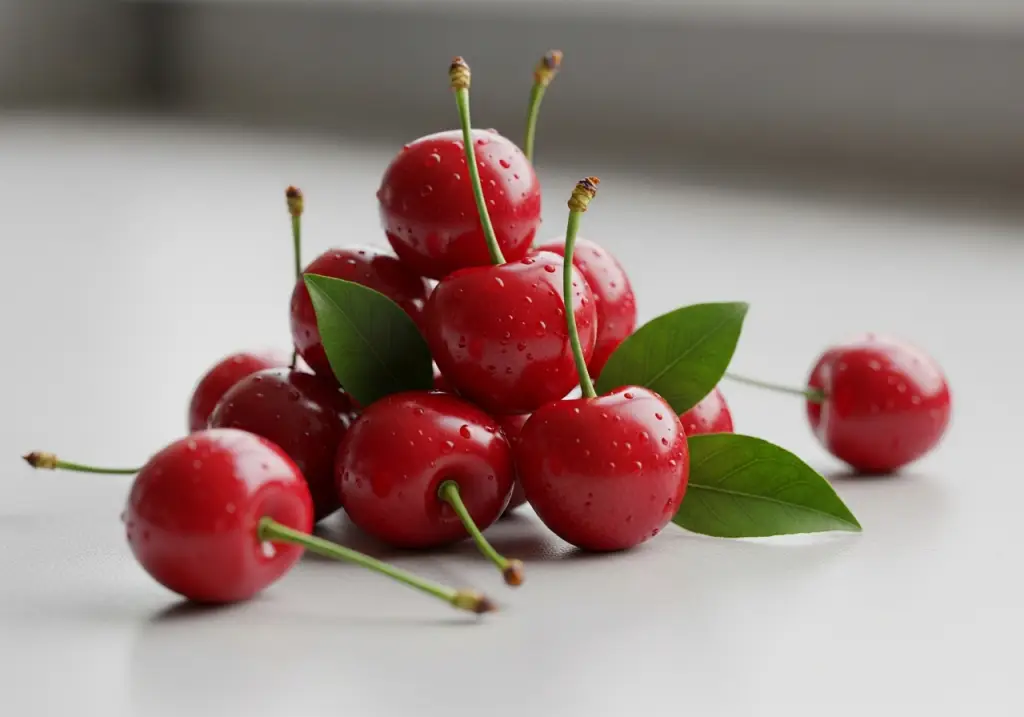
Cherries are one of summer’s most concentrated sources of colourful plant pigments, and that rich red is more than good looks: it signals the antioxidant compounds that make this fruit a regular subject of research. Sweet or tart, cherries turn up most often in studies on inflammation and heart health.
Why cherries are good for you
The defining compounds in cherries are anthocyanins, the deep-red antioxidant pigments studied for their anti-inflammatory effects and links to muscle recovery in athletes. Cherries also supply vitamin C to support immune function and collagen, along with potassium for healthy blood pressure. Tart cherries are a rare natural source of melatonin, the hormone that helps regulate sleep, which is why they are often studied for rest and recovery.
Like other dark fruits, cherries carry a broad spread of polyphenols, the protective plant compounds linked to long-term heart and metabolic health. Tart varieties have also been studied in connection with the purines involved in gout, with some research suggesting they may help lower the frequency of flare-ups, though the evidence is still emerging.
Cherries nutrition at a glance
The full breakdown is in the label above. The short version: cherries are a naturally sweet, low-fat fruit whose sugars arrive wrapped in fibre, water and antioxidants, so they digest more gently than the sweetness alone suggests. As with any sweet fruit, a sensible portion is the easy approach if you are watching your blood sugar.
How to choose, store and eat cherries
Look for firm, glossy cherries with fresh green stems still attached, and avoid any that are soft, split or dull. Keep them unwashed in the fridge and rinse only just before eating, as washing speeds up spoilage. Eat them simply by the handful, or stir them through porridge with oats, or fold them into Greek yoghurt for a quick pudding. Frozen cherries work brilliantly in smoothies year-round.
Common questions
Are tart cherries good for sleep? Tart cherries are one of the few foods that naturally contain melatonin, and small studies have linked tart cherry juice to modestly better sleep, though it is no substitute for good sleep habits.
Are cherries high in sugar? Cherries are naturally sweet, but their sugars come bundled with fibre, water and antioxidants, so a normal portion fits comfortably into a balanced diet.
Explore by health goal
Cherries is one of many foods that support these goals: