Cherries and grapes are both small, round snacking fruits eaten one at a time, close enough in nutrition that the choice comes down to what’s in season.
Cherries edge it, but not by much. Cherries carry more than twice the fibre of grapes (2.1 g per 100 g against 0.9 g), fewer calories (70 kcal against 86) and less sugar (12.8 g against 15.5 g). Grapes answer with resveratrol and quercetin. Both are whole fruit eaten by the handful, and the gap between them is much smaller than the gap between either one and a processed snack.
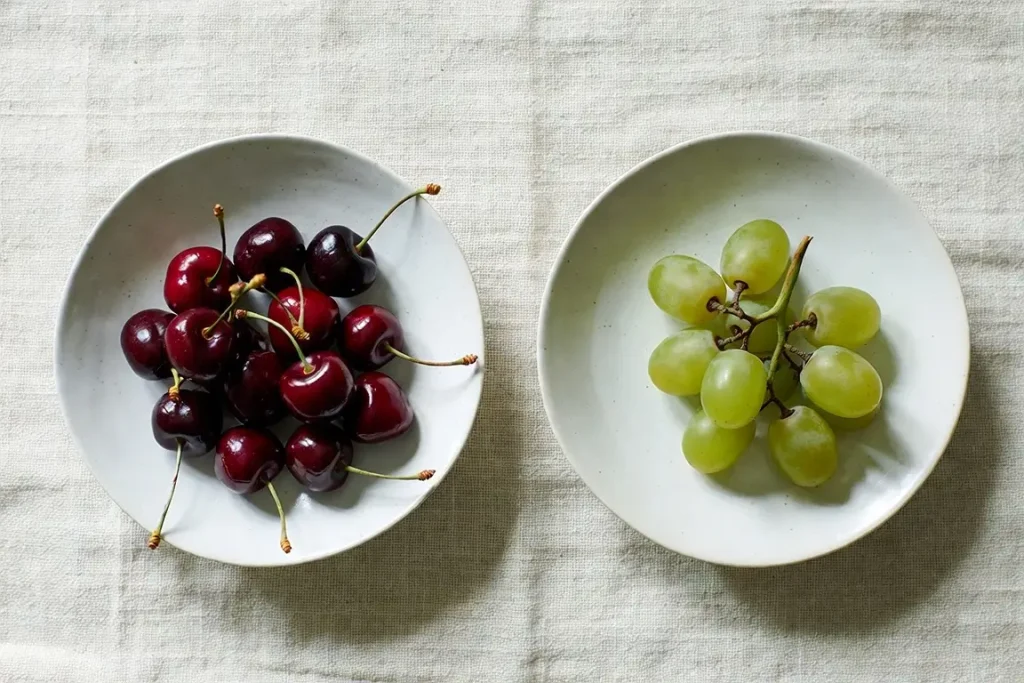
| Nutrient | Cherries | Grapes |
|---|---|---|
| Calories | 70.5 kcal | 85.9 kcal |
| Protein | 1.04 g ✓ | 0.91 g |
| Total Carbohydrate | 16.2 g | 20.2 g |
| Dietary Fiber | 2.1 g ✓ | 0.9 g |
| Total Sugars | 12.8 g ✓ | 15.5 g |
| Total Fat | 0.19 g | 0.16 g |
| Saturated Fat | 0.038 g ✓ | 0.054 g |
| Sodium | 0 mg ✓ | 7 mg |
Notable compounds in each
Cherries
No standout compounds recorded.
Grapes
When to choose each
Both are classic snacking fruits, eaten one at a time rather than by the spoonful, and close enough in calories and carbohydrate that the choice mostly comes down to preference and season. Cherries have a small protein edge and are virtually sodium-free; grapes carry more natural sugar per 100 g (15.5 g vs 12.8 g) and less fibre, and are easy to overeat given how quickly they go down.
Common questions
Are grapes high in sugar compared to cherries? Grapes are generally considered one of the more sugar-dense fruits, and their small size makes them very easy to eat in quantity without noticing. Cherries have a similar reputation to a lesser degree, but both are still whole fruits with fibre and water alongside their natural sugar, unlike sugary snacks.
Do cherries help with sleep? Tart cherries specifically, not sweet cherries, which is what’s compared here, contain natural melatonin and have a modest research base for improving sleep quality. Sweet cherries haven’t been studied to the same extent for this specific effect.
Which is healthier, cherries or grapes? Cherries, marginally – more fibre, fewer calories and less sugar per 100 g, plus anthocyanins and naturally occurring melatonin. Grapes bring resveratrol and quercetin. The difference is small enough that preference should decide it.