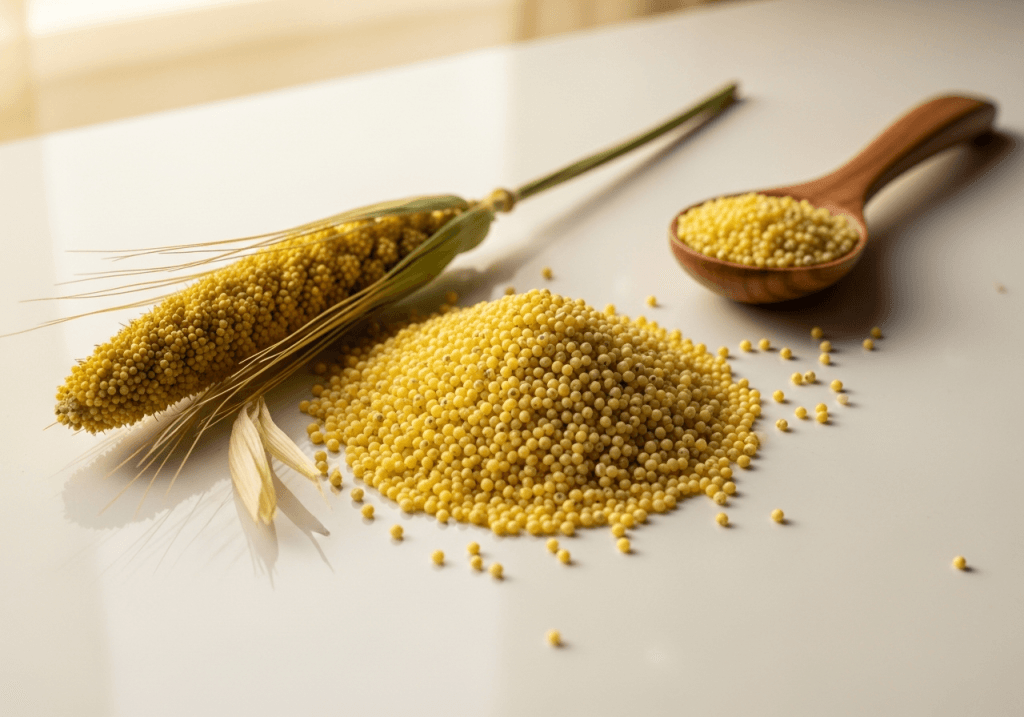
Millet is one of the world’s oldest cultivated grains, and it is quietly one of the most useful: a small, naturally gluten-free wholegrain with a mild, nutty flavour and a generous mineral profile. That combination has put it back on the radar in research on blood-sugar control and heart health.
Compounds & anti-nutrients in Millet
Per 100 g, Millet is a notable dietary source of these active compounds. Tap any to see its full sources map and how to work with it.
Why millet is good for you
Millet is a notable plant source of magnesium, a mineral involved in hundreds of bodily processes, from energy production to nerve and muscle function, and one many diets fall short on. It also delivers manganese and phosphorus for bone and metabolic health, along with a respectable amount of plant protein for a grain. Its fibre and slow-digesting starches help temper the rise in blood sugar after a meal, which is why wholegrains like millet are linked to steadier energy.
As a naturally gluten-free grain, millet is a welcome staple for anyone avoiding wheat who still wants the benefits of a wholegrain, and its mild flavour means it slips easily into both savoury and sweet dishes without dominating them.
Millet nutrition at a glance
The full breakdown is in the label above. In short, millet is a carbohydrate-rich wholegrain that brings fibre, plant protein and a strong set of minerals to the table while staying very low in fat and sodium. As a wholegrain it keeps more of its bran and germ than refined grains, which is where much of its fibre and mineral content lives.
How to choose, store and cook millet
Buy hulled millet from a shop with good turnover and store it in an airtight container in a cool cupboard, since its natural oils can turn over time. Toasting the dry grains in a pan before adding water deepens their nutty flavour; simmered, millet turns fluffy like couscous, while extra liquid makes a creamy porridge. It works well in place of brown rice or quinoa in grain bowls and pilafs.
Common questions
Is millet gluten-free? Yes, millet is naturally gluten-free, which makes it a good wholegrain option for people with coeliac disease or gluten sensitivity, as long as it is processed without cross-contamination.
Is millet a good source of protein? For a grain it is fairly protein-rich, and pairing it with pulses such as lentils gives a more complete spread of amino acids.
Explore by health goal
Millet is one of many foods that support these goals: