Couscous and millet are both reached for as a quick side grain, but only one of them is actually a grain — and only one contains gluten.
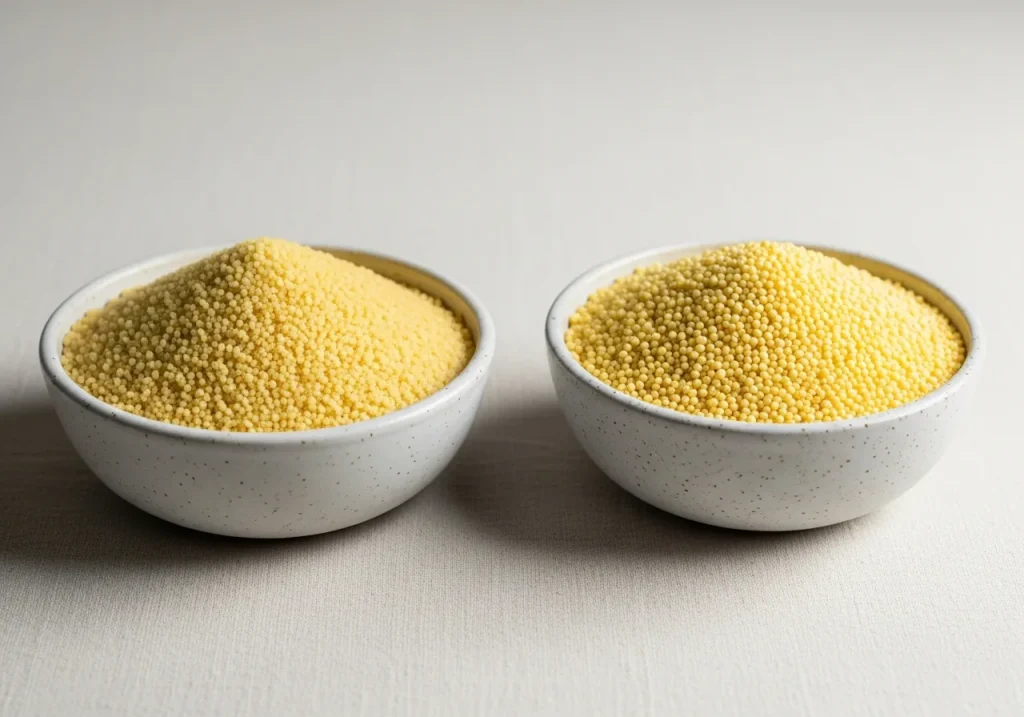
| Nutrient | Couscous | Millet |
|---|---|---|
| Calories | 376 kcal | 376 kcal |
| Protein | 12.8 g ✓ | 10 g |
| Total Carbohydrate | 77.4 g | 74.4 g |
| Dietary Fiber | 5 g ✓ | 2.62 g |
| Total Sugars | 0.1 g ✓ | 1.66 g |
| Total Fat | 0.64 g | 4.19 g |
| Saturated Fat | 0.12 g ✓ | 0.723 g |
| Sodium | 10 mg | 0 mg ✓ |
Notable compounds in each
When to choose each
Couscous edges ahead on protein and fibre, while millet is essentially sodium-free and brings meaningfully more healthy fat and a little more potassium to the table, gram for gram. Calories are identical dry weight for weight. One practical difference worth knowing: couscous is a wheat product and contains gluten, while millet is a true gluten-free grain — a bigger factor for some people than the nutrition numbers themselves.
Common questions
Is couscous a grain? Not technically — couscous is a wheat product, tiny pellets of rolled and steamed semolina, which is why it cooks so quickly and why, unlike millet, it contains gluten.
Is millet a good gluten-free alternative to couscous? Yes — millet is a true gluten-free grain with a similar mild flavour and quick cooking time, making it one of the more direct swaps for couscous in a gluten-free kitchen.