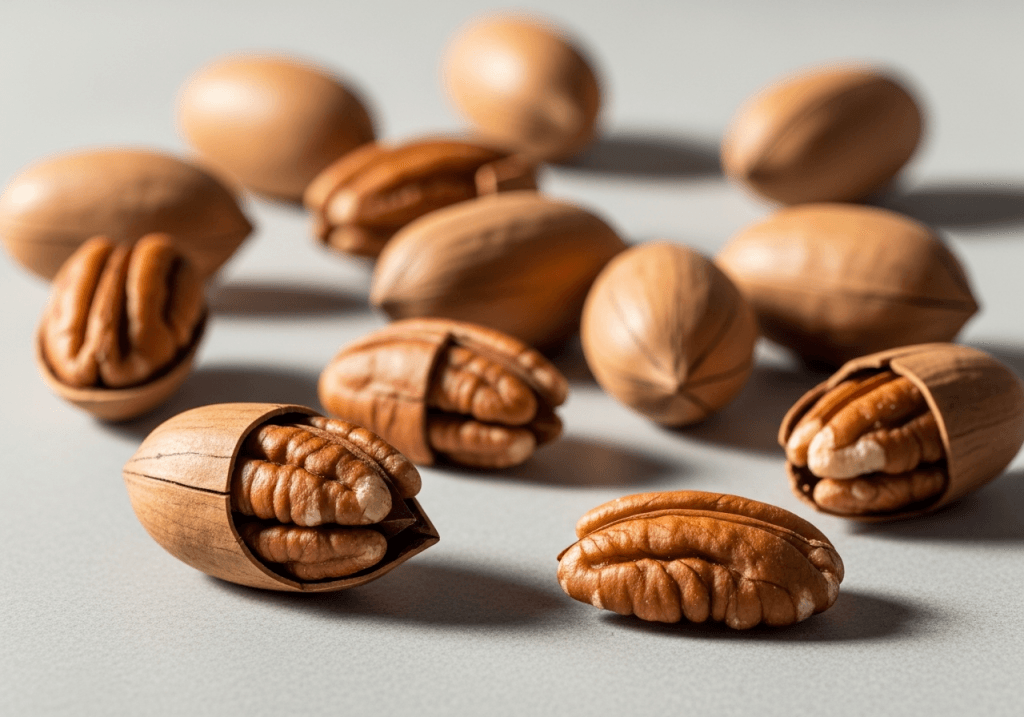
Pecans are the buttery, mellow tree nut at the heart of the famous pie, but their nutrition deserves more credit than dessert gives them. Among the richest of all nuts in unsaturated fat and plant antioxidants, pecans are studied for their role in heart health, calming inflammation and supporting brain health.
Compounds & anti-nutrients in Pecans
Per 100 g, Pecans is a notable dietary source of these active compounds. Tap any to see its full sources map and how to work with it.
Why pecans are good for you
Most of the fat in pecans is monounsaturated — the same kind that makes olive oil so well regarded — which is part of why nuts feature so often in heart research. They are an excellent source of manganese and copper, minerals involved in antioxidant defence and energy metabolism, and they supply some zinc too. Pecans are also unusually high in polyphenols, including ellagitannins, plant compounds studied for their antioxidant and anti-inflammatory effects.
Like all nuts, they bundle this fat with fibre and protein, a combination that slows digestion and helps a handful feel genuinely satisfying. Eating them with the papery skin intact keeps most of those antioxidants where you want them.
Pecans nutrition at a glance
The full breakdown is in the nutrition label above. The headline is the quality of their fats and their antioxidant load; the caveat is simply that pecans are calorie-dense, as all nuts are. That is not a reason to avoid them — research consistently links regular nut eaters with better outcomes, not weight gain — but a small handful, rather than an open bag, is the sensible serving.
How to choose, store and eat pecans
Because they are so high in fat, pecans turn rancid faster than most nuts, so buy from somewhere with good turnover and store them in an airtight container in the fridge or freezer to keep them fresh. They should smell sweet and nutty, never sharp or paint-like. Toast them lightly to deepen their flavour, scatter them over porridge or salads, or eat them as they are. They pair naturally with oats at breakfast and sit happily alongside walnuts and almonds in our nuts and seeds.
Common questions
Are pecans good for you despite being high in fat? Yes. The fat in pecans is mostly the heart-healthy unsaturated kind, and it comes with fibre, minerals and antioxidants. Regular nut eaters tend to fare well in research, so long as portions stay modest.
Do pecans need to be kept in the fridge? It helps. Their high oil content means they go rancid faster at room temperature, so the fridge or freezer keeps them tasting fresh for much longer.
Explore by health goal
Pecans is one of many foods that support these goals: