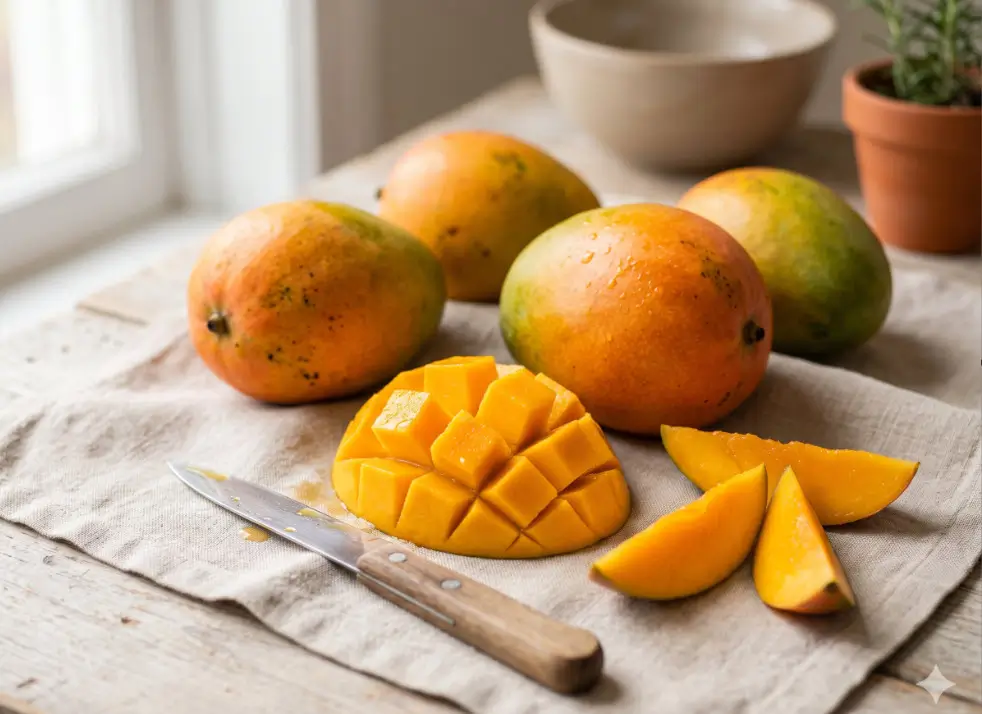
Mango is the national fruit of India, Pakistan and the Philippines, and its nutrient profile is exceptional for a sweet fruit: beta-carotene, vitamin C, vitamin E, polyphenols and prebiotic fibre in a package that delivers roughly 60 kcal per 100 g. That combination is why mangoes appear in research on immune support and skin health.
Compounds & anti-nutrients in Mango
Per 100 g, Mango is a notable dietary source of these active compounds. Tap any to see its full sources map and how to work with it.
Why mangoes are good for you
Mangoes are one of the richest fruit sources of beta-carotene — the provitamin A compound that supports vision, immune function and skin health — and they also contain unique polyphenols such as mangiferin with documented antioxidant effects. The fibre content is useful and partly pectin, which supports gut bacteria and cholesterol metabolism. The main caveat is sugar: mangoes are sweet, and portion control matters for blood sugar management.
Mango nutrition at a glance
The label shows the numbers, but the practical message is that mangoes are a nutrient-dense tropical fruit with a genuine vitamin A edge. One cup of sliced mango supplies more than the daily vitamin A requirement for most adults.
How to buy and use mangoes
Choose mangoes that yield slightly to gentle pressure and smell sweet at the stem end. Avoid ones with wrinkled skin or sour smell. Store at room temperature until ripe, then move to the fridge. Slice fresh mango into salads with spinach and olive oil, blend into smoothies with banana and Greek yoghurt, or freeze for sorbet. Dried mango is convenient but concentrated in sugar.
Common questions
Is mango good for skin? The beta-carotene and vitamin C are essential for collagen synthesis and skin repair, and topical mango butter is used in cosmetics.
Is mango too sugary? One cup of sliced mango contains about 23 g of natural sugar, which is fine for most people but should be accounted for in low-carb diets.
Explore by health goal
Mango is one of many foods that support these goals: