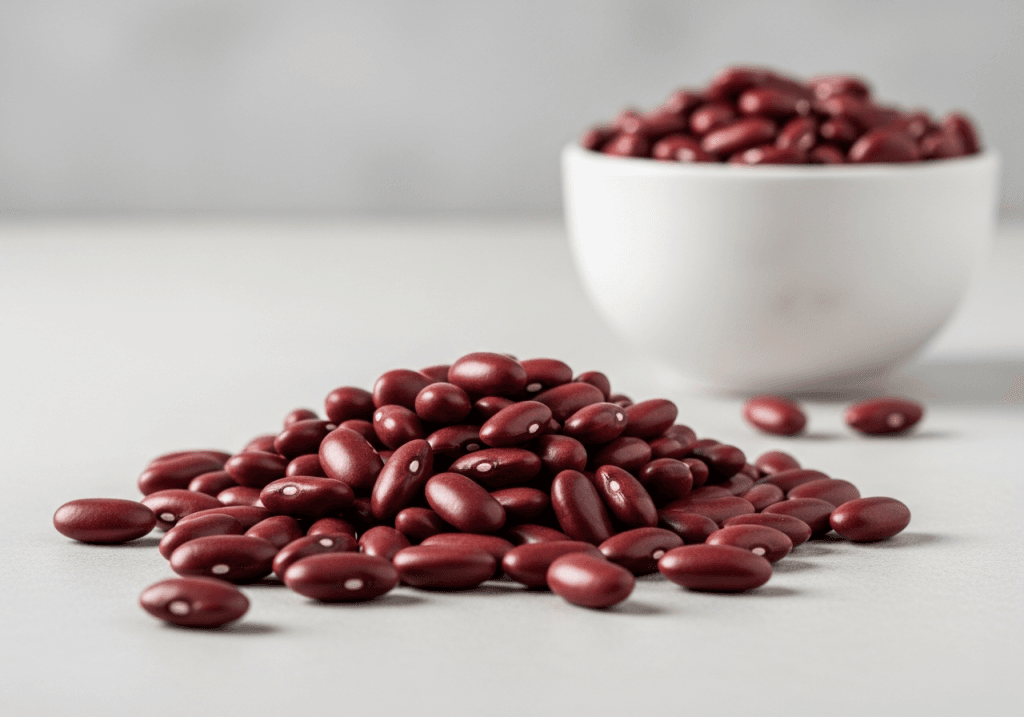
Kidney beans are among the most versatile pulses in the kitchen, delivering a satisfying combination of plant protein and fibre that keeps you full for hours. That mix is why kidney beans feature so often in research on blood sugar control, gut health and heart health.
Compounds & anti-nutrients in Kidney Beans
Per 100 g, Kidney Beans is a notable dietary source of these active compounds. Tap any to see its full sources map and how to work with it.
- Folate 394 µg 98.5% DV
- Copper 0.7 mg 77.7% DV
- Dietary Fibre 15.2 g 54.3% DV
- Manganese 1.11 mg 48.3% DV
- Iron 6.69 mg 37.2% DV
- Magnesium 138 mg 32.9% DV
- Phosphorus 406 mg 32.5% DV
- Potassium 1,359 mg 28.9% DV
- Zinc 2.79 mg 25.4% DV
- Vitamin B6 0.4 mg 23.4% DV
- Choline 65.9 mg 12% DV
- Sodium 12 mg 10.3% DV
- Vitamin K 5.6 µg 4.7% DV
- Resistant Starch 3.8 g
Why kidney beans are good for you
Kidney beans are a strong plant source of iron, the mineral your body needs to carry oxygen in the blood, along with folate, magnesium and potassium. Their real strength is fibre: a large share is the soluble kind that feeds beneficial gut bacteria and is studied for helping to steady blood sugar and support healthy cholesterol levels. Because their carbohydrate is released slowly, they have a gentle effect on blood glucose.
The iron in beans is non-haem and less readily absorbed than the iron in meat, so pairing them with a vitamin-C source such as tomato or peppers helps your body take up more of it.
Kidney beans nutrition at a glance
The full breakdown is in the label above, but the headline is plenty of protein and fibre for modest calories. Raw or undercooked kidney beans contain lectins, natural compounds that can cause stomach upset, so dried beans must be boiled hard for at least ten minutes before simmering. Tinned kidney beans are already fully cooked and safe to use straight from the can after a rinse, which also lowers their sodium.
How to choose, store and cook kidney beans
Dried beans should look glossy and unbroken; store them somewhere cool and dark and use within a year, as very old beans never soften properly. Soak them overnight, then boil vigorously before reducing to a simmer until tender. They hold their shape well in chilli, stews and salads, and pair naturally with brown rice to make a complete-protein meal. Browse more pulses in our legumes section.
Common questions
Are kidney beans good for weight loss? Their protein and fibre make meals more filling and slow digestion, which can help with appetite control, while keeping calories moderate. They are a useful staple within a balanced, calorie-aware diet.
Why do beans cause wind? Kidney beans contain fermentable fibres and oligosaccharides that gut bacteria break down, producing gas. Soaking, thorough cooking, rinsing tinned beans and building up your intake gradually all help your gut adjust.
Explore by health goal
Kidney Beans is one of many foods that support these goals: