Vegetables contribute more protein to a diet than most people assume, not because any single one is protein-rich but because they are eaten in volume. This ranks them by protein per 100 g, with calories and protein density alongside.
Garlic and chilli are excluded despite ranking well per 100 g — they are eaten by the clove and the slice, so their per-100 g figures overstate what they contribute. Dried herbs are excluded for the same reason. Legumes such as lentils and chickpeas are catalogued separately from vegetables and are far higher in protein than anything below; see foods high in protein.
Green Peas — top of the list
| Total Fat | 0.4 g |
|---|---|
| Saturated Fat | 0.07 g |
| Sodium | 5 mg |
| Potassium | 244 mg |
| Total Carbohydrate | 14.4 g |
| Dietary Fiber | 5.7 g |
| Total Sugars | 5.67 g |
| Protein | 5.42 g |
Vegetables ranked by protein
| # | Food | Protein per 100 g | Calories per 100 g | Protein per 100 kcal |
|---|---|---|---|---|
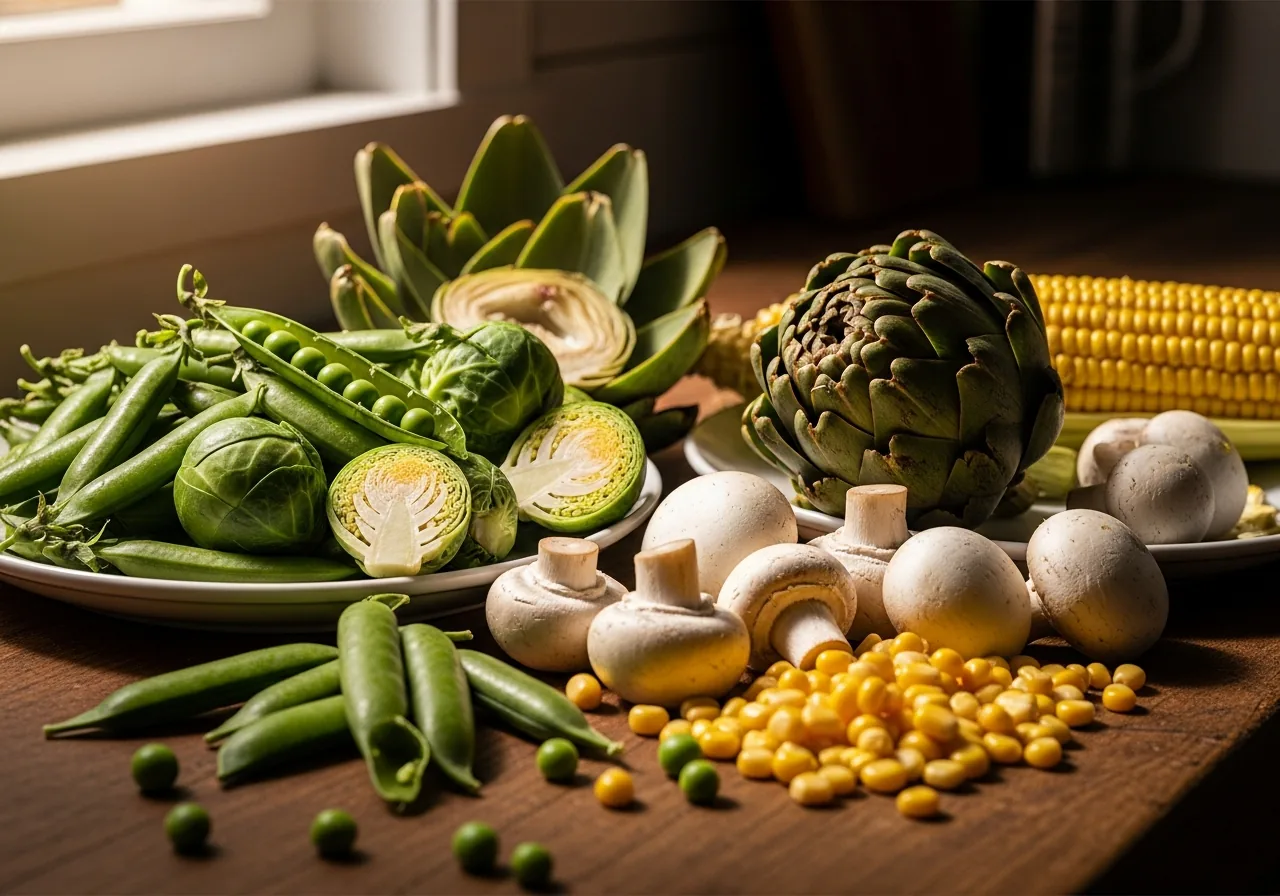
| 1 | Green Peas | 5.4 g | 81 kcal | 6.7 g |
| 2 | Brussels Sprouts | 4.0 g | 60 kcal | 6.7 g |
| 3 | Artichoke | 3.3 g | 47 kcal | 7.0 g |
| 4 | Corn | 3.3 g | 86 kcal | 3.8 g |
| 5 | White Mushrooms | 3.1 g | 22 kcal | 14.0 g |
| 6 | Kale | 2.9 g | 35 kcal | 8.3 g |
| 7 | Spinach | 2.9 g | 23 kcal | 12.4 g |
| 8 | Broccoli | 2.8 g | 34 kcal | 8.3 g |
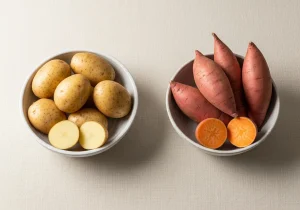
| 9 | Potato | 2.0 g | 77 kcal | 2.7 g |
| 10 | Green Beans | 2.0 g | 40 kcal | 4.9 g |
| 11 | Cauliflower | 1.6 g | 28 kcal | 5.9 g |
| 12 | Beetroot | 1.6 g | 43 kcal | 3.7 g |
| 13 | Sweet Potato | 1.6 g | 79 kcal | 2.0 g |
| 14 | Asparagus | 1.4 g | 28 kcal | 5.1 g |
| 15 | Courgette (Zucchini) | 1.2 g | 17 kcal | 7.1 g |
Protein density is where vegetables do well
On grams per 100 g, vegetables look unimpressive next to meat or beans. On protein per calorie they are competitive with some animal foods — spinach and white mushrooms both exceed 12 g of protein per 100 kcal, comparable to lean beef, because they carry so few calories. The catch is volume: reaching a useful protein total from spinach alone means eating an implausible amount of it.
The practical read is that vegetables are a real contributor to daily protein at ordinary portion sizes, and not a replacement for a protein source at a meal.
Common questions
Are peas a vegetable or a legume? Botanically a legume, catalogued here with vegetables because that is how they are eaten and shopped for. Their protein content reflects the legume side of that — they lead this list comfortably.
Does cooking change the protein in vegetables? Barely, in absolute terms — but it changes the per-100 g figure a lot, through water. Boiled spinach measures far higher per 100 g than raw because it has lost volume, while the protein on the plate is much the same.