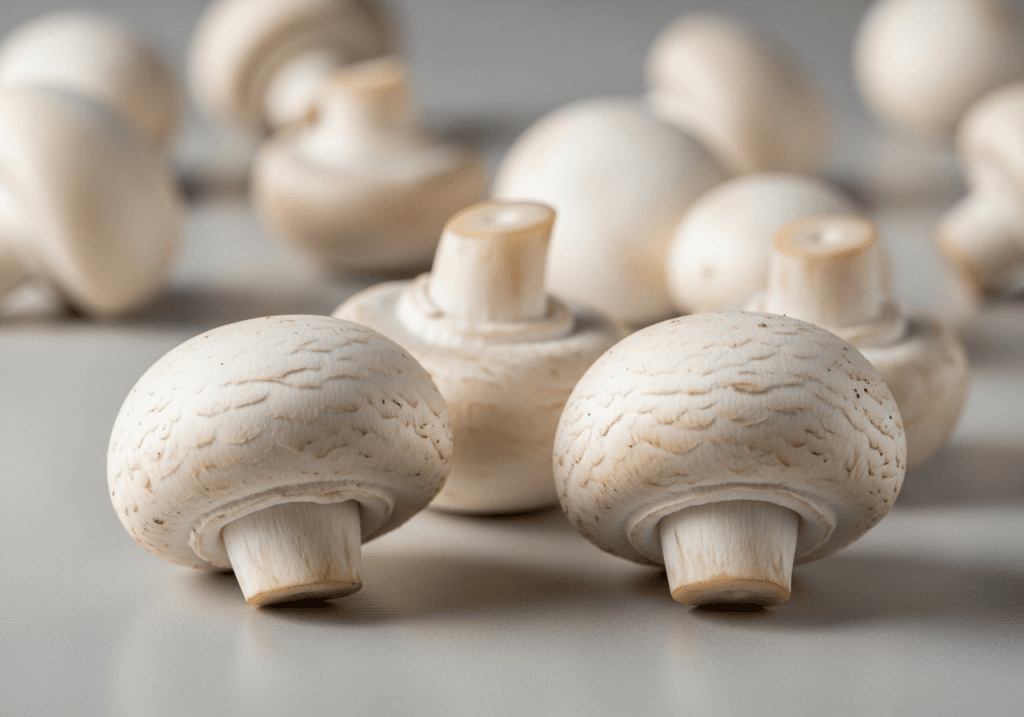
White mushrooms are the familiar button mushrooms in every supermarket, and they are far more interesting than their plain appearance suggests: a low-calorie food with a savoury, meaty depth and a genuinely useful nutrient profile. That mix is why white mushrooms feature in discussions of immune support and weight management.
Compounds & anti-nutrients in White Mushrooms
Per 100 g, White Mushrooms is a notable dietary source of these active compounds. Tap any to see its full sources map and how to work with it.
Why white mushrooms are good for you
Mushrooms occupy their own kingdom, neither plant nor animal, and they offer nutrients that vegetables often lack. They are a good source of B vitamins and supply selenium and copper, minerals that support antioxidant defences. Their cell walls contain beta-glucans, fibres studied for their role in modulating the immune system. Mushrooms are also one of the few non-animal foods that can provide vitamin D, because exposing them to sunlight or UV light triggers them to produce it.
Much of a mushroom’s appeal in cooking comes from its natural glutamates, which deliver a deep savoury, umami flavour. That makes them a clever way to add richness to meals while keeping the calorie count low.
White mushrooms nutrition at a glance
The full breakdown is in the nutrition label above. The headline is a lot of flavour and useful micronutrients for very few calories, along with a little plant protein and fibre. White mushrooms are best eaten cooked rather than raw: heat softens their cell walls so the nutrients become more available, and improves both taste and digestibility.
How to choose, store and cook white mushrooms
Pick firm, dry mushrooms with closed caps and no slime or dark patches. Store them in a paper bag in the fridge rather than sealed plastic, which traps moisture and turns them slippery, and use within a few days. Wipe rather than soak them, as they absorb water readily. A hot, dry pan is the secret: let them release their moisture and brown for the best flavour. They pair brilliantly with garlic and onion, and add a meaty note to dishes built around barley.
Common questions
Are mushrooms good for weight loss? They are very low in calories yet rich in savoury flavour, so they can replace some of the meat in a dish or add satisfying bulk for almost no energy. That makes them a handy ally in a weight-management plan.
Do mushrooms contain vitamin D? They can. Mushrooms naturally produce vitamin D when exposed to sunlight or UV light, so sun-exposed or UV-treated mushrooms are a useful plant-based source, while those grown entirely in the dark contain very little.
Explore by health goal
White Mushrooms is one of many foods that support these goals: