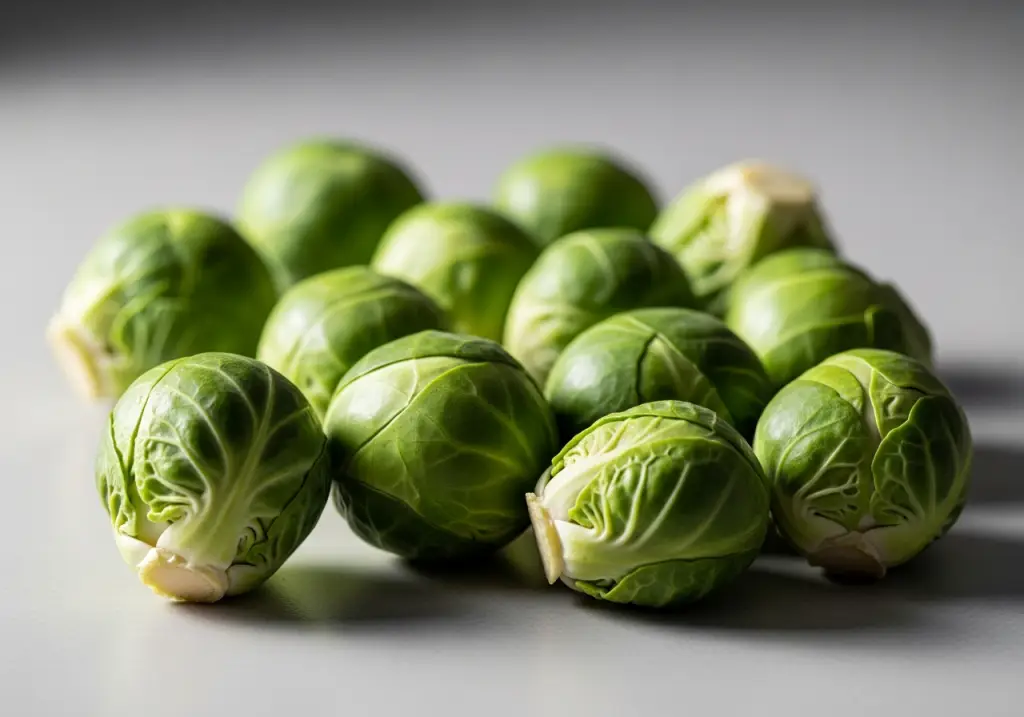
Brussels sprouts are miniature cabbages that pack an outsized nutrient density: vitamin K, vitamin C, folate, fibre and glucosinolates — the same sulphur compounds that give cruciferous vegetables their anti-cancer reputation. That combination is why Brussels sprouts appear in research on heart health and bone health.
Compounds & anti-nutrients in Brussels Sprouts
Per 100 g, Brussels Sprouts is a notable dietary source of these active compounds. Tap any to see its full sources map and how to work with it.
Why Brussels sprouts are good for you
Brussels sprouts are one of the best sources of vitamin K among vegetables, and they supply more vitamin C per 100 g than oranges. The glucosinolates break down into isothiocyanates when the plant tissue is damaged — chopping, chewing or blending — and these compounds support phase II liver detoxification and have anti-inflammatory effects. The fibre content is high and partly soluble, which helps lower LDL cholesterol.
Brussels sprouts nutrition at a glance
The label shows the numbers, but the practical message is that Brussels sprouts are a winter superfood that is unfairly polarising. The main variable is cooking method: roasting at high heat caramelises the natural sugars and reduces the sulphuric bitterness that puts many people off.
How to buy and cook Brussels sprouts
Choose firm, compact sprouts with bright green leaves and no yellowing. Store in the fridge and use within a week. Trim the stem end and remove any loose outer leaves. Roast at 200°C/400°F with olive oil and salt for 25–35 minutes, shaking the pan halfway, until the edges are crispy and the centres are tender. Brussels sprouts pair well with bacon, balsamic vinegar, garlic and pomegranate.
Common questions
Do Brussels sprouts cause gas? The raffinose and sulphur compounds can cause bloating in sensitive people, especially if they are not used to high-fibre diets. Soaking, fermenting or overcooking reduces the effect.
Are frozen Brussels sprouts as good as fresh? Yes — frozen Brussels sprouts are often picked and flash-frozen at peak, so they retain more nutrients than older fresh spears.
Explore by health goal
Brussels Sprouts is one of many foods that support these goals: