Oats are the signature source of beta-glucan, a soluble fibre with enough cholesterol-lowering evidence behind it to earn an FDA-approved heart health claim. Beyond that single compound, oats deliver manganese, magnesium, phosphorus and a useful amount of plant protein for a cereal grain. That combination is why oats are consistently linked to heart health, blood sugar control and gut health.
Compounds & anti-nutrients in Oats
Per 100 g, Oats is a notable dietary source of these active compounds. Tap any to see its full sources map and how to work with it.
Why oats are good for you
The cholesterol-lowering effect of oats is real and clinically replicated: three grams of beta-glucan a day — about a normal bowl of porridge — lowers LDL cholesterol by roughly 0.25 mmol/L on average across meta-analyses. The mechanism is straightforward: beta-glucan forms a viscous gel in the gut that binds bile acids, so the body draws cholesterol from the blood to replace them. The same gel slows glucose absorption, which is why oats have a moderate glycemic index despite being a carbohydrate staple.
Oats nutrition at a glance
The label shows the numbers, but the practical message is that oats are one of the few everyday foods with a proven, dose-dependent cardiovascular benefit. Rolled oats, steel-cut oats and oat bran all contain beta-glucan; the difference is mainly texture and cooking time, not health effect.
How to buy, store and use oats
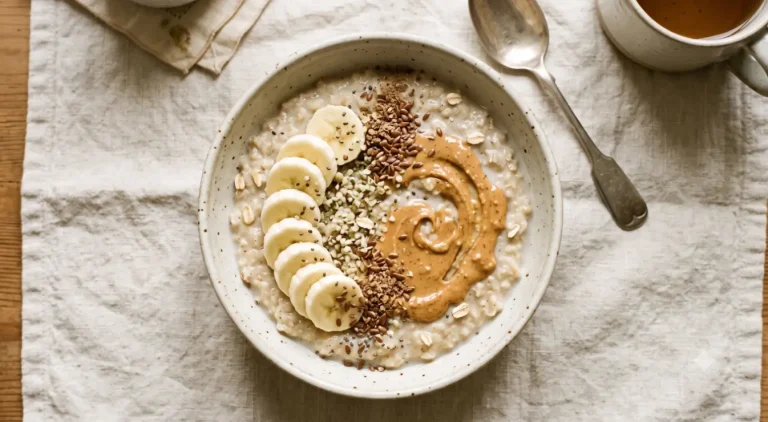
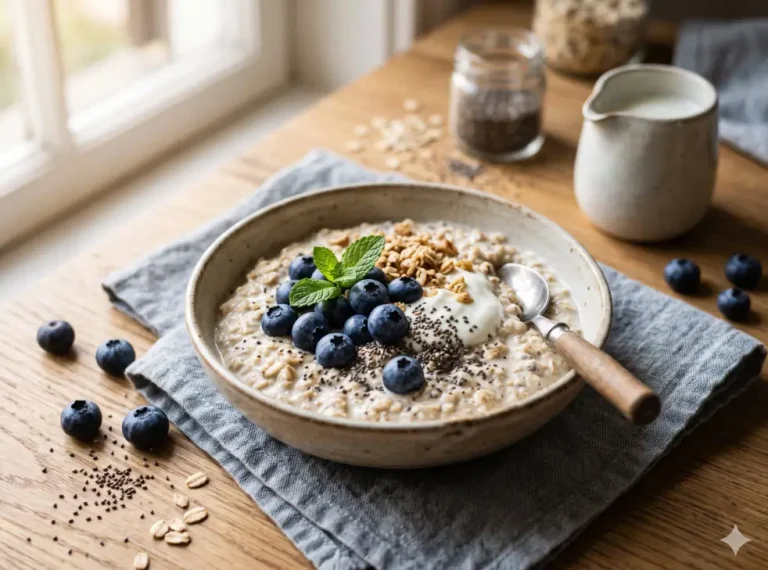
Any minimally processed oat — rolled, steel-cut or porridge oats — will deliver beta-glucan. Instant or flavoured oat packets often contain added sugar and salt; plain oats are cheaper and cleaner. Store in a cool, dry place and use within a few months for best flavour. Overnight oats with chia seeds and blueberries are a convenient breakfast; savoury oat risotto is an underused dinner option that keeps the fibre without the sweetness.
Common questions
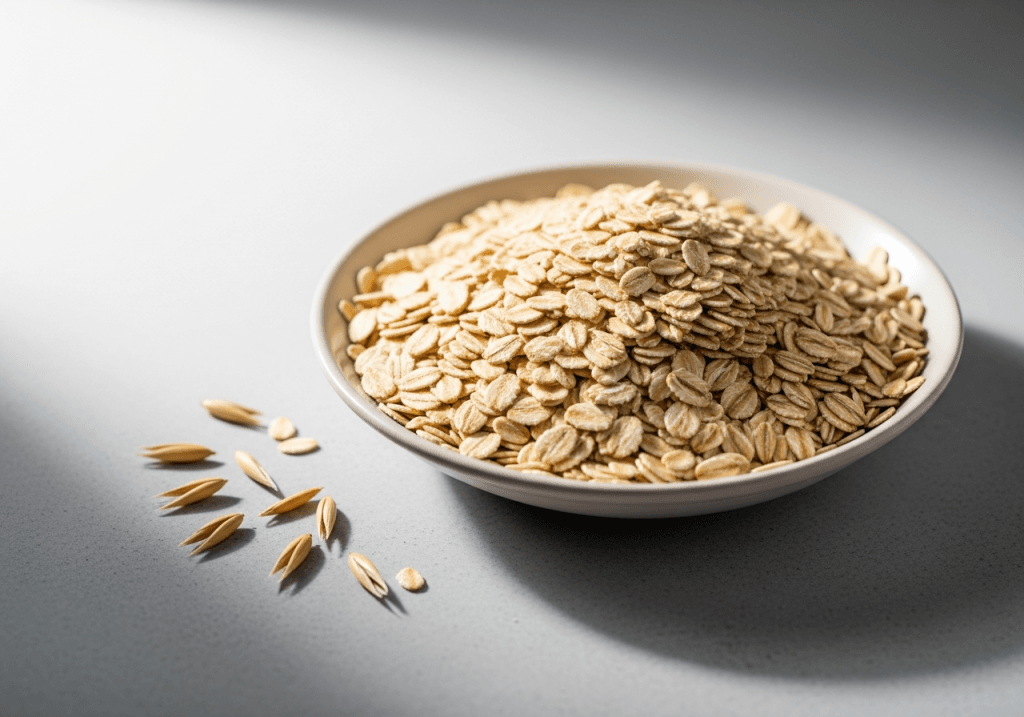
Do steel-cut oats have more fibre than rolled? Not significantly. The beta-glucan content is similar; the main difference is that steel-cut oats are less processed and take longer to cook.
Are oats gluten-free? Oats are naturally gluten-free, but they are often processed in facilities that handle wheat. If you need strict gluten avoidance, buy oats labelled gluten-free.
Explore by health goal
Oats is one of many foods that support these goals: