Added and natural sugars both count toward your daily intake, but if you’re cutting back — for blood sugar control, weight management, or just general health — knowing which whole foods start you off low makes it far easier. Below is a data-backed ranking of the foods in our database with the least sugar per 100 g.
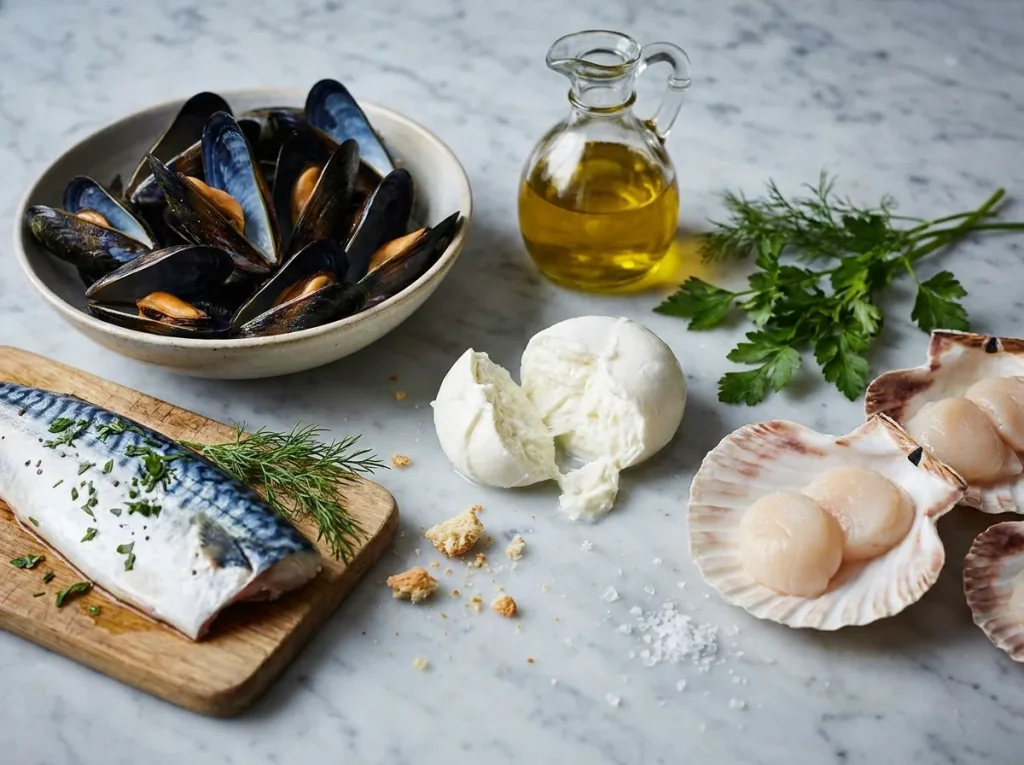
Dried herbs and spices, garlic and chilli, and brewed coffee and tea, are left out of this ranking — Coffee would otherwise lead it — because the spices are eaten a teaspoon at a time and the drinks are almost entirely water, so neither tells you anything useful in a table of 100 g food portions.
| # | Food | Sugar |
|---|---|---|
| 1 | Chicken Breast | 0 g |
| 2 | Cod | 0 g |
| 3 | Duck | 0.0 g |
| 4 | Extra Virgin Olive Oil | 0 g |
| 5 | Ground Turkey | 0 g |
| 6 | Lean Beef (95% lean) | 0 g |
| 7 | Mackerel | 0 g |
| 8 | Mozzarella | 0 g |
| 9 | Mussels | 0 g |
| 10 | Pork Tenderloin | 0 g |
| 11 | Rainbow Trout | 0 g |
| 12 | Salmon (Atlantic) | 0 g |
| 13 | Sardines | 0 g |
| 14 | Scallops | 0 g |
| 15 | Tilapia | 0 g |
| 16 | Tuna (canned, light) | 0 g |
| 17 | Turkey Breast | 0.05 g |
| 18 | Couscous | 0.1 g |
| 19 | Parmesan | 0.11 g |
| 20 | White Rice | 0.12 g |
| 21 | Cheddar Cheese | 0.27 g |
| 22 | Sesame Seeds | 0.3 g |
| 23 | Eggs | 0.37 g |
| 24 | Tofu | 0.4 g |
| 25 | Spinach | 0.42 g |
Savoury staples dominate this list for an obvious reason: meat, fish, eggs and most vegetables carry little to no sugar in their natural state. The sugar that adds up in a typical diet mostly comes from fruit (natural, but still worth being aware of in large amounts), and far more from added sugar in processed foods, baked goods and drinks — none of which are whole foods, so they don’t appear in this database at all.
Not every food in our database has a confirmed sugar figure yet, so this ranking reflects the foods with recorded data rather than the full catalogue.
Common questions
Is natural sugar in fruit as much of a concern as added sugar? Most evidence treats them differently — whole fruit brings fibre, water and micronutrients alongside its sugar, which slows absorption, whereas added sugar in processed foods and drinks offers none of that buffering. Whole fruit is generally not the target of a “reduce sugar” goal; added sugar is.
Does zero grams of sugar mean a food has no carbohydrate? No — sugar is only one type of carbohydrate. A food can be low in sugar but still carbohydrate-rich, such as brown rice or quinoa, both of which get most of their carbs from starch, not sugar.