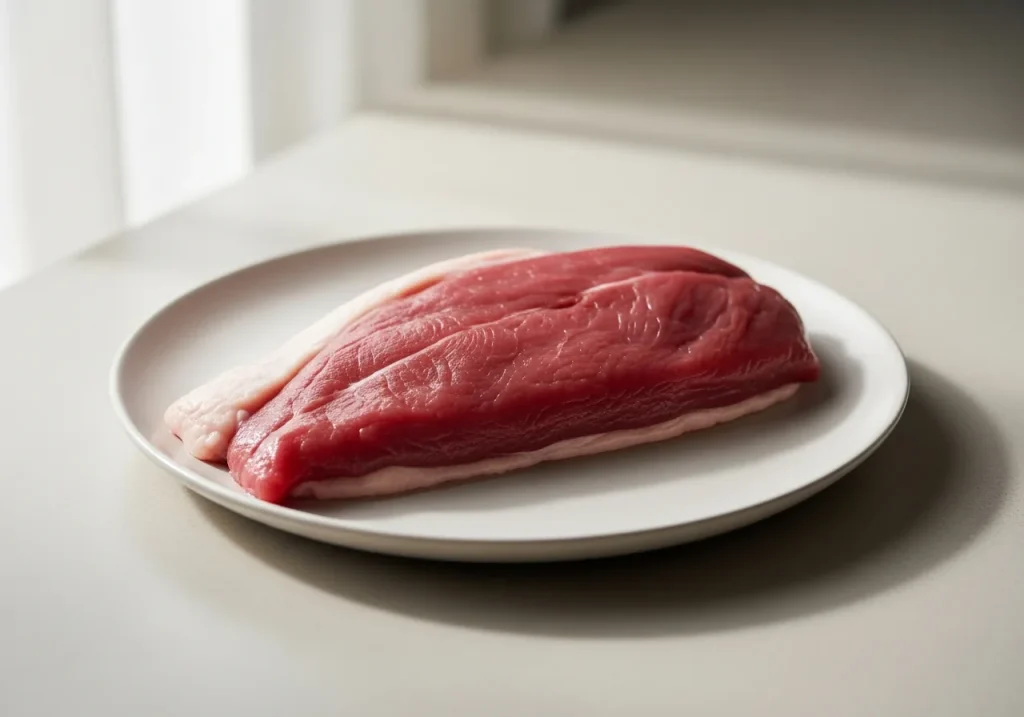
Duck is a richer, more deeply flavoured poultry than chicken or turkey, and it delivers a similar complete protein profile with notably more iron, vitamin B12 and zinc per 100 g. That nutrient density is why duck appears in research on energy and performance and muscle health.
Compounds & anti-nutrients in Duck
Per 100 g, Duck is a notable dietary source of these active compounds. Tap any to see its full sources map and how to work with it.
Why duck is good for you
Duck meat is darker than chicken because of its myoglobin content, which means it contains more iron and more of the B vitamins, especially B12 and niacin. The fat is mostly monounsaturated, similar to olive oil, though duck is still higher in total fat than skinless chicken breast. The main nutritional advantage is flavour: duck satisfies with smaller portions because of its richness, which can help with portion control.
Duck nutrition at a glance
The label shows the numbers, but the practical message is that duck is a nutrient-dense, flavour-rich meat best eaten in moderate portions. The main caveat is saturated fat in the skin — remove it for a leaner meal.
How to buy and cook duck
Choose duck with firm, pinkish-red flesh and no off smell. Duck breast is the most versatile cut; score the skin, season and pan-sear skin-side down for 10–12 minutes, then flip and finish in the oven. Duck pairs well with cherry, orange, ginger and olive oil. Rest for 5 minutes before slicing.
Common questions
Is duck healthier than chicken? Duck has more iron and B vitamins, but also more fat. If you remove the skin, the fat content becomes comparable to chicken thigh.
Does duck have to be fully cooked? Duck breast is best eaten medium-rare to medium. Only ground duck needs to be fully cooked, like all ground meats.
Explore by health goal
Duck is one of many foods that support these goals: