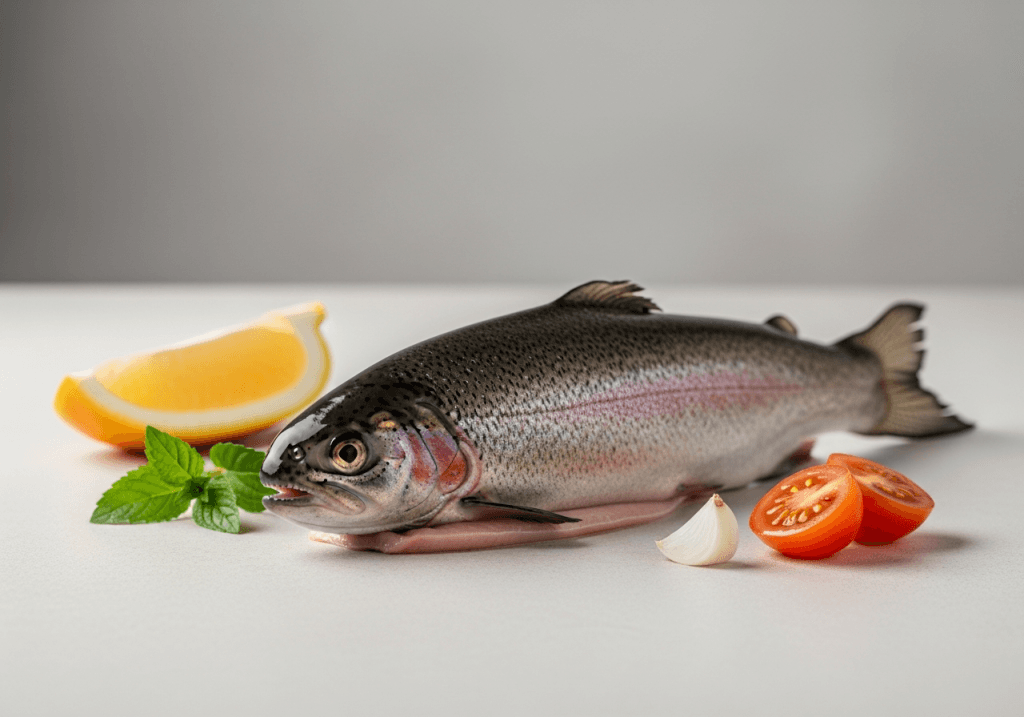
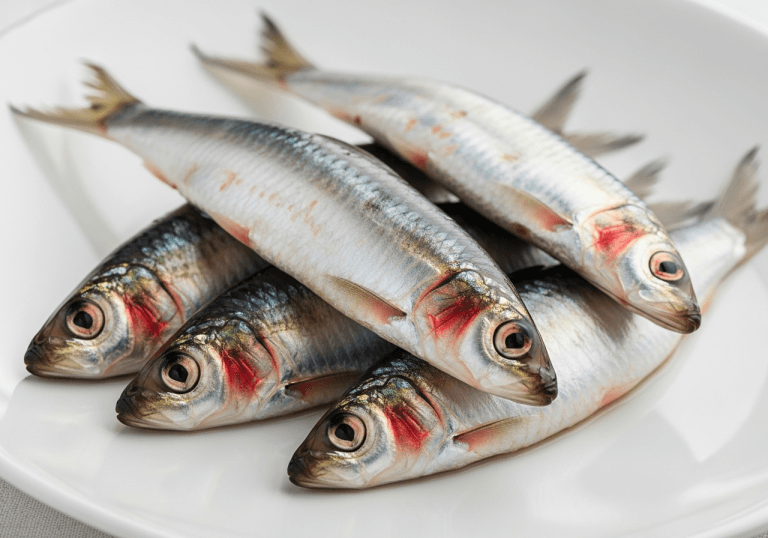
Rainbow trout is one of the most approachable oily fish on the fishmonger’s slab: milder and less assertive than mackerel, yet built on the same valuable foundation of long-chain omega-3 fats and high-quality protein. That foundation is why trout appears in research on heart health, brain health and inflammation.
Compounds & anti-nutrients in Rainbow Trout
Per 100 g, Rainbow Trout is a notable dietary source of these active compounds. Tap any to see its full sources map and how to work with it.
Why rainbow trout is good for you
Trout is a good source of the long-chain omega-3 fatty acids EPA and DHA, the marine fats most consistently linked to cardiovascular and cognitive health and studied for their anti-inflammatory effects. It is also rich in complete protein and in vitamin B12, which supports the nervous system and red blood cells, plus selenium, an antioxidant mineral. As an oily fish, trout is one of the few natural food sources of vitamin D, which many people fall short on, particularly in winter.
Because it tends to be lower in mercury than many larger fish, trout is generally considered one of the safer oily fish to eat regularly.
Rainbow trout nutrition at a glance
The full breakdown is in the label above. In short, trout pairs lean, complete protein with heart-friendly fats, so its calories come with real nutritional return. Health guidance generally encourages eating a portion or two of oily fish a week, and trout is an easy, gently flavoured way to do that.
How to choose, store and cook rainbow trout
Fresh trout should smell clean and of the sea, with bright eyes, firm flesh and shiny skin. Keep it cold and cook it within a day or two, or freeze it promptly. Its delicate flesh suits quick, gentle methods: pan-frying, baking in foil or grilling, finished with lemon and herbs. It pairs naturally with the brightness of steamed green beans or a grain base of quinoa, and a drizzle of olive oil rounds it off.
Common questions
Is rainbow trout as healthy as salmon? It is broadly comparable: both are oily fish rich in omega-3s, protein and vitamin D. Salmon tends to carry a little more fat and omega-3, but trout is an excellent, often more affordable alternative.
Is rainbow trout high in mercury? Trout is generally low in mercury compared with larger predatory fish, which makes it a sensible choice for eating regularly, including for most people advised to be cautious about fish.
Explore by health goal
Rainbow Trout is one of many foods that support these goals: