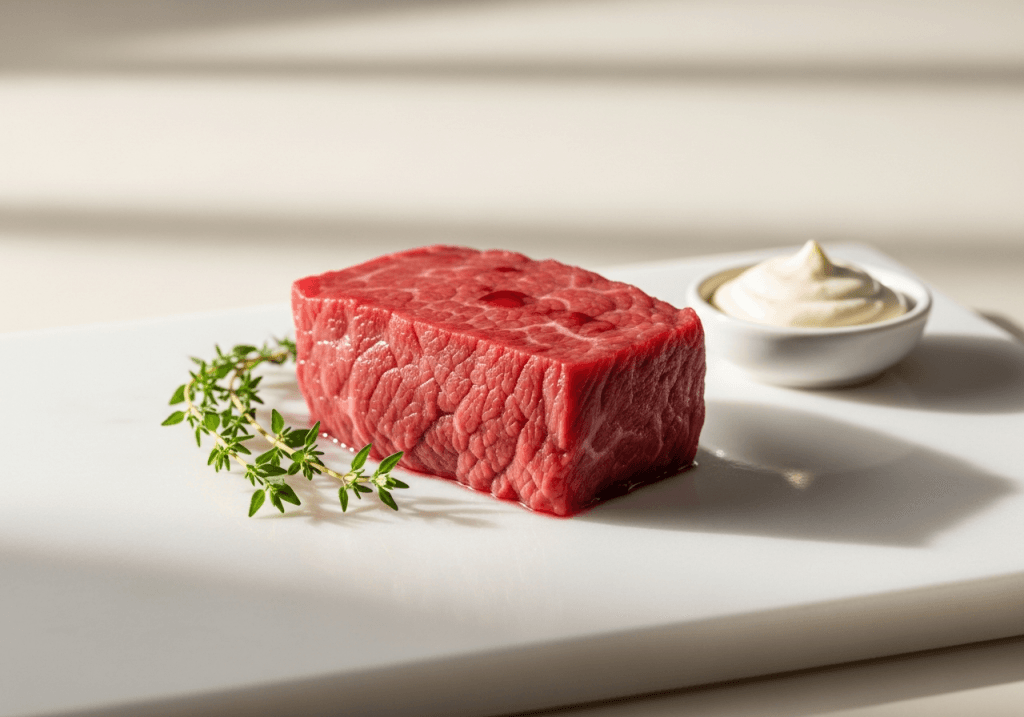
Lean beef, here the 95% lean mince, remains one of the most bioavailable sources of three nutrients that restrictive diets most often run short on: iron, zinc and vitamin B12. It delivers them as complete protein at a moderate calorie cost, which is why lean beef earns its place in discussions of athletic energy and performance and bone health.
Compounds & anti-nutrients in Lean Beef (95% lean)
Per 100 g, Lean Beef (95% lean) is a notable dietary source of these active compounds. Tap any to see its full sources map and how to work with it.
Why lean beef is good for you
The defining advantage of beef is the form its minerals take. Its iron is haem iron, which the body absorbs far more readily than the non-haem iron in plants, making beef a reliable way to support healthy red blood cells and energy. It is equally rich in zinc, central to immune function and tissue repair, and in vitamin B12, which is found naturally only in animal foods. Beef also provides complete protein with all essential amino acids and naturally occurring creatine, which muscles use during short bursts of effort.
To get more from a plant meal, pair iron-rich foods with beef, or simply lean on beef itself when iron needs are high.
Lean beef nutrition at a glance
The full breakdown sits in the label above. At 95% lean, this mince keeps protein high while holding total and saturated fat relatively low for red meat. The sensible caveat is balance: health bodies advise enjoying red meat in moderate amounts and limiting processed versions, so treat lean beef as one rotating protein among fish, poultry and pulses rather than a daily default.
How to choose, store and cook lean beef
Look for bright, fresh-coloured mince labelled 95% lean or higher, and use or freeze it promptly. Because lean mince has little fat to keep it moist, cook it gently and avoid overcooking, which can leave it dry; a splash of stock or a low, slow simmer in a sauce works well. Beef pairs naturally with garlic and onions, and bulking a mince dish with black beans stretches it further while adding fibre. See more options in our meat and poultry section.
Common questions
Is lean beef healthy to eat regularly? Lean beef is a nutrient-dense protein, but guidance recommends keeping red meat to moderate amounts and limiting processed meats. Enjoyed a few times a week as part of a varied diet, it fits comfortably.
Is beef a good source of iron? Yes, it is one of the best, because its haem iron is absorbed far more efficiently than plant iron. That makes it especially useful for people prone to low iron.
Explore by health goal
Lean Beef (95% lean) is one of many foods that support these goals: