Compared like for like, 95% lean beef is the leaner of the two. Per 100 g raw it carries 137 calories to ground turkey’s 153, 5 g of fat to 9.6 g, and more protein — 21.4 g against 17.3 g. It also edges turkey on sodium (66 mg against 80 mg) and potassium (346 mg against 246 mg). That surprises most people, because turkey is the one marketed as the lighter choice.
The catch is what you are actually comparing. Supermarket ground beef is usually 80–85% lean and genuinely fattier than turkey; standard ground turkey includes dark meat and skin and is nothing like turkey breast. It is the grade on the label that decides this, not the animal — which is why the two ranges overlap so heavily in practice.
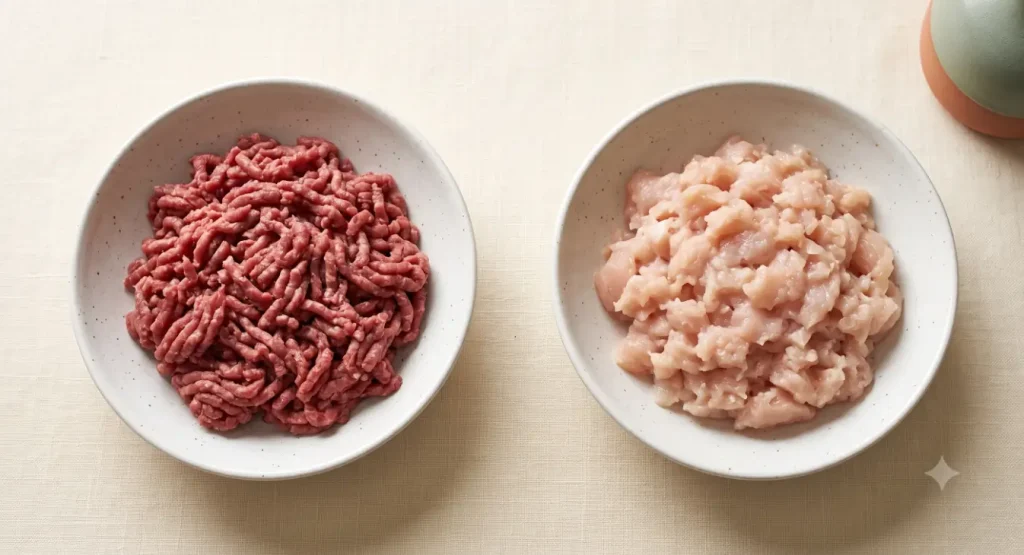
| Nutrient | Ground Turkey | Lean Beef (95% lean) |
|---|---|---|
| Calories | 153 kcal | 137 kcal |
| Protein | 17.3 g | 21.4 g ✓ |
| Total Carbohydrate | 0 g | 0 g |
| Dietary Fiber | 0 g | 0 g |
| Total Sugars | 0 g | 0 g |
| Total Fat | 9.59 g | 5 g |
| Saturated Fat | 2.26 g | 2.18 g ✓ |
| Sodium | 80.2 mg | 66 mg ✓ |
Notable compounds in each
When to choose each
Reach for 95% lean beef when protein density is the priority: it delivers about a quarter more protein per 100 g for fewer calories, and carries iron in the haem form the body absorbs most readily. Reach for ground turkey for its milder flavour in dishes where beef would dominate, and when the grade you can buy is genuinely lean. Either way, read the fat percentage rather than the species — a 93% lean turkey and a 93% lean beef are far closer to each other than either is to the standard version of itself.
Ground turkey vs lean beef nutrition per 100g
Both are sold raw and both figures below are per 100 g raw, which is how they are usually labelled. Cooking drives water off and concentrates everything, so a cooked 100 g portion of either reads higher across the board.
The two are almost identical on saturated fat — 2.26 g for turkey against 2.18 g for the lean beef — so the real gap is in total fat and protein, not the saturated fraction. Neither carries carbohydrate or fibre.
Common questions
Is ground turkey healthier than ground beef? Not automatically. Against 95% lean beef, ground turkey has more calories and nearly twice the fat per 100 g, and less protein. Against standard 80–85% lean beef, turkey usually does come out lighter. The lean percentage on the pack tells you more than the type of meat does.
Which has more protein, ground turkey or lean beef? Lean beef, by a clear margin: 21.4 g per 100 g against 17.3 g for ground turkey — about 24% more, from fewer calories.
How many calories are in ground turkey vs beef? Ground turkey is 153 calories per 100 g raw and 95% lean beef is 137. A fattier 80% lean beef would be well above both, nearer 250.
Is ground turkey good for weight loss? It can be, but it is not the automatic choice people assume. If you are choosing on calories and protein alone, a very lean beef mince does more per calorie. Extra-lean ground turkey breast is leaner than either, and is a different product from standard ground turkey.