Fibre is one of the most consistently under-eaten nutrients in a typical diet, and it’s linked to everything from gut health to steadier blood sugar. Below is a data-backed ranking of the foods in our database with the most fibre per 100 g.
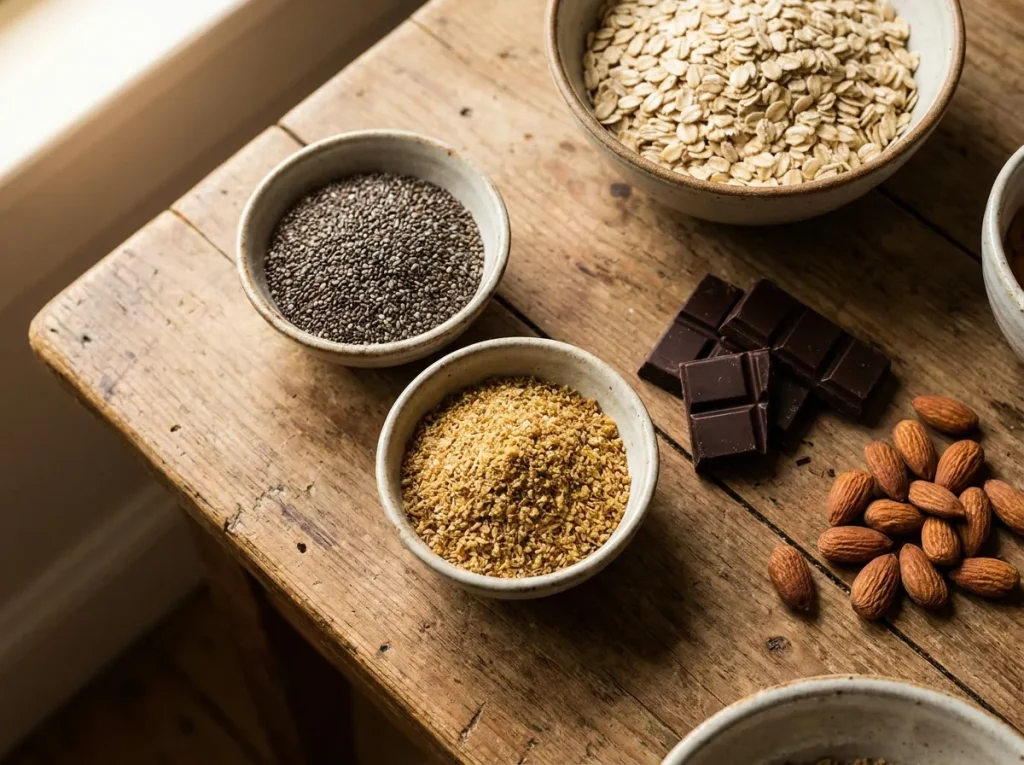
Dried herbs and spices, garlic and chilli are left out of this ranking — Cinnamon would otherwise lead it — because per 100 g they top almost every nutrient table, but they are eaten a teaspoon at a time, so listing them as a source would be misleading.
| # | Food | Fiber |
|---|---|---|
| 1 | Chia Seeds | 34.4 g |
| 2 | Flaxseed | 23.1 g |
| 3 | Barley | 15.6 g |
| 4 | Black Beans | 15.5 g |
| 5 | Pinto Beans | 15.5 g |
| 6 | Kidney Beans | 15.2 g |
| 7 | Sesame Seeds | 11.8 g |
| 8 | Dark Chocolate (70–85%) | 10.9 g |
| 9 | Almonds | 10.8 g |
| 10 | Chickpeas | 10.8 g |
| 11 | Oats | 10.1 g |
| 12 | Wholewheat Pasta | 10.1 g |
| 13 | Buckwheat | 10 g |
| 14 | Coconut | 9.0 g |
| 15 | Hazelnuts | 8.41 g |
| 16 | Lentils | 7.9 g |
| 17 | Sunflower Seeds | 7.22 g |
| 18 | Elderberry | 7.0 g |
| 19 | Quinoa | 7 g |
| 20 | Pistachios | 6.97 g |
| 21 | Avocado | 6.7 g |
| 22 | Raspberries | 6.5 g |
| 23 | Peanut Butter | 6.32 g |
| 24 | Edamame | 6.23 g |
| 25 | Whole Wheat Bread | 6.1 g |
Chia seeds and flaxseed lead by a wide margin, followed by barley, beans and the rest of the whole grains, seeds and legumes like chickpeas. As with protein, per-100 g figures favour dense, low-water foods — a realistic serving of chia seeds is a tablespoon or two, not 100 g, so the table is best read as “fibre density” rather than “how much fibre you’ll actually eat in one sitting.”
Common questions
How much fibre should I be aiming for? Most general guidance lands around 25–30 g a day for adults, and most people fall short of it. Building meals around whole grains, legumes, fruit and vegetables is the most reliable way to close the gap.
Should I increase fibre intake quickly? Gradually is usually more comfortable — a sudden jump in fibre, especially without enough water, commonly causes bloating or digestive discomfort. Increasing over a week or two tends to sit better.