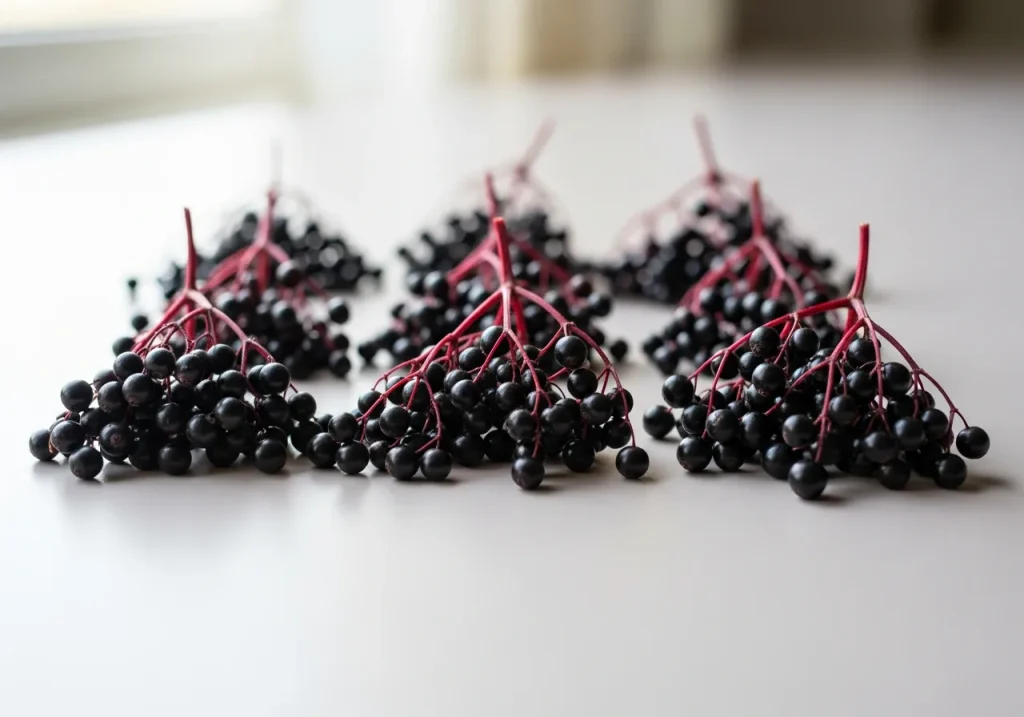
Elderberry is the dark purple fruit of the Sambucus tree, and its juice and extract are among the most studied natural remedies for upper respiratory infections. The anthocyanin and polyphenol content is exceptional, and multiple trials show reduced cold and flu duration with elderberry extract. That combination is why elderberries appear in research on immune support and anti-inflammatory eating.
Why elderberries are good for you
Elderberries’ immune effect is partly antiviral: the polyphenols inhibit viral entry and replication in vitro, and the anthocyanins reduce inflammatory cytokines. The vitamin C content is useful, and the fibre is partly soluble. The caveat is safety: raw elderberries, leaves and bark contain cyanogenic glycosides that can cause nausea, vomiting and diarrhoea. Cooking or commercial processing destroys these compounds, so only cooked elderberry products should be consumed.
Elderberry nutrition at a glance
The label shows the numbers, but the practical message is that elderberry is a potent, low-cost immune-support fruit — but only when cooked or commercially prepared. Raw elderberries are toxic.
How to buy and use elderberries
Choose cooked elderberry products — syrups, jams, teas and supplements — from reputable brands. Avoid raw elderberries, leaves, bark and roots. Elderberry syrup is the most common form, often combined with honey and ginger. Elderflowers are also used to make a milder, refreshing drink. Elderberry pairs well with other dark berries and citrus.
Common questions
Are elderberries safe? Yes when cooked or commercially processed. Raw elderberries, leaves and bark are toxic and should never be eaten.
Does elderberry prevent colds? It does not prevent infection, but multiple trials show it reduces cold and flu duration by roughly 1–2 days when taken at symptom onset.
Explore by health goal
Elderberry is one of many foods that support these goals: