Potassium works alongside sodium to help regulate blood pressure and fluid balance, and most people fall short of typical targets. Below is a data-backed ranking of the foods in our database with the most potassium per 100 g.
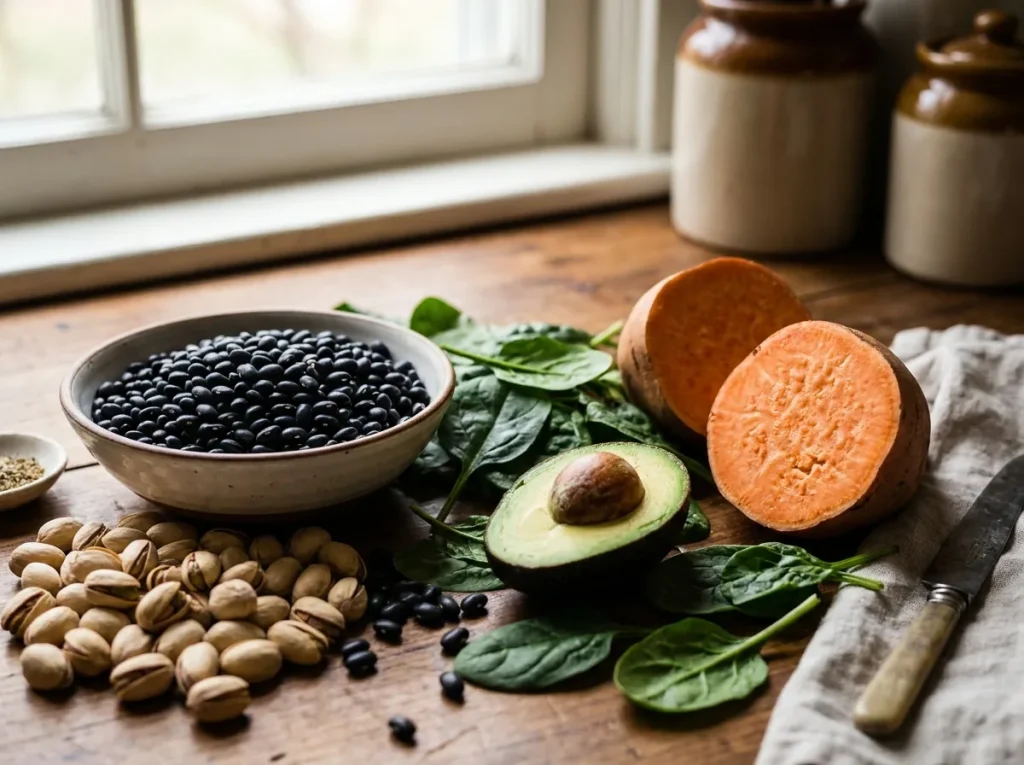
Dried herbs and spices, garlic and chilli are left out of this ranking — Turmeric would otherwise lead it — because per 100 g they top almost every nutrient table, but they are eaten a teaspoon at a time, so listing them as a source would be misleading.
| # | Food | Potassium |
|---|---|---|
| 1 | Black Beans | 1483 mg |
| 2 | Pinto Beans | 1393 mg |
| 3 | Kidney Beans | 1359 mg |
| 4 | Chickpeas | 1070 mg |
| 5 | Lentils | 949 mg |
| 6 | Pistachios | 947 mg |
| 7 | Flaxseed | 793 mg |
| 8 | Almonds | 733 mg |
| 9 | Dark Chocolate (70–85%) | 715 mg |
| 10 | Pumpkin Seeds | 691 mg |
| 11 | Sunflower Seeds | 657 mg |
| 12 | Peanut Butter | 654 mg |
| 13 | Chia Seeds | 642 mg |
| 14 | Cashews | 638 mg |
| 15 | Hazelnuts | 636 mg |
| 16 | Quinoa | 563 mg |
| 17 | Spinach | 558 mg |
| 18 | Edamame | 520 mg |
| 19 | Sweet Potato | 486 mg |
| 20 | Avocado | 485 mg |
| 21 | Brussels Sprouts | 477 mg |
| 22 | Sesame Seeds | 468 mg |
| 23 | Buckwheat | 460 mg |
| 24 | Potato | 425.0 mg |
| 25 | Walnuts | 424 mg |
Beans, nuts and seeds dominate the top of this table, with spinach, sweet potato and avocado further down — a useful reminder that potassium isn’t just a banana story, even though bananas are the food most associated with it. Pairing potassium-rich foods with a lower-sodium diet is where the real blood pressure benefit tends to show up in the research, rather than potassium alone.
Common questions
Is potassium only about bananas? Not at all — bananas are a reasonable source, but foods like white beans, spinach, potatoes and salmon often carry as much or more per 100 g. Variety matters more than any single “potassium food.”
Can too much potassium be a problem? For most healthy people with normal kidney function, no — the bigger issue is under-consumption. People with kidney disease or on certain medications may need to limit potassium, so it’s worth checking with a healthcare professional if that applies to you.