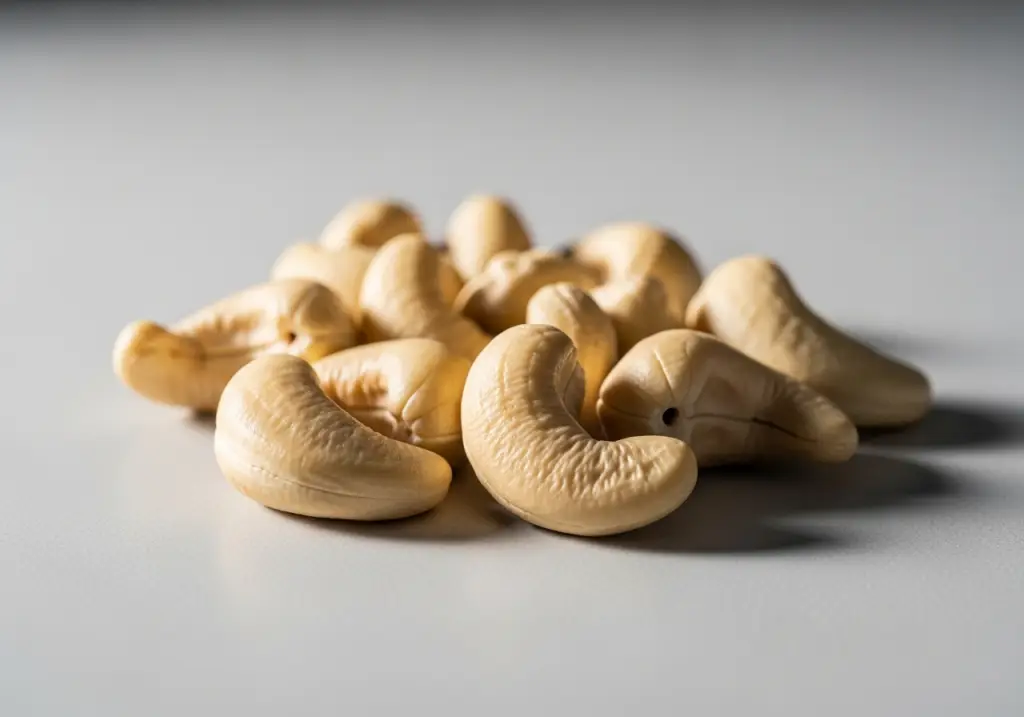
Cashews are the soft, buttery exception in the nut bowl: kidney-shaped, mild and creamier than most, with a fat profile dominated by the same heart-friendly unsaturated fats found in olive oil. That richness, alongside a genuinely impressive mineral content, is why cashews feature in research on heart health and bone health.
Compounds & anti-nutrients in Cashews
Per 100 g, Cashews is a notable dietary source of these active compounds. Tap any to see its full sources map and how to work with it.
Why cashews are good for you
Cashews are an excellent plant source of magnesium, a mineral involved in hundreds of bodily processes from muscle function to bone structure that many people fall short on. They also supply copper and manganese, trace minerals that support energy metabolism and the body’s own antioxidant enzymes, plus a useful amount of plant protein. Most of their fat is monounsaturated, the type linked to healthier cholesterol patterns.
Like other nuts, cashews contain phytates, natural compounds that can bind minerals such as iron and zinc and slightly reduce their absorption. Soaking cashews softens them and modestly lowers phytate, which is partly why they blend into such smooth dairy-free sauces.
Cashews nutrition at a glance
The full breakdown is in the nutrition label above. The short version: cashews are energy-dense and rich in good fats and minerals, so a small handful goes a long way. They are lower in fibre than many nuts and naturally a little starchy, and roasted-and-salted versions can carry a lot of added salt, so choosing plain or dry-roasted keeps them at their best.
How to choose, store and use cashews
Buy plump, uniformly pale cashews and avoid any that smell sharp or paint-like, which signals the fats have turned. Because of that fat content they keep best sealed in a cool, dark cupboard, or in the fridge or freezer for longer storage. Whole cashews are a satisfying snack; soaked and blended, they make a silky base for sauces and dressings. They pair well with dark chocolate or chopped over a bowl of oats.
Common questions
Are cashews good for weight loss? They are calorie-dense, but their protein, fibre and fat are filling, and studies on nuts generally do not link moderate intake to weight gain. A small measured handful rather than open-bowl grazing is the sensible approach.
Are raw cashews safe to eat? The cashews sold as raw are actually steamed to remove a toxic resin in the shell, so they are safe; truly raw, unprocessed cashews are not sold for this reason. Both raw-style and roasted cashews are fine to enjoy.
Explore by health goal
Cashews is one of many foods that support these goals: