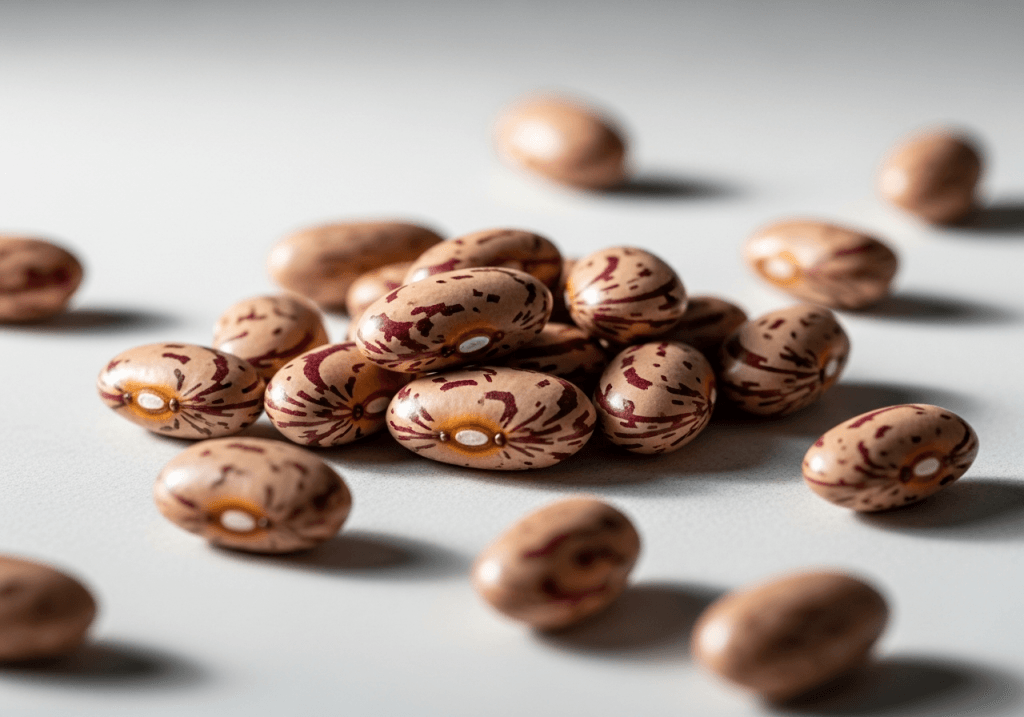
Pinto beans are the speckled, creamy beans at the heart of Mexican cooking, mashed into refried beans and ladled into stews, and they pack a genuinely impressive nutritional punch. As a high-fibre, plant-protein legume they feature in research on gut health, heart health and blood sugar control.
Compounds & anti-nutrients in Pinto Beans
Per 100 g, Pinto Beans is a notable dietary source of these active compounds. Tap any to see its full sources map and how to work with it.
- Folate 525 ug 131.3% DV
- Copper 0.89 mg 99.2% DV
- Dietary Fibre 15.5 g 55.4% DV
- Manganese 1.15 mg 49.9% DV
- Magnesium 176 mg 41.9% DV
- Phosphorus 411 mg 32.9% DV
- Potassium 1,393 mg 29.6% DV
- Iron 5.07 mg 28.2% DV
- Vitamin B6 0.47 mg 27.9% DV
- Choline 66.2 mg 12% DV
- Sodium 12 mg 10.3% DV
- Calcium 113 mg 8.7% DV
- Vitamin E 0.21 mg 1.4% DV
- Purines 171 mg
- Resistant Starch 2 g
Why pinto beans are good for you
Pinto beans are an excellent source of fibre, much of it the soluble, fermentable kind that feeds beneficial gut bacteria and is linked with helping the body manage cholesterol. They also deliver substantial plant protein, useful magnesium and a strong dose of folate, a B vitamin important for cell division and healthy red blood cells. Because their carbohydrate is wrapped in fibre and protein, beans release energy slowly and have a gentle effect on blood sugar.
Like all dried beans, pinto beans contain natural phytates that can modestly reduce mineral absorption, but soaking and thorough cooking lower these, and the overall nutritional benefit of eating beans far outweighs the effect.
Pinto beans nutrition at a glance
The full breakdown is in the nutrition label above. The headline is fibre and plant protein in one affordable package, which makes pinto beans a brilliant foundation for filling, low-cost meals. The one thing to watch is sodium: tinned beans are convenient but often salty, so draining and rinsing them, or cooking dried beans from scratch, keeps salt in check.
How to buy, store and cook pinto beans
Dried pinto beans are cheapest and keep almost indefinitely in a sealed jar; soak them overnight, then simmer until tender. Tinned beans are the quick option, ideal for weeknights. Their mild, earthy flavour soaks up spices beautifully, so build them into chilli, soups and burritos. They pair naturally with onion, garlic and tomatoes, and work much like black beans in most recipes.
Common questions
Are pinto beans good for weight loss? Their fibre and protein are both filling, which helps curb appetite, and they provide steady energy without a sugar spike. As a hearty, low-fat base for meals they fit well into a weight-management plan.
Why do beans cause gas, and can you reduce it? Beans contain fermentable fibres and sugars that gut bacteria break down, producing gas. Soaking dried beans, discarding the soaking water, cooking them well and building up your intake gradually all help your digestion adjust.
Explore by health goal
Pinto Beans is one of many foods that support these goals: