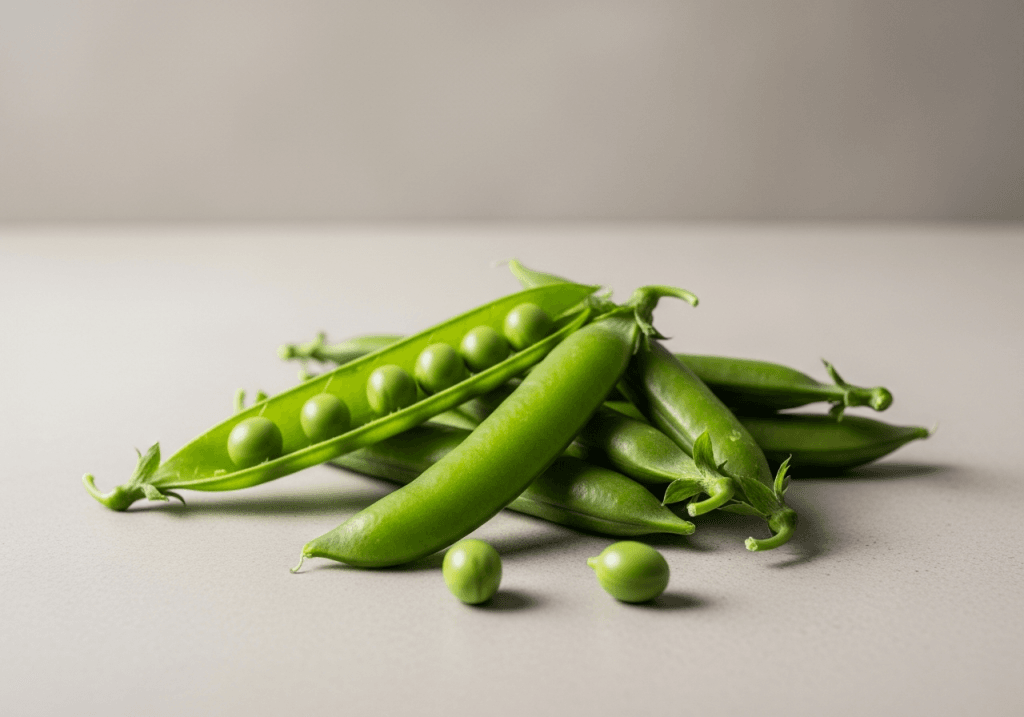
Green peas — the garden peas most of us grew up shelling or tipping frozen into a pan — sit in an interesting spot nutritionally: technically a legume, eaten like a vegetable, and far more substantial than their size suggests. Sweet, starchy and surprisingly high in plant protein and fibre, garden peas are linked to gut health, blood-sugar control and heart health.
Compounds & anti-nutrients in Green Peas
Per 100 g, Green Peas is a notable dietary source of these active compounds. Tap any to see its full sources map and how to work with it.
Why garden peas are good for you
For a vegetable, peas carry a notable amount of plant protein, which is part of why they keep you fuller than most greens. They are a good source of vitamin K and folate, plus vitamin C and manganese. Their fibre is the real headline: a mix of soluble and insoluble fibre that feeds gut bacteria, supports regularity and helps slow how quickly the meal’s carbohydrate reaches the bloodstream.
That combination of protein and fibre is also why peas have a gentle effect on blood sugar despite being starchier than leafy veg — the carbohydrate arrives packaged with things that slow its release.
Garden peas nutrition at a glance
The full breakdown is in the nutrition label above. The short version: peas pack more protein and fibre than most vegetables, with natural sweetness from their sugars. Frozen peas are picked and frozen at their peak, so they often hold their vitamins as well as ‘fresh’ peas that have spent days in transit — a rare case where frozen is genuinely as good as fresh.
How to choose, store and cook garden peas
Fresh pods should be plump, bright green and squeak when pressed; eat them soon, as their sugars turn to starch within days of picking. For everyday cooking, frozen peas are hard to beat for convenience and quality. Cook them only briefly — a couple of minutes in barely simmering water or a quick steam keeps them sweet and bright rather than grey and mushy. They pair well with salmon or stirred through a risotto, and round out a plate alongside carrots. Browse more of our vegetables for ideas.
Common questions
Are peas a vegetable or a protein? Both, in a sense. Botanically peas are a legume and they supply useful plant protein, but they are eaten and counted as a vegetable. They are a handy way to add protein to plant-based meals.
Are frozen peas as healthy as fresh? Yes, often more so. Peas are frozen within hours of harvest, locking in nutrients that ‘fresh’ peas can lose during storage and transport. Keep a bag in the freezer with confidence.
Explore by health goal
Green Peas is one of many foods that support these goals: