The paleo diet asks a simple question: what if we ate more like our pre-agricultural ancestors? In practice that means building meals around whole foods that existed before farming and skipping the grains, pulses, dairy and refined sugar that came later. Much of its appeal lies in stripping out ultra-processed food, which is also where most of its measured benefit for blood sugar control and weight management seems to come from.
What is the paleo diet?
Paleo is a whole-food pattern rather than a calorie-counting plan. The principle is to eat foods a hunter-gatherer might recognise — meat, fish, eggs, vegetables, fruit, nuts and seeds — and to leave out grains, legumes, dairy, added sugar and anything heavily processed. It is less a fixed rulebook than a lens for cutting modern convenience food, and you can explore the wider pattern through our paleo diet archive.
What to eat on the paleo diet
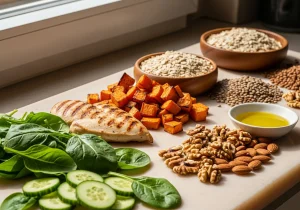
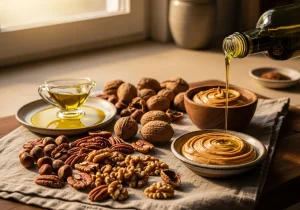
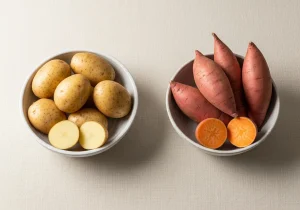
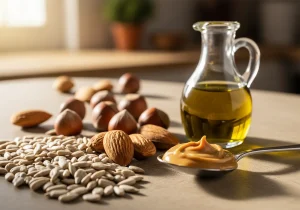
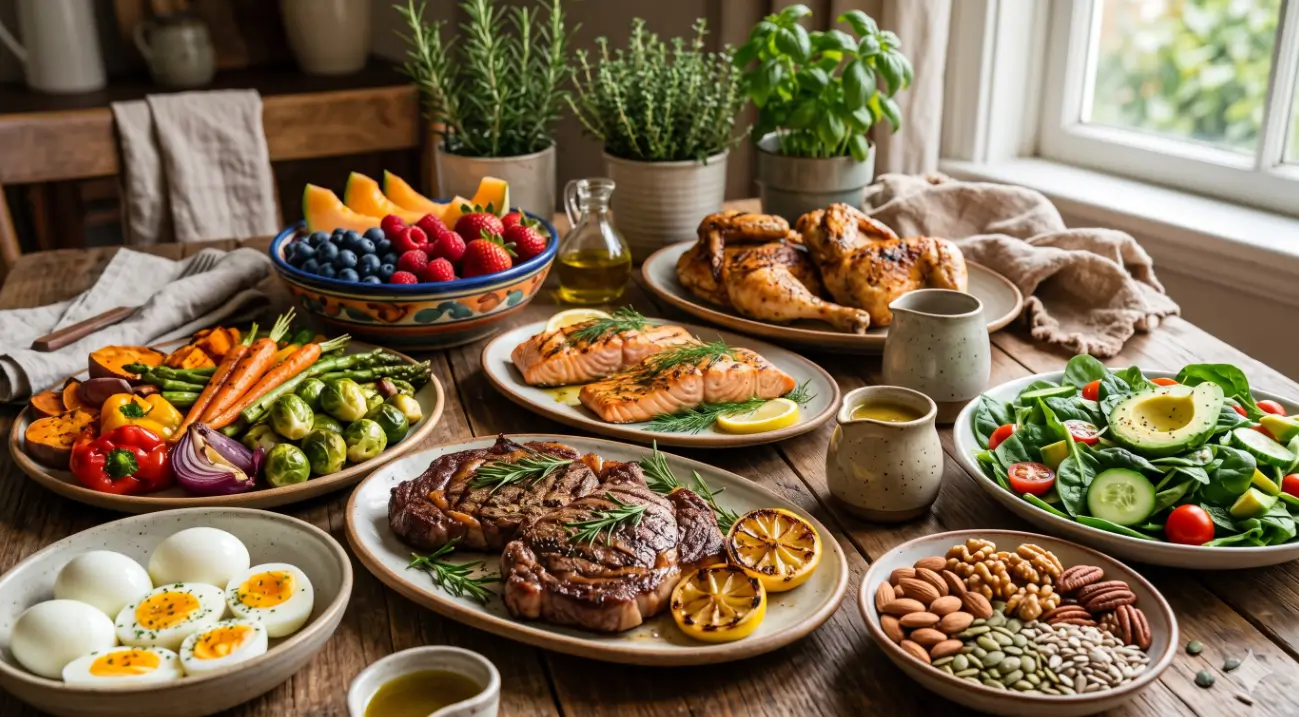
The core of paleo is unprocessed protein and plenty of plants. Lean meat and poultry such as chicken breast and lean beef sit alongside oily fish like salmon, with eggs as an everyday staple. Around them go non-starchy and starchy vegetables, fruit, and a handful of almonds or other nuts for healthy fats. Cooking with quality fats and seasoning generously keeps the plan satisfying without grains or pulses.
What to limit
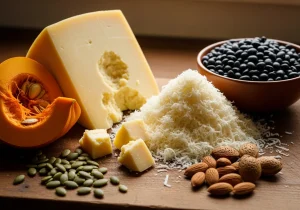
Paleo excludes grains, legumes, dairy, refined sugar and processed food. Cutting ultra-processed items is sensible for almost anyone. The harder line is on wholegrains and pulses such as lentils and beans: these are fibre-rich, affordable and well-supported by research, so removing them is not itself evidence-based and can lower your fibre and B-vitamin intake unless you plan carefully. Treat those exclusions as a personal choice rather than a health necessity.
What the evidence says
The evidence for paleo is still emerging. Small, short trials have shown modest improvements in weight, waist circumference and glucose, but most researchers attribute these to the removal of ultra-processed food rather than anything unique about avoiding grains or dairy. Eating more vegetables, fish and nuts plausibly supports heart health, yet long-term, large-scale data are lacking. It is best viewed as a structured way to eat more whole foods, not a proven medical diet.
Who it suits — and who should take care
Paleo can work well as a whole-food transition for people wanting to cut processed food and steady their blood sugar. Those who tolerate the restriction and enjoy cooking from scratch tend to do best. Take care if you rely on pulses or wholegrains for affordable nutrition, if you are vegetarian, or if you are managing a medical condition — losing entire food groups warrants planning, and ideally a word with a dietitian. If the framework feels too rigid, a gentler flexitarian diet or the well-evidenced Mediterranean diet may suit better.
Common questions
Is the paleo diet good for weight loss? It can help in the short term, mostly because removing processed food and added sugar naturally lowers calorie intake. Whether you keep the weight off depends, as with any diet, on how sustainable you find it.
Why does paleo ban beans and wholegrains? The reasoning is that these foods post-date farming, but it is not supported by evidence — both are nutritious. If you feel well eating them, there is little health reason to exclude them.