Intermittent fasting in its popular 16:8 form means eating within an eight-hour window each day and fasting for the other sixteen — a style of eating better described as time-restricted eating. There are no banned foods; you simply compress when you eat. Trials suggest its main effect is to trim total intake, which is why it tends to support weight management and steadier blood sugar in much the same way as ordinary calorie restriction.
What is intermittent fasting (16:8)?
The 16:8 approach narrows your eating to one daily window — commonly midday to early evening — and leaves the remaining hours for water, tea or black coffee. Nothing on the plate is off-limits, so it is a timing pattern rather than a food pattern. Many people find a shorter window naturally reduces snacking and grazing. You can read more about the approach on our intermittent fasting archive.
What to eat on intermittent fasting
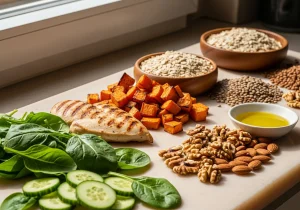
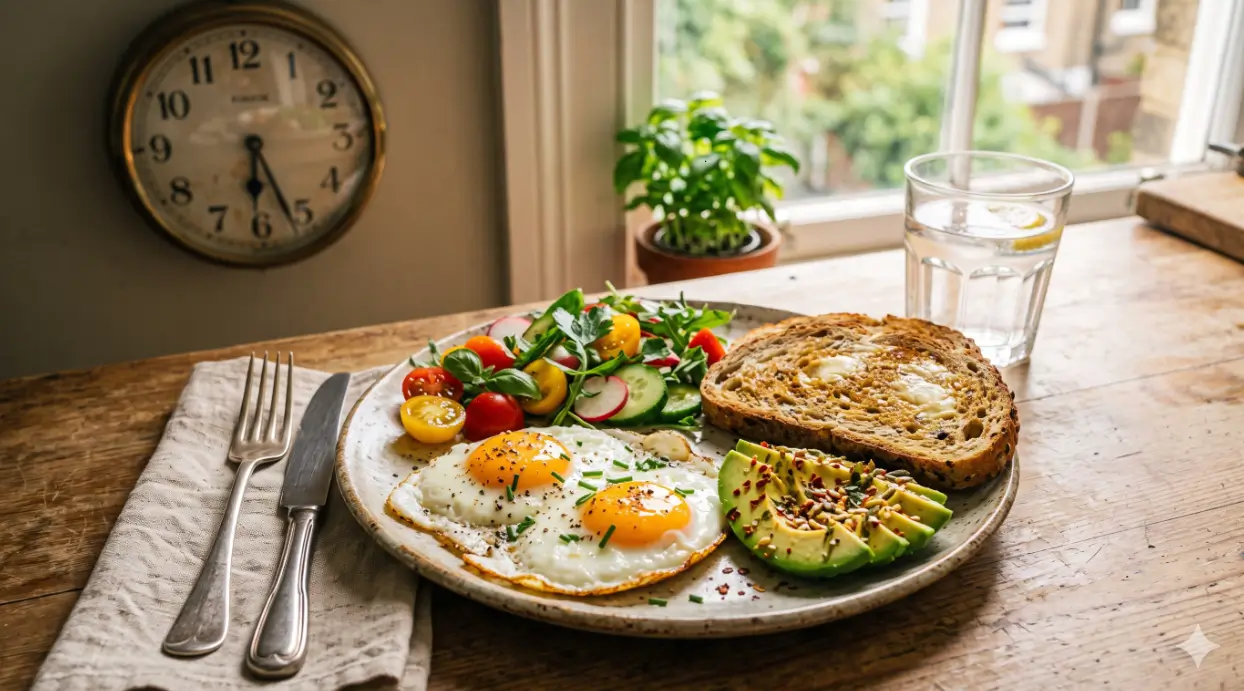
Because 16:8 sets no food rules, what you eat inside the window still decides the result. The sensible move is to fill it with nourishing whole foods rather than treating the window as licence. Protein such as eggs, Greek yoghurt and chicken breast helps with fullness, while fibre-rich lentils, vegetables, fruit and wholegrains keep energy stable across a compressed day.
What to limit
The only real restriction is eating outside your window — calorie-containing drinks and snacks during the fast break it. Beyond that, there is nothing to forbid, but cramming refined, sugary or heavily processed food into the eating window will undo much of the benefit. The point is fewer, better meals, not a smaller number of indulgent ones.
What the evidence says
The evidence is moderate. Controlled trials generally find that time-restricted eating produces weight loss comparable to continuous calorie restriction — no better, no worse — and the deciding factor is how well people stick to it. Some studies hint at improvements in insulin sensitivity, though these often track the weight lost. For heart health markers the picture is promising but not yet settled, so it is fair to call fasting a useful tool rather than a metabolic shortcut.
Who it suits — and who should take care
Time-restricted eating suits people who prefer structure over counting and who find a defined window curbs late-night grazing — handy for weight management and metabolic flexibility. It is not for everyone. Anyone who is pregnant or breastfeeding, has a history of disordered eating, is underweight, or takes glucose-lowering or blood-pressure medication should seek medical advice first, as fasting can affect dosing and energy. If a daily fast feels punishing, a steady pattern like the Mediterranean diet or a flexitarian diet may be easier to sustain.
Common questions
Is 16:8 fasting better than counting calories? Not inherently. Trials show similar weight loss to standard calorie restriction; it simply offers a different, sometimes easier, way to eat a little less overall.
Can you drink coffee while fasting? Black coffee, plain tea and water are fine during the fasting hours. Adding milk, sugar or anything with calories technically breaks the fast.