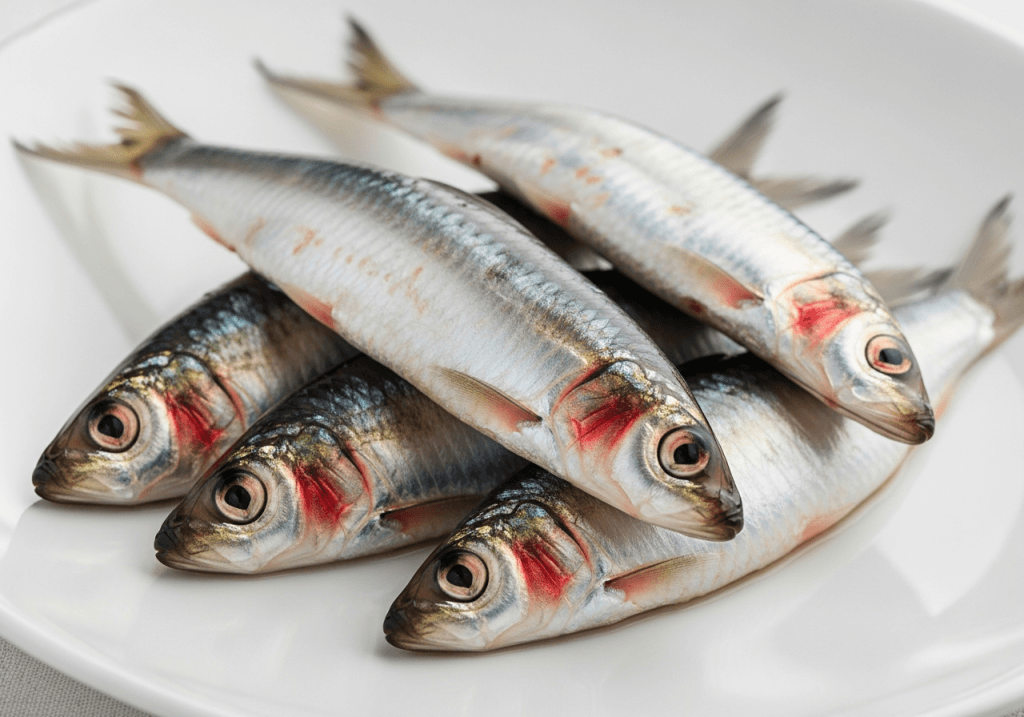
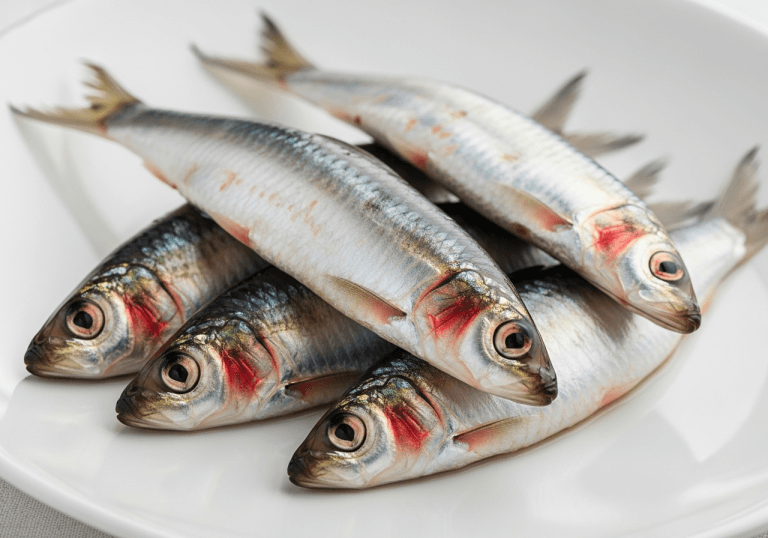
Sardines are small, oily fish that deliver an unusually complete nutrient package for their size: omega-3 EPA and DHA, calcium from their soft, edible bones, vitamin B12, selenium and vitamin D. That combination is why sardines appear in research on heart health, bone health and energy and performance.
Compounds & anti-nutrients in Sardines
Per 100 g, Sardines is a notable dietary source of these active compounds. Tap any to see its full sources map and how to work with it.
- Vitamin B12 8.94 µg 372.5% DV
- Selenium 52.7 µg 95.8% DV
- Phosphorus 490 mg 39.2% DV
- Calcium 382 mg 29.4% DV
- Vitamin D 4.8 µg 24% DV
- Iodine 35 µg 23.3% DV
- Choline 75 mg 13.6% DV
- Vitamin E 2.04 mg 13.6% DV
- Sodium 307 mg 13.3% DV
- Vitamin C 0 mg 0% DV
- Purines 399 mg
- Histamine 15 mg
- Coenzyme Q10 6.4 mg
- Monounsaturated Fat 3.87 g
- Omega-3 0.98 g
- EPA & DHA 0.98 g
- Creatine 0.35 g
Why sardines are good for you
Sardines are among the most nutrient-dense foods per pound because you eat the whole fish — bones, skin and organs. The bones supply calcium in a highly bioavailable form, and the flesh supplies EPA and DHA at levels comparable to salmon. Sardines are also low on the food chain, so they accumulate far less mercury than larger predatory fish. The main barrier is palatability: many people find the strong, oily flavour challenging.
Sardines nutrition at a glance
The label shows the numbers, but the practical message is that sardines are a complete, shelf-stable, cheap source of omega-3 and calcium. The flavour is an acquired taste, but rinsing, marinating or mashing them into salads reduces the intensity.
How to buy and eat sardines
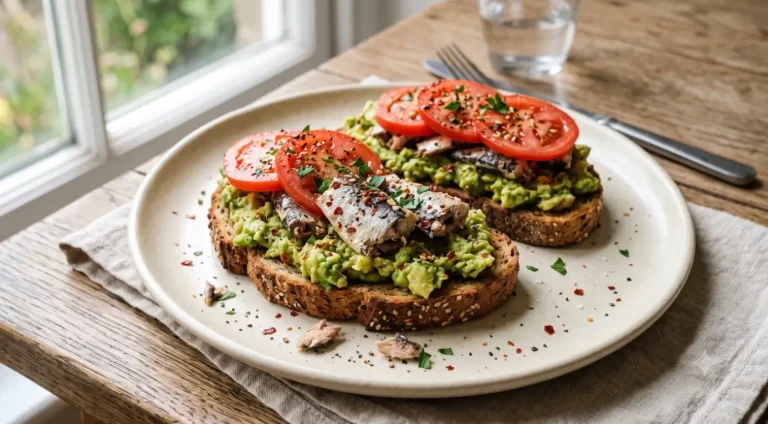
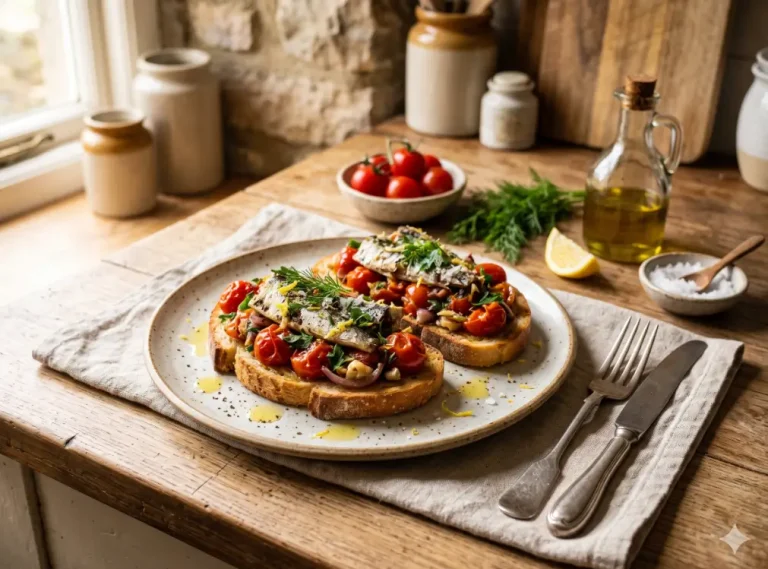
Choose tinned sardines in spring water or olive oil; avoid versions with added sauces or excess salt. Fresh sardines are excellent grilled, but they are harder to find. Use sardines smashed on whole-grain toast with lemon, mixed into pasta with tomato and chilli, or as a snack straight from the tin. They keep for months when canned.
Common questions
Are sardines high in mercury? No — sardines are among the lowest-mercury fish because they are small and short-lived. They are safe for frequent consumption, including during pregnancy.
Should I eat the bones? Yes — the soft, edible bones are the main calcium source. They crumble easily and are not noticeable when the fish is mashed or eaten straight from the tin.
Explore by health goal
Sardines is one of many foods that support these goals: