Purines are normal components of all living cells and most people never need to think about them. They matter in gout and hyperuricaemia, where the body breaks purines down into uric acid faster than it can clear it. Diet is only part of that picture — the body makes most of its own uric acid — but the highest-purine foods are the ones clinicians most often suggest moderating.
The foods below are the highest sources of purines among the 125 foods in our database, ordered by mg per 100 g. Treat this as an orientation to which foods sit at the top of the range, not as a complete avoid-list — values vary with variety, growing conditions and preparation, and many foods have never been measured for purines.
Values are from the USDA and ODS-NIH Database for the Purine Content of Foods, Release 2.0 (2025), and are the total of the four purine bases (adenine, guanine, hypoxanthine and xanthine) per 100 g. Where a food is measured both raw and cooked we use the form our own nutrition data describes, because cooking concentrates purines as water is lost.
For how purines behave in the body, see the Purines compound page.
Sardines — the top-ranked source
| Total Fat | 11.45 g |
|---|---|
| Saturated Fat | 1.53 g |
| Sodium | 307 mg |
| Potassium | 397 mg |
| Total Carbohydrate | 0 g |
| Dietary Fiber | 0 g |
| Total Sugars | 0 g |
| Protein | 24.62 g |
Foods highest in Purines
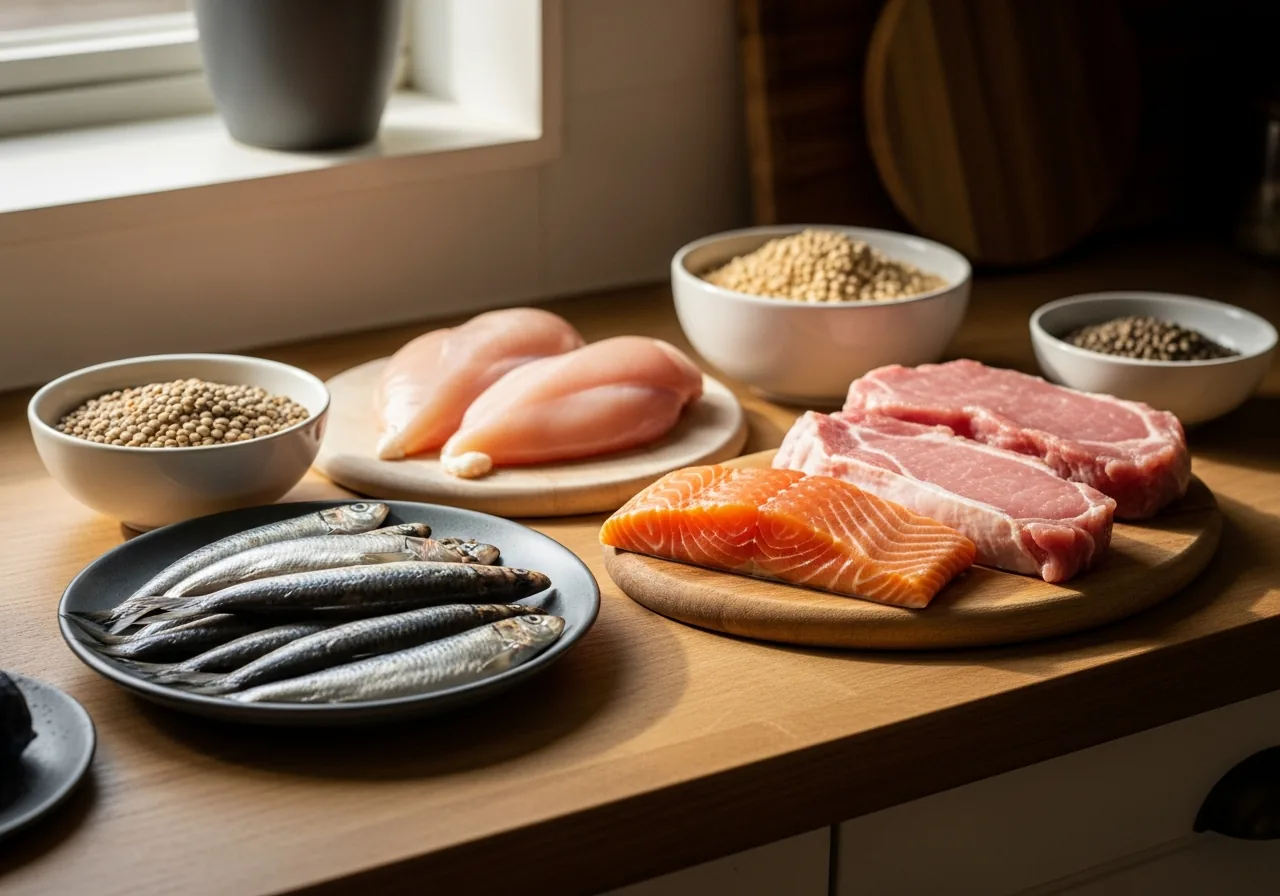
- Sardines — 399.0 mg per 100g. Omega-3, calcium (with bones), vitamin D
- Chicken Breast — 368.6 mg per 100g. Niacin, vitamin B6, selenium
- Salmon (Atlantic) — 249.9 mg per 100g. Omega-3 EPA & DHA, vitamin D, vitamin B12
- Pork Tenderloin — 237.2 mg per 100g. Protein, thiamine (B1), vitamin B6
- Lentils — 222.0 mg per 100g. Folate, iron, manganese
- Tuna (canned, light) — 211.8 mg per 100g. Selenium, vitamin B12, niacin
- Mackerel — 194.0 mg per 100g. Omega-3 (EPA & DHA), vitamin D, vitamin B12
- Lean Beef (95% lean) — 188.9 mg per 100g. Heme iron, zinc, vitamin B12
- Tilapia — 185.8 mg per 100g. Protein, selenium, vitamin B12
- Shrimp — 182.4 mg per 100g. Selenium, vitamin B12, iodine
- Rainbow Trout — 181.0 mg per 100g. Omega-3 (EPA & DHA), vitamin B12, vitamin D
- Pinto Beans — 171.0 mg per 100g. Folate, fibre, plant protein
- Lamb — 127.5 mg per 100g. Protein, vitamin B12, zinc
- Cod — 110.3 mg per 100g. Selenium, vitamin B12, iodine
- Turkey Breast — 95.7 mg per 100g. Niacin, vitamin B6, selenium
How to reduce Purines in what you already eat
How to Reduce Purines
Purine load is managed mainly through source choice and hydration; boiling leaches a little into the broth.
| Method | Typical reduction | How it works |
|---|---|---|
| Boil meat/fish, discard broth | modest | Some purines leach into the cooking liquid. |
| Hydration + low-fat dairy | uric acid ↓ | Supports renal clearance of uric acid. |
| Favour low-purine staples | lower load | Most vegetables, eggs and grains are naturally low. |
Common questions
Are purines bad for you? For most people, no. Purines occur naturally in everyday foods, and most of those highest in purines are foods worth eating. They matter mainly to the minority managing a specific diagnosis, which is who this list is for.
Do I need to avoid these foods? Almost certainly not, unless a clinician has advised it for a specific diagnosis. Most of the foods on this list are nutrient-dense and worth eating; the ones at the top are simply where purines concentrate.
Does cooking reduce purines? Purine load is managed mainly through source choice and hydration; boiling leaches a little into the broth. The table above sets out the specific methods and how much each one removes.
Scientific references & clinical evidence
This guide is built on peer-reviewed research — verify the primary sources below.