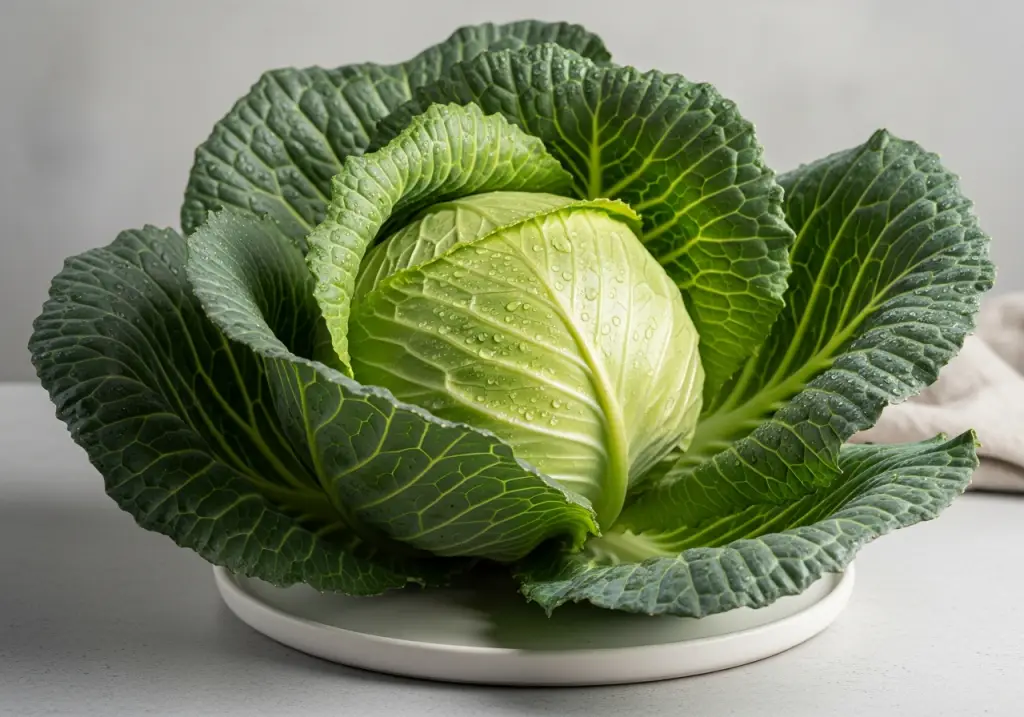
Cabbage is the unglamorous backbone of Eastern European, Asian and fermented-food traditions, and its nutrient density justifies that status: vitamin C, vitamin K, folate, fibre and glucosinolates in every layer. That combination is why cabbage appears in research on heart health and immune support.
Compounds & anti-nutrients in Cabbage
Per 100 g, Cabbage is a notable dietary source of these active compounds. Tap any to see its full sources map and how to work with it.
Why cabbage is good for you
Cabbage is one of the cheapest sources of vitamin C per 100 g among vegetables, and it supplies more vitamin K than most greens. The glucosinolates are the same anti-cancer compounds found in all cruciferous vegetables, and they are preserved through fermentation — which is why sauerkraut and kimchi may be even more bioactive than raw cabbage. The fibre content is high and partly soluble, which helps lower cholesterol and feed beneficial gut bacteria.
Cabbage nutrition at a glance
The label shows the numbers, but the practical message is that cabbage is a cheap, shelf-stable, nutrient-dense staple that works raw, cooked or fermented. The main quality variable is variety: red cabbage contains more anthocyanins, while white cabbage is sweeter and better for fermentation.
How to buy and cook cabbage
Choose compact, heavy heads with tight leaves and no soft spots or browning. Store in the fridge for up to a couple of weeks. Shred raw for coleslaw with Greek yoghurt and olive oil, or sauté with garlic and ginger for an Asian-style side. Ferment into sauerkraut for a probiotic boost. Cabbage keeps well and is cheap in bulk.
Common questions
Is sauerkraut better than raw cabbage? Fermentation preserves and even multiplies some bioactive compounds while adding probiotics, but raw cabbage retains more vitamin C. Both have a place.
Does cabbage cause gas? The raffinose and sulphur compounds can cause bloating, especially in people not used to high-fibre foods. Cooking and fermentation reduce the effect.
Explore by health goal
Cabbage is one of many foods that support these goals: