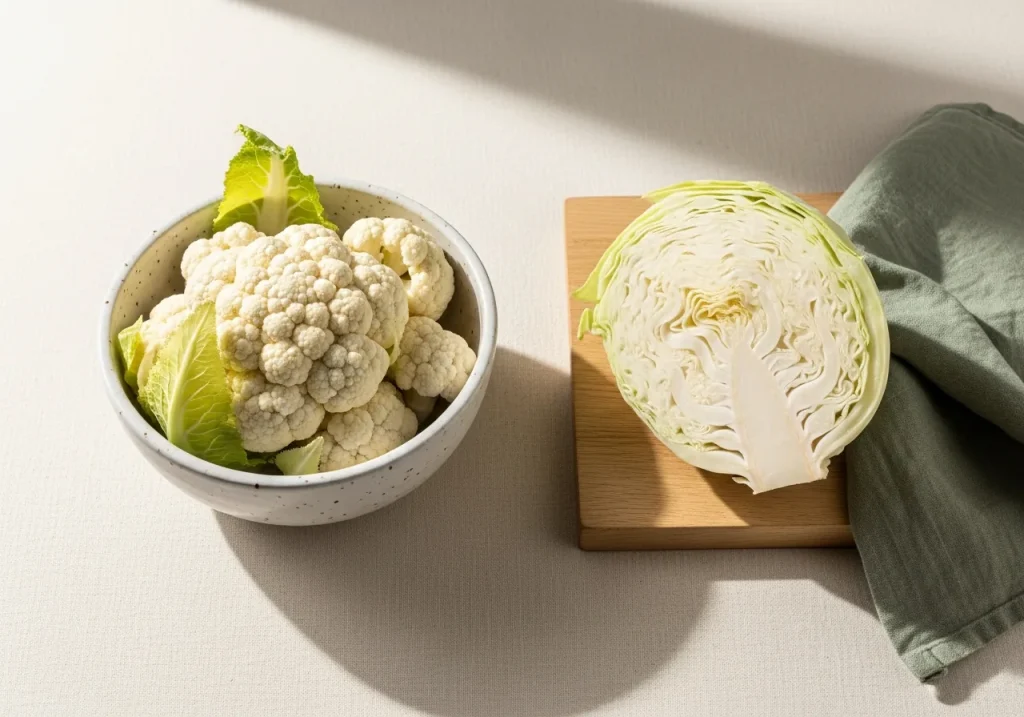
Cauliflower and cabbage are both pale, mild-flavoured members of the cruciferous family, close enough in nutrition that texture and use in the kitchen matter more than the numbers.
| Nutrient | Cauliflower | Cabbage |
|---|---|---|
| Calories | 27.6 kcal | 31.4 kcal |
| Protein | 1.64 g ✓ | 0.96 g |
| Total Carbohydrate | 4.72 g | 6.38 g |
| Dietary Fiber | 1.95 g | 2.5 g ✓ |
| Total Sugars | 1.91 g ✓ | 3.2 g |
| Total Fat | 0.24 g | 0.23 g |
| Saturated Fat | 0.13 g | 0.034 g ✓ |
| Sodium | 20 mg | 16.1 mg ✓ |
Notable compounds in each
When to choose each
These two are close on the numbers, with cauliflower carrying a modest protein edge and cabbage running slightly lower in sodium. Both belong to the same brassica family as broccoli and kale, and share the sulphur-containing compounds behind that family’s characteristic flavour and much of its health interest. Either works as a low-calorie base for a meal — cauliflower has become the more versatile modern substitute (rice, mash, pizza base), while cabbage remains the classic slaw and ferment vegetable.
Common questions
Is cauliflower or cabbage more versatile in cooking? Cauliflower has become the trendier substitute in recent years, riced, mashed, or used as a pizza base, thanks to its mild flavour and ability to take on other textures. Cabbage is more traditionally used raw in slaws or fermented into sauerkraut and kimchi.
Why is cauliflower sometimes white and sometimes purple or orange? Different cultivated varieties carry different pigments — purple cauliflower gets its colour from anthocyanins, the same family of antioxidant compounds found in blueberries, while orange varieties carry more beta-carotene. Standard white cauliflower simply lacks these pigments.