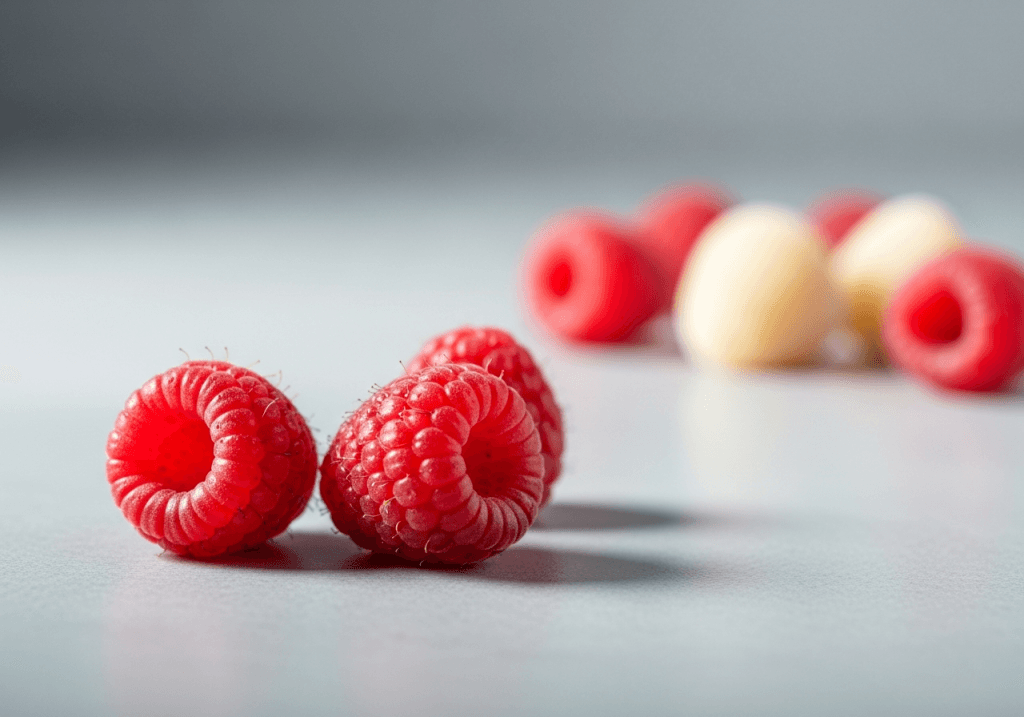
Raspberries are one of the most fibre-rich fruits you can eat — those little hollow drupelets are essentially clusters of seeds and skin, which is exactly where the fibre and antioxidants live. Tart, fragrant and low in sugar for a fruit, raspberries turn up in research on gut health, inflammation and heart health.
Compounds & anti-nutrients in Raspberries
Per 100 g, Raspberries is a notable dietary source of these active compounds. Tap any to see its full sources map and how to work with it.
Why raspberries are good for you
Raspberries are a good source of vitamin C and the mineral manganese, both of which support antioxidant defences and collagen. Their deep red colour comes from anthocyanins, the same pigments studied in blueberries for heart and brain benefits, and they are especially rich in ellagitannins — polyphenols researched for their anti-inflammatory effects.
What really sets raspberries apart is the ratio of fibre to sugar: very high in fibre, modest in sugar, which is why they feel filling and have a gentle effect on blood sugar. Much of that fibre is the insoluble kind that supports regularity, alongside soluble fibre that feeds beneficial gut bacteria.
Raspberries nutrition at a glance
The full breakdown is in the nutrition label above. The short version: raspberries deliver a lot of fibre, vitamin C and plant antioxidants for very little sugar, which makes them one of the friendlier fruits for anyone watching their sugar intake. There is no real downside here beyond their fragility — they are simply a fruit best eaten fresh and soon.
How to choose, store and eat raspberries
Look for plump, dry, evenly coloured berries and check the bottom of the punnet for any squashed or mouldy ones, which spread fast. Do not wash them until you are ready to eat — moisture hastens spoilage — and store them in a single layer in the fridge, using within a day or two. Frozen raspberries are an excellent, cheaper standby for smoothies and porridge. They pair beautifully with Greek yoghurt or scattered over oats, and sit alongside strawberries in our fruits.
Common questions
Are raspberries good for weight loss? They can fit well. Raspberries are low in calories and sugar yet high in fibre and water, so they satisfy a sweet craving while helping you feel full — a sensible swap within weight management.
Are frozen raspberries as healthy as fresh? Yes. They are frozen at their ripest, which preserves their vitamin C and antioxidants well, and they cost less and keep for months — ideal for smoothies and baking.
Explore by health goal
Raspberries is one of many foods that support these goals: